

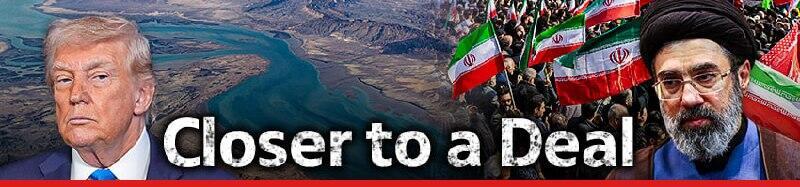

We are at a historic moment. On Sunday, perhaps, an agreement will be signed that amounts to a betrayal of the Iranian people and a surrender to the Iranian regime. True, not everything is yet clear, but on several key issues the agreement is already evident.
First, the Iranian regime will receive international recognition. Second, there is no reference to ballistic missiles. That means Iran will continue to pose a regional threat, while Israel will remain under a ballistic missile threat. Third, there is no separation between Iran and its terrorist proxies. The implication is that Hezbollah, the Houthis, Shiite militias in Iraq and, of course, Hamas will continue operating under Iranian sponsorship and with Iranian funding.
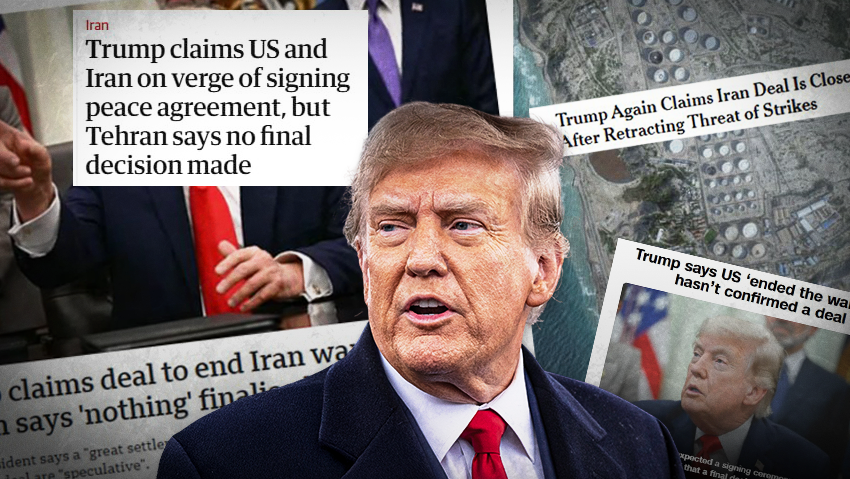
Headlines from around the world about Trump and the Iran deal
Fourth, the emerging agreement is a betrayal of the Iranian people. They took to the streets in an effort to overthrow the ayatollahs' regime and gain a measure of freedom. Trump encouraged them to continue their struggle. He promised help was on the way. They listened. Tens of thousands were killed. They wanted to believe that the bloodshed would lead to the downfall of the regime of terror. The greater the expectations, the greater the disappointment.
Any agreement includes American recognition of a regime that is far stronger and far more radical. The future of the Middle East in general and of the Iranian people in particular has never seemed so hopeless. It is no longer clear whether moral values still have any significance in international affairs. What is clear is that they have been buried.
The Iranians have been abandoned. So have the Lebanese. They had begun to feel that they might finally be freeing themselves from Iranian domination, which, through Hezbollah, has devastated Lebanon over recent decades and driven it into bankruptcy. Lebanon has the potential to recover. Many countries are willing to help. But there is little chance of that happening. An agreement with Iran ensures that Hezbollah will continue to bring destruction and ruin. The same applies to Hamas.
There is also a shared sense of destiny and a common experience of standing against powerful forces. Hamas was not defeated after two years of war. Iran was not defeated after 40 days of bombardment. The result is a boost in morale for all branches of the axis of evil and terror.
Under previous decisions, both Hezbollah and Hamas were supposed to disarm. An agreement with Iran effectively destroys the chances of that happening.
Assuming the agreement ultimately signed resembles the American version of the reported understandings, it will closely resemble the 2015 nuclear deal, the Joint Comprehensive Plan of Action (JCPOA). That was the agreement that enabled Iran's regional expansion.
Trump himself repeatedly described that deal as bad and deeply flawed, insisting that he would secure a far better agreement. In 2018, he withdrew from the deal and imposed severe sanctions on Iran. Those sanctions inflicted significant damage on the Iranian economy.
Yet one of Biden's first moves after entering the White House in January 2021 was to reverse those sanctions. And now? Trump is stepping into Biden's shoes. At best, he is returning to a similar agreement, which is a serious mistake. He is also returning to sanctions relief, which is an even greater mistake. That will allow Iran to advance on other fronts, including ballistic missile development, the arming of its proxies and regional subversion.
The West has exposed itself in all its weakness. When it comes to the Palestinians, the free world erupts in outrage. When it comes to the Iranians, there is silence.
By any conceivable measure, Iranians suffer far more than Palestinians. Just as the Iranian people suffer under a regime that crushes them and prioritizes vast investments in the machinery of death, Palestinians suffer under a leadership that prefers terrorism over reconciliation and prosperity.
Remarkably, the free world shields the Iranian regime in much the same way that it effectively aligns itself with Hamas. Demonstrations target Israel and the United States, which are fighting these regimes of oppression.
Only in April, Iran was elected to one of the United Nations' most important committees, which oversees human rights, women's status and counterterrorism issues. Canada, France, Spain, Norway, the Netherlands, Australia, the United Kingdom, Finland, Austria and Switzerland supported the appointment.
Many among us hoped that the special relationship between Netanyahu and Trump would lead to unprecedented coordination. That did happen on the tactical level. The joint strikes against Iran were undoubtedly an achievement.
But tactical cooperation did not translate into strategic alignment. At the strategic level, there is scarcely a mistake that Trump did not make. The ultimate goal of eliminating the Iranian threat will have to be left to his successor.
And one can only hope that successor will do better.