

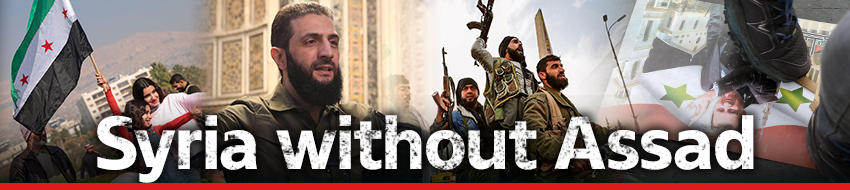
Discussions about a potential Israel-Syria agreement continued in Arab media Saturday. London-based Saudi newspaper Asharq Al-Awsat published an article titled: "Is Syria Ready for Peace with Israel?" Sources close to Damascus’ government told the paper that indirect negotiations are underway with regional and international backing—previously acknowledged by Syrian President Ahmed al-Sharaa.
"Syria demands an end to Israeli attacks and incursions into its territory and seeks a return to the 1974 Disengagement Agreement. Israel aims to establish a new buffer zone and a security deal, paving the way for future comprehensive peace is likely."
Gallery

Prime Minister Benjamin Netanyahu, Syrian Presidnet Ahmed al-Sharaa, U.S. President Donald Trump
(Photo: Haj Suleiman/Getty Images, דובר צה"ל , AP Photo/Matias Delacroix, Abdulaziz KETAZ / AFP, מארק ישראל סלם, AP PhotoAlex Brandon )
The sources ruled out an immediate permanent agreement but left room for a framework leading to permanent or Abraham Accords-style deals. They described a rapidly evolving process, with Damascus relying on Arab mediation to preserve sovereignty and hoping Western pressure will compel Israel to "stop the attacks."
Al-Sharaa strongly desires a deal but conditions it on swift Israeli withdrawal from positions inside Syria—a demand Jerusalem opposes. Talks reportedly explore delaying or softening withdrawals. Informed sources suggest Syria is pushing more urgently for a settlement than Israel.
The deal referenced by Syria established ceasefire lines and a UN-monitored buffer zone (UNDOF) after the 1973 Yom Kippur War. Israel withdrew from the Syrian salient, Mount Hermon peaks and areas near Quneitra. The agreement held until December 2023, when IDF forces entered the buffer zone after Bashar Assad’s regime fell.
Under al-Sharaa, the border dynamic shifted: Israel now operates in previously demilitarized zones and demanded full demilitarization south of Damascus. This month, Emirati site Aram News reported Syria’s General Security Directorate preparing to deploy troops in southern Syria for the first time since Assad’s ouster—allegedly with Israeli approval and U.S. pressure.
Get the Ynetnews app on your smartphone: Google Play: https://bit.ly/4eJ37pE | Apple App Store: https://bit.ly/3ZL7iNv
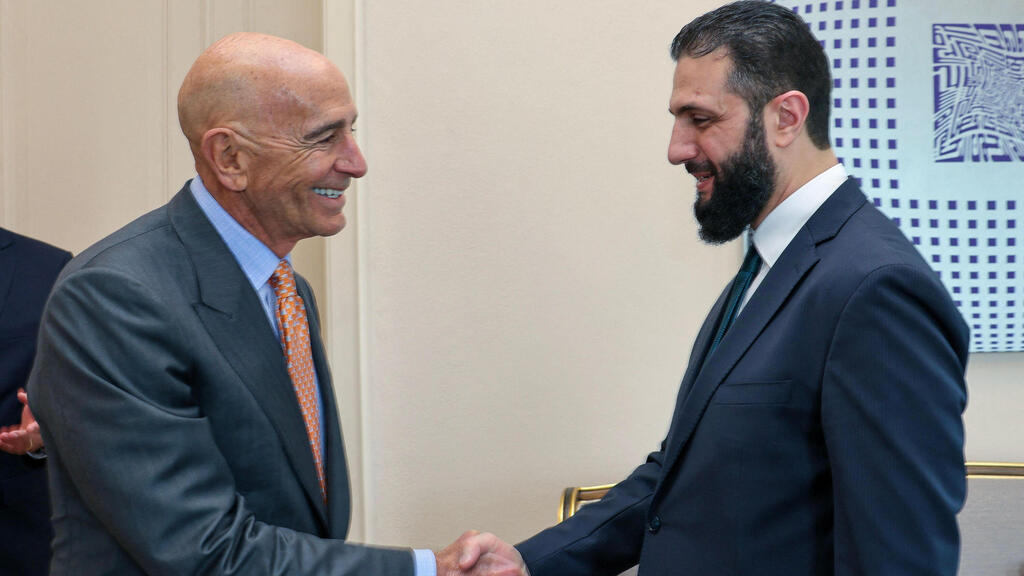
U.S. envoy to Syria Thomas Burke with al-Sharaa
(Photo: AFP PHOTO / TURKISH FOREIGN MINISTRY/HANDOUT)
Recent incidents between IDF forces and buffer-zone residents were also reported. Lebanon’s Al-Mayadeen network claimed residents in Syria’s Sayyida (Golan) area "refuse Israeli aid."
Al-Sharaa confirmed indirect talks during a May press conference in Paris with French President Emmanuel Macron, calling them "negotiations to calm tensions and prevent loss of control." He stressed Syria threatens no regional state, including Israel.
Syrian political researcher Wael al-Ajji told Asharq Al-Awsat: "Comprehensive peace with Israel is premature. The new Syrian government has more urgent priorities." He cited public exhaustion from wars and previous regimes’ "cynical exploitation" of the Palestinian issue, noting Damascus seeks "improved living conditions, civil peace and national unity—not conflicts."
Al-Ajji added that "international law and UN resolutions clearly define Syrian rights and territorial sovereignty," calling legal avenues "the best, safest and cheapest option."
U.S. Envoy Steve Witkoff hinted last week at imminent announcements of additional Abraham Accords signatories. Lebanese MTV reported that Thomas Burke, U.S. Special Envoy for Syria, urged Beirut during meetings to "join the international trend," noting the Abraham Accords "train is moving fast, especially in Syria, which has opened rapidly to solutions."