


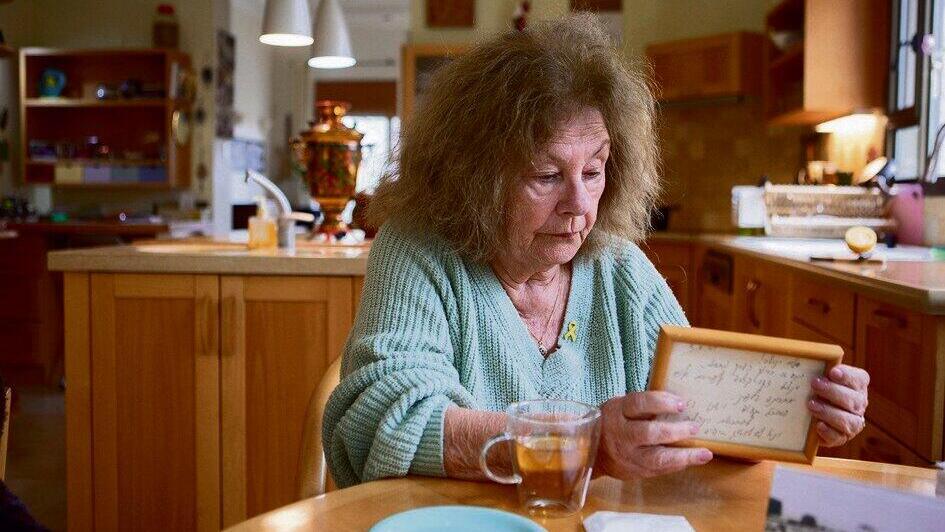
For 58 years, Rina Benari has kept a postcard sent to her by her partner, Yaakov Yarkoni, from the front lines of the 1967 Six-Day War. In it, he assured her that “everything will be fine.” By the time the postcard arrived, the news of his death in battle had already reached her.
Now, on the 58th anniversary of the war, Benari is sharing their story and donating his personal items—kept for decades—to the Ammunition Hill National Memorial Site. “Even after all these years, Yaakov is still a part of me,” she said. “We shared a deep love and he still lives within me. Preserving his belongings keeps the memory of who he was—and the love we had—alive.”
A race against time
The project, in cooperation with the Heritage Ministry, is collecting and documenting personal artifacts of soldiers killed in the Six-Day War. The materials will be made available to the public on Ammunition Hill’s online archive and used by the Six-Day War Heritage Center to preserve their stories for future generations.
Doris, the widow of the late Yitzhak Kashkash, has donated his personal effects—tobacco, a pipe, a watch and a shaving machine—which she kept at home since the war. “For decades, these items were mine alone,” she said. “Now they belong to all of Israel, so that people can know who Yitzhak really was—not just a name and a photo but a full and vibrant life.”
Get the Ynetnews app on your smartphone: Google Play: https://bit.ly/4eJ37pE | Apple App Store: https://bit.ly/3ZL7iNv
Michal Sagiv, daughter of Eliezer Miron, who was killed in the war when she was still a baby, donated his tallit (prayer shawl), tefillin and stamp albums. “I got them from my grandmother,” she said. “This past Memorial Day, I noticed how few people are left who can speak firsthand about the fallen. It hit me how urgent it is to preserve and record their stories.”
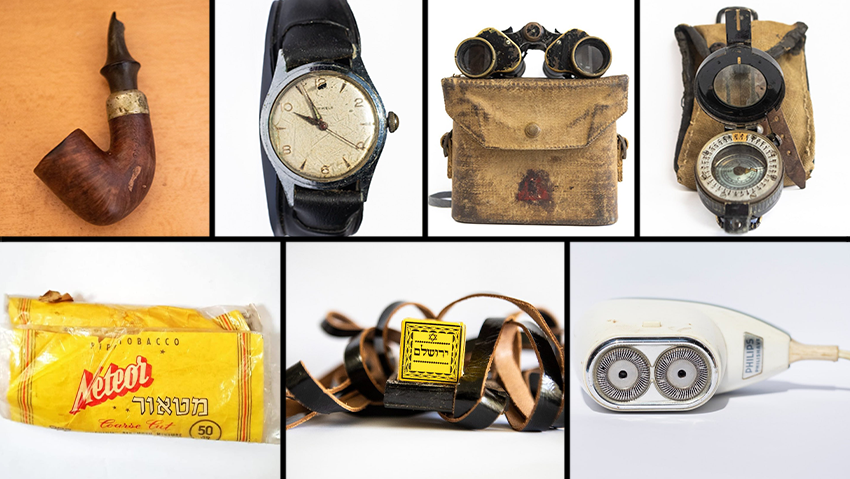
Personal items of fallen IDF soldiers in the Six-Day War
(Photo: Maya Levkowitch Segal)
Fani Vanunu, daughter of Nissim Vanunu, added, “Until now, my father’s story was only known within the family. Now, it will be part of the national memory of the Six-Day War. All I have left of him are photos and passports. Now people will know not just his name but his face and who he was.”
Maya Lebkowitz-Segal, who heads the documentation project, said: “We’re racing against time as these items age. We’re photographing, scanning and preserving them to ensure they last forever and become a permanent part of the Six-Day War’s legacy.”
Ammunition Hill National Memorial Site Director Kitri Maoz added, “Even decades later, the pain of loss remains present in these families. They hold on to every photo, item or memento. Our goal is to preserve their stories and make sure they live on for generations.”