


A day after Joshua (Josh) Boone, 32, was found dead in his home in Beersheba, his family is on its way to Israel from the United States. In Israel, authorities are awaiting the family’s consent to an autopsy to clarify the circumstances of his death, as the family demands that Josh be recognized as a fallen IDF soldier and buried accordingly in a military cemetery — in contrast to the army’s offer to classify him as a soldier who ‘died after his service.’
Josh’s partner, Keren, stressed: ‘The interim solution proposed by the IDF does not satisfy us. The fact that Josh was not on active reserve duty at the time of his death does not mean he should not be buried as a hero and recognized as a fallen IDF soldier.’
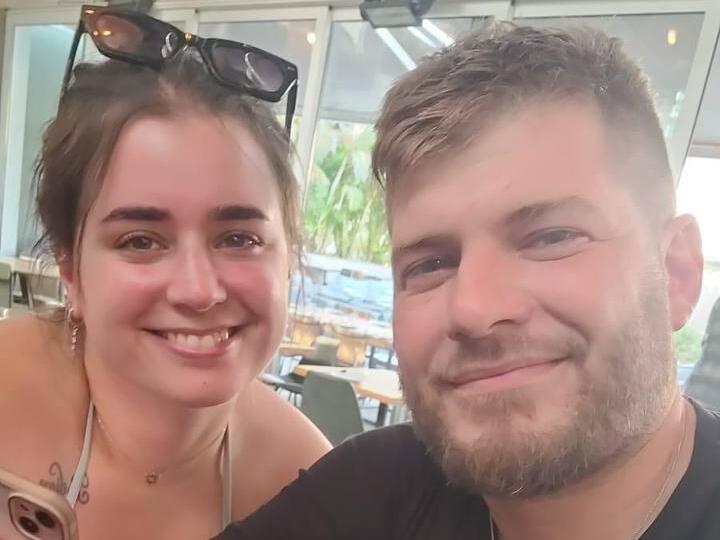
Josh’s family is expected to arrive in Israel on Wednesday. His friends attended a discussion Monday at the Knesset Foreign Affairs and Defense Committee, where they voiced the family’s demand that he be recognized as a fallen soldier. The IDF later said that despite the request, Josh would be recognized as a combat soldier who ‘died after his service.’ His partner, friends and family said they will continue to work to change that determination.
Josh’s partner, Keren Oliel, 35, shared that they spoke about their shared future just three hours before she was informed that Josh had been found dead. ‘We were supposed to get married, move to the Gaza border area and have two children. That was our plan,’ she said. ‘He spent 748 days in reserve duty, more than 700 of them in prolonged combat — Lebanon, Syria, Gaza. He saved dozens of civilians and soldiers. The family is hurting, we are all hurting. He was my light, my soulmate. I am not angry. I only want the minimal recognition that this hero deserves.’
Keren, together with Josh’s family, is leading the struggle to have him recognized as a fallen IDF soldier. ‘The IDF offered us an interim solution that does not satisfy us — a funeral with “military elements,” meaning a military representative who would deliver a eulogy and lay a wreath,’ she said, referring to the option of classifying Josh as someone who ‘died after his service.’ She added: ‘We want a military funeral, in a military section, in a military cemetery. Josh should be buried as a hero, alongside other heroes. The fact that he was not on active reserve duty at the time of his death does not mean he should not be buried as a hero and recognized as a fallen IDF soldier.’
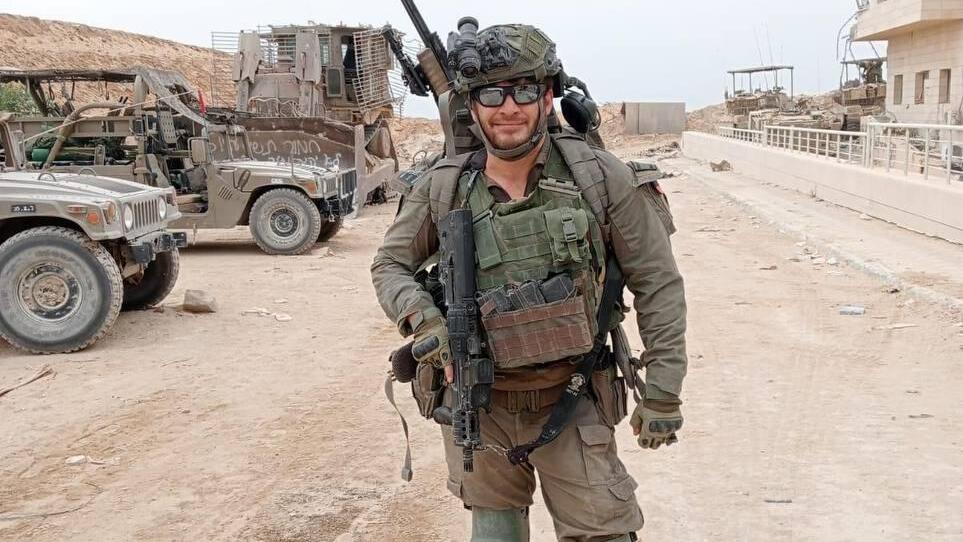
Joshua (Josh) Boone
‘After 748 days of war, the soul pays a price’
Josh, who did not apply to the Defense Ministry for a formal diagnosis or recognition for post-traumatic stress disorder, received private treatment at a clinic in Beersheba. ‘The mental health officer of the last unit he served in diagnosed him with ongoing PTSD and combat shock,’ Keren explained. ‘We did not turn to the Rehabilitation Department because it takes a very long time — time that, as it tragically turned out, we did not have.’
She added that they understood such a diagnosis would be recorded in his medical file, which could have harmed his military profile and future service as a combat soldier. ‘Josh’s dream was to continue serving. He wanted to become a shooting instructor, to serve in a civilian defense squad near the Gaza border and to teach others how to protect themselves. He was afraid that if he were labeled as post-traumatic, he would not be able to fulfill those goals.’
Speaking about her loss, Keren said: ‘There was no single trigger. It was ongoing. He finished reserve duty last month and continued to treat himself, but in the end, the private frameworks did not give him the response he needed. They did not know how to treat his complex PTSD. After 748 days of war, the soul pays a price. I think God wanted him to stop suffering and allowed him to rest as he deserved. It hurts me, but at least he is no longer suffering.’
As reported, Josh’s friends went to the Knesset in hopes of influencing the IDF’s decision. ‘We are here so that Josh will be recognized as a fallen IDF soldier as soon as possible, given the urgency and respect for the dead,’ they said. ‘The circumstances of his death stemmed from the post-trauma he was dealing with. As a society, we must recognize him as a fallen soldier.’ They said they launched a petition to raise awareness of his story and push for change while it is still possible.
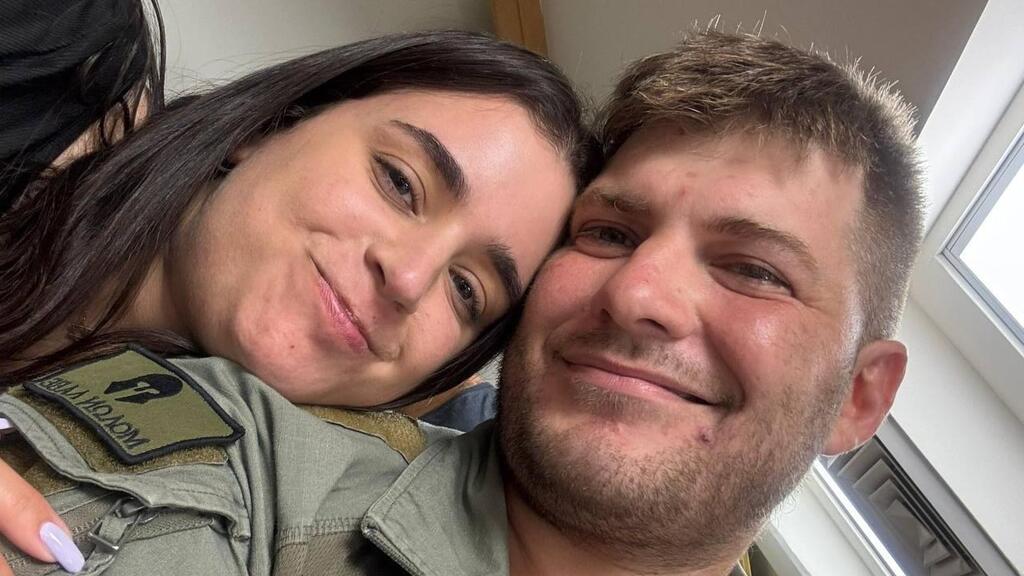
Karen and Josh
The IDF’s new classification — and families’ opposition
The designation ‘died after his service’ was set by a committee headed by Maj. Gen. (res.) Moti Almoz. The committee established a framework for families of soldiers discharged from regular or reserve service who served during the war and are suspected of having taken their own lives within two years of completing service, in circumstances potentially linked to their military service. This marked the first time the IDF addressed recognition of soldiers who died by suicide.
Under the committee’s conclusions, soldiers whose deaths are suspected to be linked to their service are to be buried in civilian cemeteries, accompanied by a military representative who delivers a eulogy and lays a wreath on behalf of the IDF. A representative from the IDF’s Casualties Directorate is to assist the family during the mourning period and with bureaucratic matters. A later committee is to examine each case individually. If a causal link is found between military service and the death, the bereaved family would be eligible for a monthly stipend and support from the Defense Ministry.
Josh’s family has voiced strong opposition to recognizing him as a soldier who ‘died after his service.’ Other bereaved families have also criticized the Almoz Committee’s framework, saying it amounts to an interim solution that fails to fully support them and reflects a lack of full responsibility by the army.
The IDF said it has begun implementing the committee’s conclusions, but bereaved families who expected to be notified that the new designation had been applied to their cases said they had not yet been updated. Foreign Affairs and Defense Committee Chairman Boaz Bismuth later contacted the head of the IDF Personnel Directorate, Maj. Gen. Dado Bar-Kalifa, seeking clarification.
Bismuth wrote that ‘following the response regarding the late combat soldier Josh, additional inquiries were received in my office from bereaved families who said the committee’s conclusions had not been implemented in their cases. In light of this, I request clarification as to why they were not provided with accompaniment and contact from a representative of the Casualties Directorate to assist in submitting a recognition request to the Defense Ministry in accordance with the Almoz Committee’s conclusions.’
To view the petition supporting Josh - click here
If someone in your surroundings is in crisis and may be at risk of suicide, do not hesitate to speak with them, encourage them to seek professional help and stress the importance of doing so. Assistance is available through ERAN, Israel’s emotional first aid hotline at 1201, via WhatsApp at 052-8451201, or through online support organizations, on the Sahar website or www.headspace.org.il.
First published: 07:56, 01.13.26