

“For the first time in the country’s history, we marked two years of a war still underway. The two-year memorials took place alongside one-year memorials, alongside 30-day commemorations and even shivas and funerals for soldiers who fell in early October 2025.”
This is how Col. Meital Samet-Cohen, head of the Israel Defense Forces’ Casualties Department, describes the demands of a role she calls both responsible and relentless. Samet-Cohen oversees the department charged with accompanying bereaved families and providing the first official support from the moment the devastating news of a fallen son or daughter reaches them.
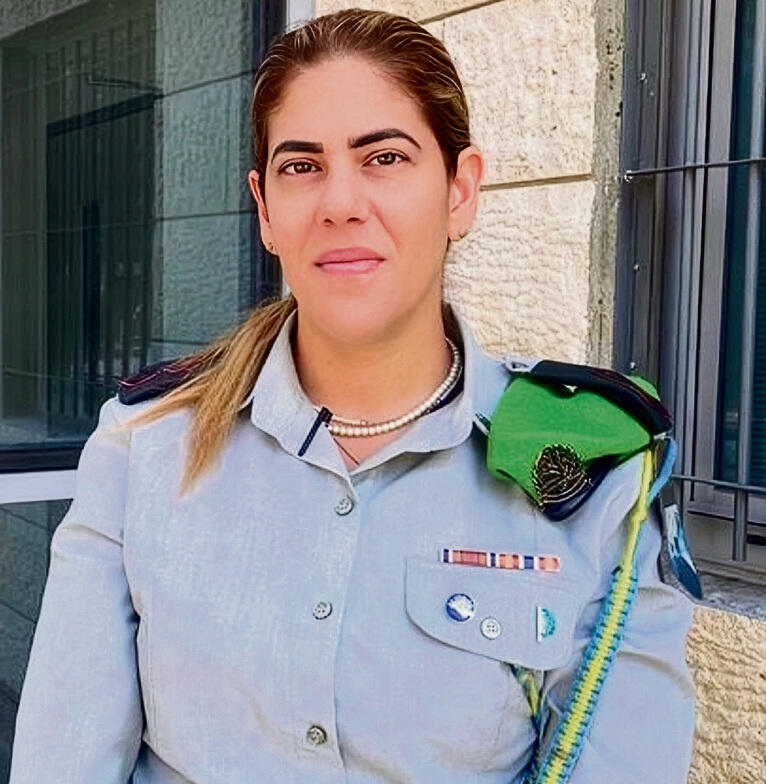
“I’m 41, and I’ve been a casualty officer for nearly 24 years. I enlisted specifically to be there for families in their darkest moments. My father is a disabled IDF veteran, I grew up at Beit HaLohem, and I know firsthand how meaningful proper support can be.”
For four years, she served in the Casualties Branch until she herself was gravely injured in a car accident on her way to the Plugot base. In a single moment, the highly regarded officer found herself in the rehabilitation ward beside the soldiers she had previously visited and supported.
“I was a casualty officer in the Givati Brigade, accompanying the wounded, visiting them in rehab — and suddenly I was the one lying in the next room needing rehabilitation. My recovery took a full year, including time in a wheelchair, but I knew I wasn’t giving up on returning to service.”
The army, she admits, was less certain. “They didn’t really want to take me back,” she says with a smile. But she persisted until she found a commander who agreed. She returned gradually, still in a wheelchair and later on crutches, remembering how inaccessible military bases were then and how much has since changed. “If you ask around, they’ll tell you I was the casualty officer in the cemetery walking with crutches,” she says.
A race against social media
A defining moment in her career came at 37, married to Avi — a field police officer — with three children, when she was asked to establish a new branch dedicated to accompanying wounded soldiers and disabled veterans. The unit had never existed before. It was created after the severe injury of Itzik Saidian, and she was promoted to lieutenant colonel soon after.
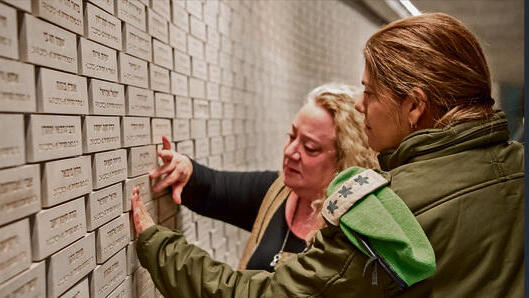
“Our volunteers never know what they will find behind the door.”
A month before the war erupted, she was appointed head of the Casualty Families Liaison Branch.
“Great timing,” she jokes. “But then I understood just how critical the branch we built in 2021 was to our functioning during Iron Swords.” With the outbreak of the war, the branch became a full department responsible for wounded soldiers and missing persons. “Even though no one could prepare for so many casualties in such a short time, we made sure families continued to feel our support as closely as possible.”
Hundreds of reservists were mobilized to serve as the “first notifier” teams who knock on doors.
“From the moment a casualty officer enters a home, we stay with the family throughout their lives,” she says.
She stresses a message she wants the public to hear: “When we prepare to knock on a family’s door, we are racing against the information that spreads on social media. We work with the utmost responsibility to confirm we’re at the correct house, and it’s essential the family receives the news in the most intimate, respectful and responsible way. So I urge the public not to circulate information that might reach families before we do.”
What does she hear from those who perform this agonizing duty?
“Wow,” she sighs. “First, you should know that the ones knocking are reservists doing this voluntarily. From talking with them, I hear how their stomach turns just before the knock. They straighten their uniforms, take a breath and then knock.
“These are extremely tense moments because they don’t know what they’ll find behind the door — a breastfeeding mother, small children, elderly parents.”
‘Some fallen soldiers were already in my heart before they fell’
Is there someone who entered her heart in a special way?
“There are fallen soldiers who were deep in my heart even before they fell,” she says, her voice breaking. “The Nahal Brigade commander, Col. Yonatan Steinberg — Yoni — who went out to fight alongside his troops and was killed on Oct. 7. Yoni was my friend from Nahal, and his commitment to bereaved families guides me to this day.
“Over the years, so many faces and names have entered my heart. So many people I wish I had known in life, and instead I met only after their deaths.”
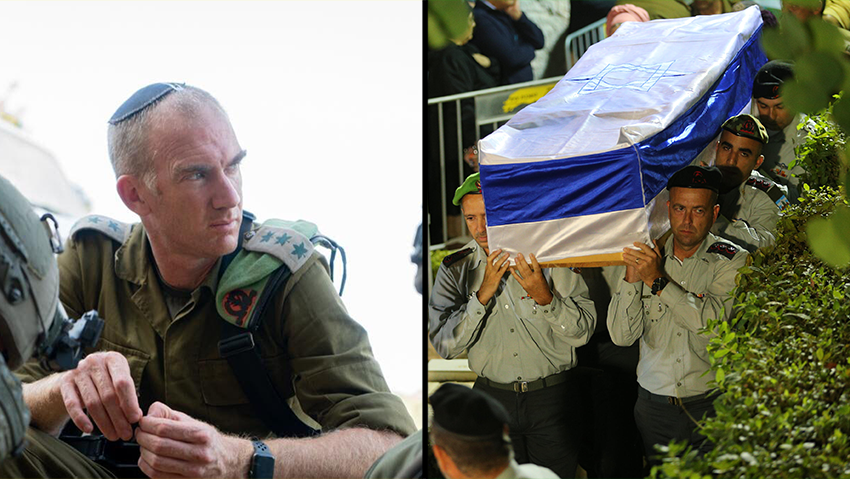
Col. Yonatan Steinberg
(Photo: Alex Kolomoisky)
The final voice of the fallen
One insight Samet-Cohen and her team reached during this war is the power of community. That includes support for bereaved grandparents — something the IDF never formally addressed.
“Unfortunately, the high number of fallen soldiers sharpened these needs. As an institution, we had never looked at grandparents as a group. We never considered that they experience a double pain — the loss of a beloved grandchild they helped raise, and watching their own son or daughter crushed with grief.”
In past years, they encountered the rare case of a widow in need of halitzah, the ritual release from levirate marriage when a husband dies childless. “Today,” she says, “we are dealing with nearly 20 young widows who lost their husbands without having children and require the halitzah ceremony.” Her department now coordinates these cases quickly and sensitively with the Rabbinate.
Technological advances have also reshaped family requests — especially the desire to hear a fallen soldier’s final radio transmission or see the last video taken in the field.
“In the past that wasn’t customary, but today we provide it. For families, hearing the last voice of their son or daughter is incredibly meaningful.”