

U.S. President Donald Trump has ordered his senior envoys to stop engaging with Iran, abandoning his push for a rapid diplomatic breakthrough in favor of a longer-term strategy aimed at squeezing Tehran economically and militarily until it accepts Washington’s terms, CNN reported Tuesday.
White House officials have described the change privately as a shift from trying to “hammer Iran ASAP” to seeking to “strangle them” over time, according to a source familiar with the matter.
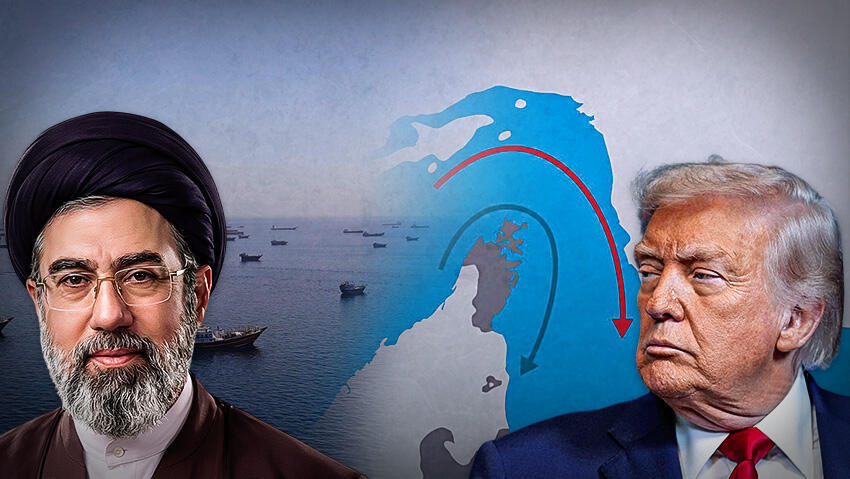
The move marks a sharp change after weeks in which Trump repeatedly insisted negotiations were progressing well and suggested a new agreement could be close, despite little visible progress since the ceasefire reached in June broke down.
On Tuesday, Trump publicly declared that the diplomatic track had stopped altogether.
“There are no talks or conversations going on, or scheduled, with the Islamic Republic of Iran,” he wrote on Truth Social. “The Naval Blockade remains in full force and effect. The Hormuz Strait is open and operating. All water mines have been removed or detonated. Thank you for your attention to this matter!”
In reality, traffic through the Strait of Hormuz remains severely restricted, CNN reported, while vessels using the strategic waterway continue to face attacks from Iranian projectiles.
Trump’s instruction applies to a negotiating team that includes Vice President JD Vance and special envoys Steve Witkoff and Jared Kushner, according to CNN.
Officials said the order came despite what they described as some “positive discussions” with Iran. Trump, however, remained dissatisfied with Tehran’s refusal to accept his demands and now wants to wait until Iranian leaders signal a renewed willingness to reach the agreement he is seeking before Washington reengages.
The change came only a day after Kushner offered a far more optimistic assessment.
During a visit to the Middle East, Kushner told Fox News that contacts between Washington and Tehran were “probably more robust” than ever and said the U.S. team was speaking with various figures inside the Iranian regime.
“They’re engaging in a very strong way and that’s quite positive,” he said. “We are having very positive and active conversations.”
Iranian officials have repeatedly denied that direct talks with the United States are taking place. Trump has previously expressed frustration over those denials, accusing Tehran of publicly playing games while privately seeking an agreement.
Hormuz dispute fuels Trump’s frustration
Behind the scenes, Trump has also grown increasingly angry over negotiations between Iran and Oman on managing traffic through the Strait of Hormuz, people familiar with the matter told CNN.
Both countries have coastlines along the strait, and the arrangement being discussed would divide responsibility for traffic entering and leaving the Persian Gulf.
The plan has not been finalized, but some White House officials fear it could strengthen Iran’s ability to exercise control over the waterway. They also believe Oman has at times been more sympathetic to Tehran’s position than Washington’s, rather than acting as a neutral intermediary.
Trump discusses the talks and blockade last week


Among the proposals opposed by Trump and other senior U.S. officials are mechanisms that could require vessels to pay fees to transit the strait. Some versions under discussion reportedly include charges linked to environmental protection or security.
Trump has insisted that no tolls or other payments should be imposed.
His preferred outcome is a return to the prewar situation, with unrestricted commercial traffic passing through the international waterway and no single country asserting control over it.
The dispute has prompted increasingly sharp rhetoric from Trump toward Oman, a longtime U.S. strategic partner.
“I don’t think they behaved very well, but we’d handle them very easily, just like we do others,” Trump told reporters at the White House on Monday.
Restoring normal shipping through Hormuz has become one of the central challenges of the war, even as Trump continues to say that preventing Iran from obtaining nuclear weapons remains his main objective.
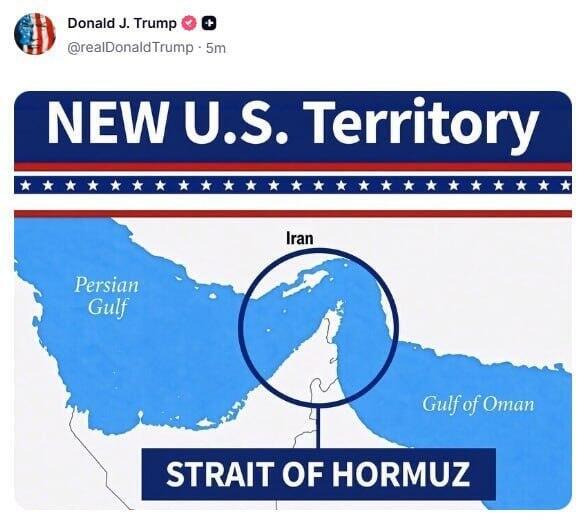
Trump underscored his position Tuesday by posting a map of the strait on Truth Social bearing the words “US Territory.”
Sanctions and blockade take center stage
With diplomacy frozen, Washington is preparing to increase economic pressure.
The United States is expected to impose sweeping new sanctions on Iran, possibly as early as this week, U.S. officials told CNN.
At the same time, the naval blockade of Iranian ports is set to continue. Senior U.S. military officials, including Defense Secretary Pete Hegseth, have said American forces in the region are prepared to enforce the blockade indefinitely.
Trump and his advisers believe sustained economic pain will eventually force the Iranian regime to accept Washington’s conditions for ending the war.
Iranian officials appear to be making the opposite calculation. They believe Trump is under growing political and military pressure to find a way out of the conflict and may ultimately retreat from some of his demands.
That competing assessment has contributed to the current deadlock.
The blockade is already affecting Iran’s position in the Strait of Hormuz. More than 80% of vessels crossing the strait during the past two weeks have reportedly used an Omani shipping route approved by the United Nations, a channel Tehran strongly opposes.
Pressure is also building on Washington
Trump’s shift comes as the war places increasing strain on U.S. military forces.
Historically long deployments of American assets in the region, including the USS Abraham Lincoln aircraft carrier, have drawn scrutiny over their effect on ships and personnel.
Trump has also acknowledged that U.S. stocks of some of its most advanced munitions are lower than he would like after six months of fighting.
Those pressures have fueled growing calls, including from some Republicans, for the administration to find an off-ramp from the war.
So far, Trump has resisted those calls and insisted that he does not feel constrained by time.
Instead, the administration appears to be betting that time will work against Tehran.
After weeks of trying to force a quick diplomatic breakthrough, Trump is now signaling that he is prepared to wait, keep the blockade in place, tighten sanctions and allow Iran’s economic isolation to deepen until its leaders decide the cost of resisting Washington’s demands has become too high.