


The Pentagon is reassessing the scale of the U.S. military presence in the Middle East, including whether to reduce forces stationed in the Gulf after months of Iranian attacks damaged American bases across the region, The Washington Post reported Tuesday.
The report, based on eight officials and people familiar with the discussions, said the destruction created what some Pentagon officials view as a “once-in-a-generation opportunity” to reconsider how the United States deploys forces in the region rather than simply rebuilding damaged installations as they existed before the war.
One Pentagon official said the Joint Chiefs of Staff and U.S. Central Command are examining the issue. Defense Secretary Pete Hegseth has not yet ordered a formal force posture review, the official said, describing the current effort instead as “prudent planning” that could later help the administration decide whether and how to reconstruct bases damaged during the fighting.
One proposal under discussion would reportedly involve moving some forces to Israel, but the idea has generated disagreement in Washington because of concerns about Israeli espionage, according to the report.
The broader debate comes as the Gulf remains under threat. The United Arab Emirates activated missile warnings earlier Tuesday after authorities said they detected a missile threat directed at the country.
Alerts sounded in Dubai for the first time in about six weeks, while residents received warnings on their phones instructing them to remain in safe locations and follow official guidance. About half an hour later, the UAE Interior Ministry announced that “the situation is safe.”
The Emirati Defense Ministry said its forces remained fully prepared to respond to threats and protect the country’s sovereignty, security and stability.
The renewed alert underscored the continuing volatility facing Gulf states even as Washington considers whether its traditional military footprint in the region remains sustainable.
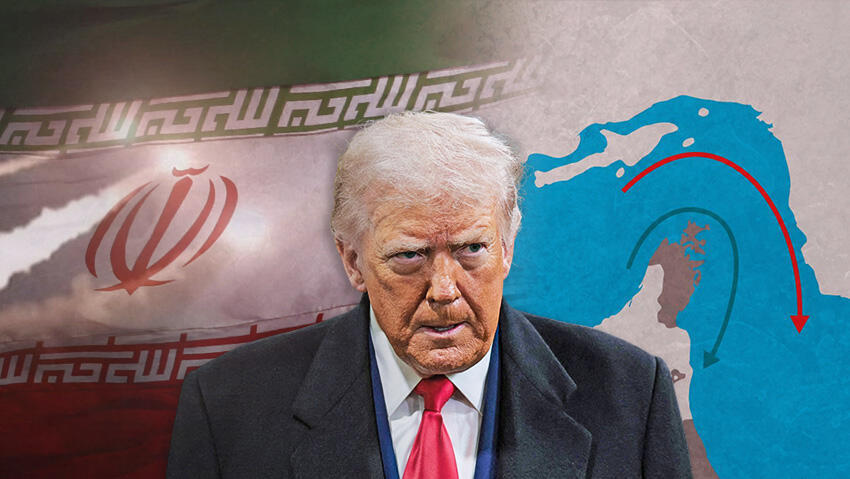
Earlier Tuesday, U.S. President Donald Trump posted what he presented as an annexation map of the Strait of Hormuz on Truth Social after previously threatening to declare the strategic waterway American territory.
Trump later wrote that no talks with Iran were underway or scheduled, adding that the U.S. naval blockade remained fully in force and that the Strait of Hormuz was “open and operating.”
“There are no talks or conversations going on, or scheduled, with the Islamic Republic of Iran. The Naval Blockade remains in full force and effect. The Hormuz Strait is open and operating. All water mines have been removed or detonated,” Trump said.
His statement contradicted remarks by his son-in-law and special envoy Jared Kushner, who had described contacts between the administration and elements of the Iranian regime as the “best ever.”
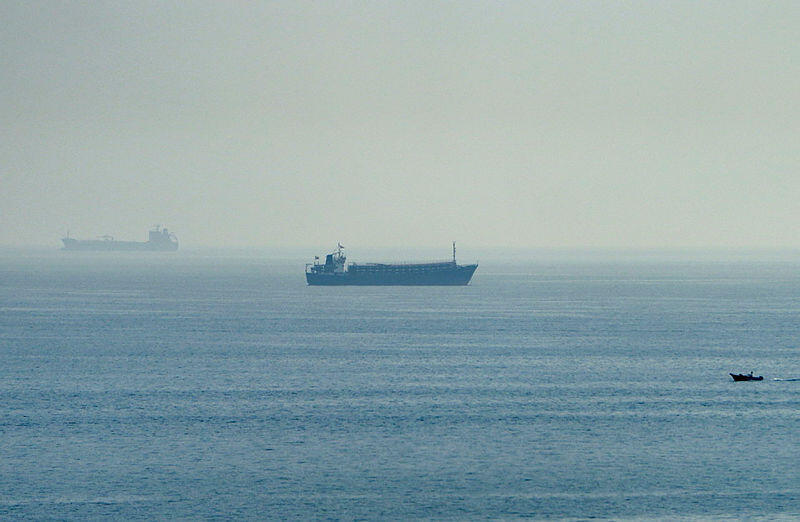
Strait of Hormuz
(Photo: REUTERS/Stringer)
Iranian officials and the Islamic Revolutionary Guard Corps sharply rejected Kushner’s characterization, accusing Trump of promoting a fantasy born of what they described as defeat and desperation in the war.
The Wall Street Journal reported about two weeks ago that the UAE had pressed Trump to launch a broad attack on Iran, while Qatar, Saudi Arabia, Turkey and Pakistan urged him not to do so.
Trump was reported to have seriously considered strikes on Iranian facilities and infrastructure before ultimately deciding against them.
Israeli assessments have warned that Tehran could seek to widen the regional confrontation if it concludes that the continuing naval blockade threatens regime stability. Recent reports have suggested that Iranian officials increasingly view the confrontation as extending well beyond the battlefield.
The blockade and the disruption of Iran’s ability to export oil and generate revenue are adding economic pressure on the regime as Washington continues to use financial leverage alongside military pressure.
A senior Iranian official told Reuters that Tehran had decided to shift its posture from defensive to “fully offensive.”
“All Iranian bodies will be prepared for an escalation of tensions in the Strait of Hormuz and in the region if diplomatic efforts fail,” the official said.
The same official claimed Iran had given the United States several weeks to fully implement the memorandum of understanding reached between the sides.
Against that backdrop, the Pentagon’s reassessment reflects a larger strategic question for Washington: whether the heavy damage inflicted on longstanding U.S. bases should be treated as a reason to restore the old military architecture of the Gulf, or as an opportunity to build a smaller and potentially different American presence in the region.