

Prime Minister Benjamin Netanyahu began talks with his political allies Wednesday following an inconclusive parliamentary election, speaking with far-right ministers Bezalel Smotrich and Itamar Ben-Gvir as rival opposition leaders prepared their own consultations over the formation of the next government.
Netanyahu held his first post-election conversations with Finance Minister Smotrich, who leads the Religious Zionist Party, and National Security Minister Ben-Gvir, chairman of the far-right Otzma Yehudit party. Talks with leaders of the ultra-Orthodox parties are expected to follow.
Gallery

Itamar Ben-Gvir, Benjamin Netanyahu, Bezalel Smotrich
(Photo: Knesset, REUTERS/Nathan Howard, Alex Kolomosiky)
The discussions marked the first steps toward coalition negotiations after Tuesday's election left neither Netanyahu's right-wing and religious bloc nor the rival pro-change alliance with enough seats to command a majority in the 120-member Knesset.
According to the Central Elections Committee, 88.6% of votes had been counted as of the latest update, with no change in the projected distribution of seats among the main political blocs.
Netanyahu's bloc was projected to win 53 seats, compared with 48 for the pro-change bloc and 19 for the predominantly Arab parties. A governing majority requires at least 61 seats.
The figures remain preliminary, with hundreds of thousands of ballots still outstanding.
The Central Elections Committee estimated that between 430,000 and 480,000 so-called double-envelope ballots had yet to be counted. These include votes cast by soldiers and other eligible voters outside their regular polling stations. Counting of those ballots had not yet begun.
"The processing work is in full swing, and not all the outer envelopes have yet been received," the committee said.
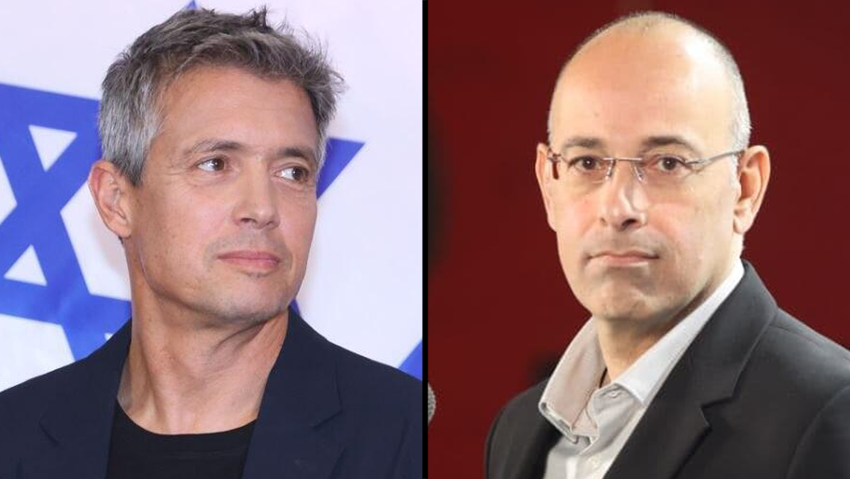
Yoaz Hendel, Yaron Zelekha
(Photo: Moti Kimchi)
An analysis of the latest results also showed that the joint Reservists-Economic Party list, led by former minister Yoaz Hendel and economist Yaron Zelekha, remained 30,910 votes short of the electoral threshold required to enter parliament.
If the list crosses the threshold, it could alter the distribution of seats and further complicate efforts to form a government.
Opposition leaders prepare talks after day of silence
After nearly 24 hours without contact among leaders of the pro-change bloc, Democrats Chairman Yair Golan is expected to hold separate meetings Thursday with Yashar! leader Gadi Eisenkot and Yair Lapid of the Beyachad party.
No meeting has yet been scheduled between Golan and former prime minister Naftali Bennett, who also leads Beyachad.
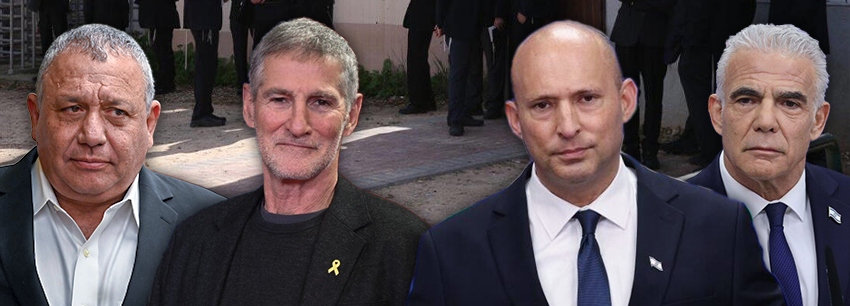
Gadi Eisenkot, Yair Golan, Naftali Bennett, Yair Lapid
(Photo: Moti Kimchi, Alex Kolomoisky, Yair Sagi, Yoav Dudkevitch)
The consultations are expected to focus on the opposition's options following an election that left the bloc short of a parliamentary majority despite its efforts to unseat Netanyahu.
One of the first proposals likely to be discussed is replacing Knesset Speaker Amir Ohana, a member of Netanyahu's Likud party, when the newly elected parliament convenes.
Although no concrete negotiations have begun, opposition figures are considering whether to move against Ohana as early as the Knesset's swearing-in ceremony, expected on Nov. 10.
The initiative would likely require support from predominantly Arab parties, whose combined parliamentary representation is projected to increase to 19 seats.
Opposition leaders view replacing the speaker as a parliamentary maneuver rather than a formal political alliance with Arab parties. Nevertheless, they recognize that relying on Arab lawmakers could carry a political cost.
Likud, for its part, is expected to portray any such effort as evidence that the pro-change bloc is joining forces with the Joint List, an alliance of predominantly Arab political factions.
There are also disagreements within the opposition over potential cooperation with Golan's leftist Democrats party, adding another complication to efforts to coordinate a common strategy.
Ultra-Orthodox party weighs abstention on speaker vote
United Torah Judaism, an ultra-Orthodox party traditionally aligned with Netanyahu, is considering abstaining if a vote to remove Ohana is brought before the new Knesset.
Such a move could affect the parliamentary arithmetic surrounding the opposition's initiative.
Tensions between Ohana and some ultra-Orthodox lawmakers are not new.
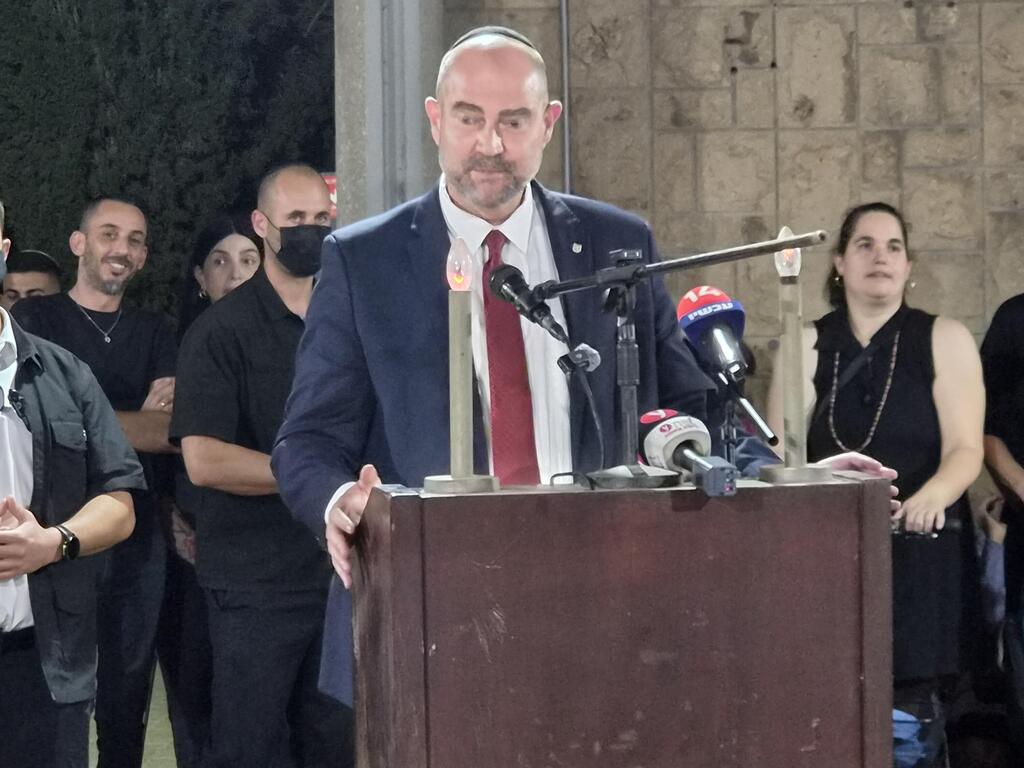
Knesset Speaker Amir Ohana
(Photo: Ido Erez)
During the election campaign, United Torah Judaism lawmaker Yitzhak Pindrus criticized Ohana in an interview with the ultra-Orthodox newspaper Mishpacha.
Ohana's sexual orientation has drawn objections from some ultra-Orthodox politicians, who oppose homosexuality on religious grounds.
"The government failed because Amir Ohana was Knesset speaker. It was a desecration of God's name," Pindrus said.
Despite the possibility of abstaining on the speaker vote, United Torah Judaism has not announced any intention to leave Netanyahu's political bloc.
Party chairman Yaakov Asher said there had been no contacts between United Torah Judaism and the pro-change parties.
"We wish to clarify that there have been no approaches from party leaders, apart from a message conveyed by people close to Prime Minister Netanyahu indicating that he intends to keep the coalition parties together," Asher's office said.
Shas rules out abandoning Netanyahu
Another key ultra-Orthodox party, Shas, signaled that it would remain loyal to Netanyahu.
A Shas official told ynet that party chairman Aryeh Deri had no intention of abandoning the alliance he helped build or opening negotiations with Eisenkot.
"Anyone who thinks that Deri, the day after the election, will leave the bloc he established and start courting Eisenkot is very much mistaken," the official said.
The statement appeared intended to dispel speculation that Netanyahu's traditional religious allies might consider joining an alternative coalition.
With Netanyahu's bloc projected to hold 53 seats, the prime minister would need support from lawmakers outside his existing alliance to reach the 61-seat threshold.
Bennett urges supporters to remain hopeful
Bennett, whose Beyachad party was projected to win 12 seats before the counting of double-envelope ballots, acknowledged the disappointing results for the pro-change bloc but sought to encourage his supporters.
"My brothers and sisters, keep your heads up," Bennett wrote on X. "We have only one home, and we are here to stay. With God's help, things will be good here!"
He accompanied the post with a video thanking members of his party's election campaign staff.
The former prime minister has not publicly outlined a new coalition strategy, and no meeting with Golan has been arranged.