


As the hours pass, it appears that the only party still below the electoral threshold with a possible path into the Knesset is the joint Reservists-Economic Party list led by Yoaz Hendel and Yaron Zelekha.
With 85.6% of votes counted, nearly 128,000 ballots have been cast for the list, which runs under the Hebrew ballot letters "די" (Dalet-Yod). That means the party needs approximately 57,500 additional votes to cross the electoral threshold, estimated at around 185,000 votes.
Gallery
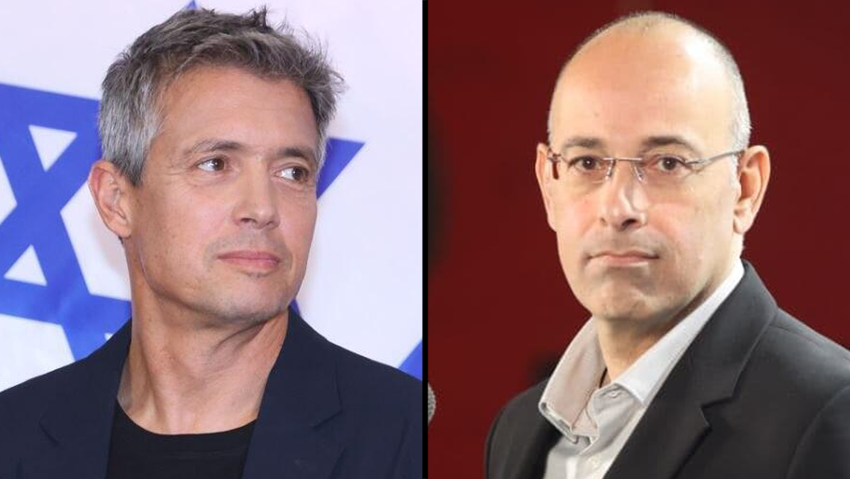
Yoaz Hendel and Yaron Zelekha head the combined Reservists-Economic Party
(Photos: Motti Kimchi)
The chances of the two candidates crossing the threshold are slim, but difficult to assess precisely. While Hendel and Zelekha have so far received only about 2.6% of the general vote, their support could be higher among the double-envelope ballots, which include votes cast by soldiers and other eligible voters outside their regular polling stations.
One reason is that Zionist parties traditionally receive stronger support in these ballots. Another is Hendel's direct appeal to military reservists.
In a ynet and Yedioth Ahronoth poll of reservists published on August 21, Hendel, who was then allied with Hili Tropper, received support equivalent to nine Knesset seats, representing more than 5% of respondents. Although that survey offers little indication of his current standing, it may suggest that the support Hendel sought to cultivate among reservists does exist.
Another ynet and Yedioth Ahronoth survey, published on October 9 among first-time voters ages 18 to 22, gave Hendel and Zelekha six seats, equivalent to 3.68% of the vote. Because this demographic is also relevant to the double-envelope count, the findings provide another indication that the list could receive a higher share of the remaining votes.

Yoaz Hendel at his elections headquarters
(Photo: Dana Kopel)
If Hendel and Zelekha secure approximately 12% of the votes still outstanding, they are expected to cross the electoral threshold. That remains a significant hurdle given their relatively weak performance among the general electorate, but the possibility cannot be ruled out entirely. All television exit polls had projected that their joint list would fail to enter the Knesset.
If the Reservists-Economic Party manages to overcome the odds and cross the threshold, the parties currently positioned to lose seats, based on the count of 93% of regular polling stations and before the double-envelope ballots are counted, are Shas, Beyachad, the Joint List and Yashar!.
Politically, that would reduce Eisenkot's bloc to 46 seats and leave Netanyahu's bloc with 52. The Arab parties would hold 18 seats, although that figure could also decline as the double-envelope ballots are counted.
Hendel and Zelekha have deliberately avoided aligning themselves with either political bloc. The Reservists Party chairman told ynet Tuesday that he wanted a Zionist government, one that would depend on neither ultra-Orthodox nor Arab parties. He also said he did not want Netanyahu to remain prime minister.
During the election campaign, Hendel said he would support whichever bloc won the largest number of Zionist votes. Because he does not consider the ultra-Orthodox parties Zionist, that position could lead him to recommend Eisenkot to form the next government. In any event, without support from the Arab parties, such a recommendation would have limited practical significance.
Conversely, if Hendel and Zelekha join Netanyahu, he would need just five additional seats to reach a 61-member Knesset majority. That would likely trigger intense efforts to persuade lawmakers from the change bloc to defect. The change bloc, however, could still rely on the Arab parties to defeat the government.
Hendel said Tuesday evening that he was waiting for the double-envelope ballots to be counted. "By the end of the week, we'll know the results from the IDF polling stations," he said. "We saw incredible momentum. Let's see the actual results. In any case, we fought very, very hard, and we are fighters who work hard. We will fulfill our ambitions for the State of Israel and the Jewish people. Nobody here is giving up."