


Israeli officials are closely and anxiously following advanced talks between U.S. President Donald Trump’s administration and Saudi Arabia over a civilian nuclear cooperation agreement that, according to reports, is no longer tied to normalization between Riyadh and Jerusalem.
The change marks a sharp departure from the policy pursued by the Biden administration, which treated nuclear cooperation with Saudi Arabia as part of a broader package that would include Saudi recognition of Israel. In Jerusalem, the decision is being viewed as a strategic setback and a sign that the White House is giving less weight to Israeli concerns and interests.
Gallery
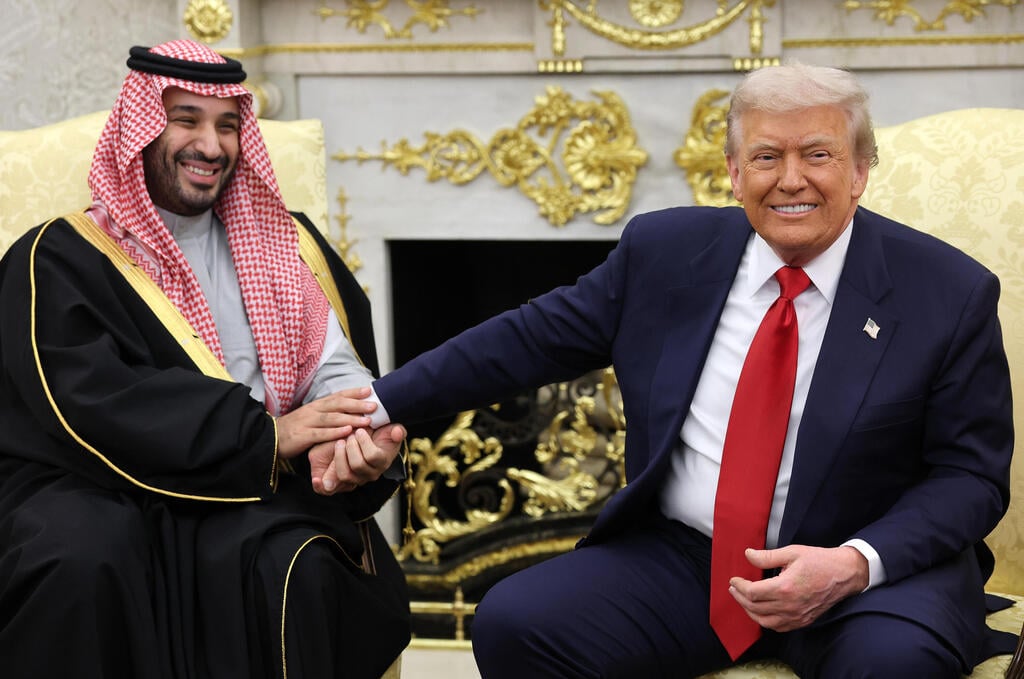
US President Donald Trump and Saudi Crown Prince Mohammed bin Salman
(Photo: Win McNamee/Getty Images)
Israel has not publicly criticized the agreement. However, senior Israeli officials familiar with the matter have privately acknowledged that the development is negative for Jerusalem.
They said removing the normalization requirement reduces Israel’s leverage over Saudi Arabia and reflects a further erosion of its influence with the Trump administration.
The officials described the move as part of a broader series of American policies regarded in Jerusalem as troubling. These include efforts to advance a possible sale of F-35 fighter jets to Turkey and Washington’s apparent willingness, in negotiations with Iran, to retreat from issues Israel has treated as red lines, including Tehran’s ballistic missile program and its continued support for regional proxy organizations.
“An agreement with Israel is not currently on the table,” a senior Israeli official familiar with the issue told ynet. “Yes, this is bad because it reduces our leverage, but it is still not the end of the story.”
The official said normalization with Israel could offer Saudi Arabia additional benefits, including assistance in protecting nuclear infrastructure.
“If the Americans are the ones building the infrastructure, I assume and hope that control over the reactors, particularly in light of the lessons from Iran, will be effective,” the official said.
For now, the official added, the effect on Israel is largely symbolic and political.
“Without regional stability and quiet in our arena, including some kind of move involving the Palestinians, there is no chance of normalization,” the official said. “That is why Trump is moving forward. He needs Saudi Arabia for the current regional struggle and wants to show other countries that drawing closer to the United States brings rewards.”
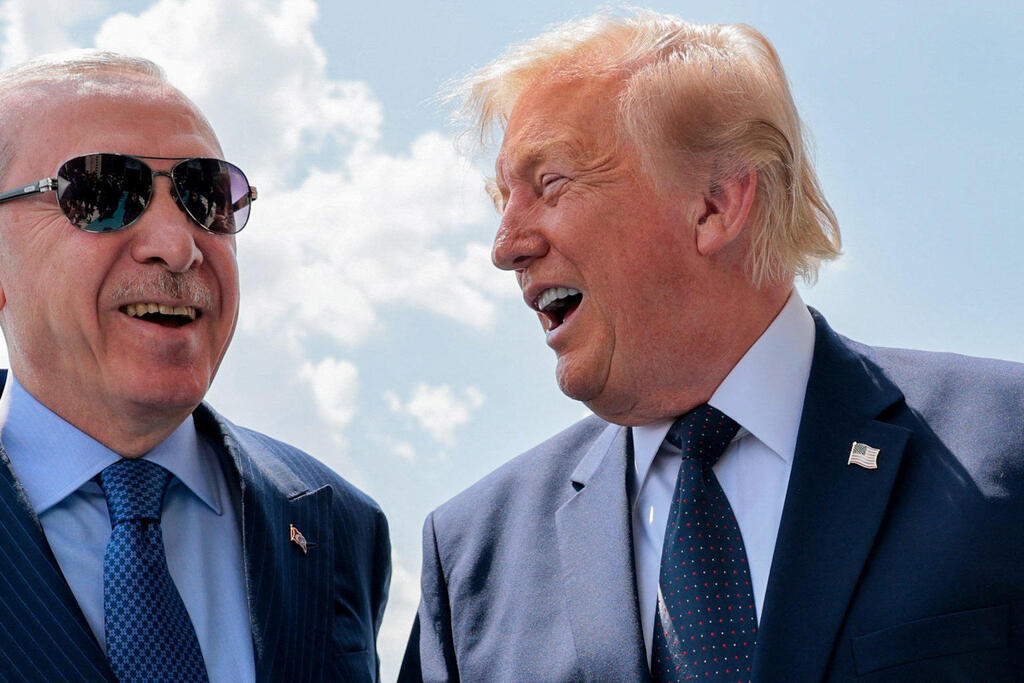
Turkish President Recep Tayyip Erdoğan welcomes US President Donald Trump in Ankara
(Photo: REUTERS/Jonathan Ernst)
Brig. Gen. (res.) Yaakov Nagel, a former acting head of Israel’s National Security Council, expressed firm opposition to any agreement permitting uranium enrichment inside Saudi Arabia.
“The bottom line is that any uranium enrichment of any kind on Saudi soil is a mistake, regardless of who carries it out or how it is supervised,” Nagel told ynet.
He said he held the same position before the Hamas-led October 7 attack, when Israel reportedly did not oppose Saudi enrichment as part of a possible normalization package.
“My position has not changed,” he said.
Nagel said Saudi Arabia could legitimately construct nuclear reactors for electricity generation, but should not be granted an independent enrichment capability.
Instead, he proposed that nuclear fuel rods be supplied by a foreign country and removed after use as a condition for receiving new ones.
“This is also how it is done at Iran’s Bushehr reactor, where the Russians are responsible for supplying the nuclear fuel and removing it after use,” he said.
Jeremy Issacharoff, a former senior Israeli diplomat who headed the Foreign Ministry’s strategic affairs division and specializes in nuclear proliferation, described the reported agreement as “extremely dangerous.”
He said the development highlighted Israel’s declining ability to influence policy in Washington on issues critical to its national security.
“According to the reports, this is a worrying and unprecedented development concerning the prevention of nuclear proliferation in the region,” Issacharoff told ynet.
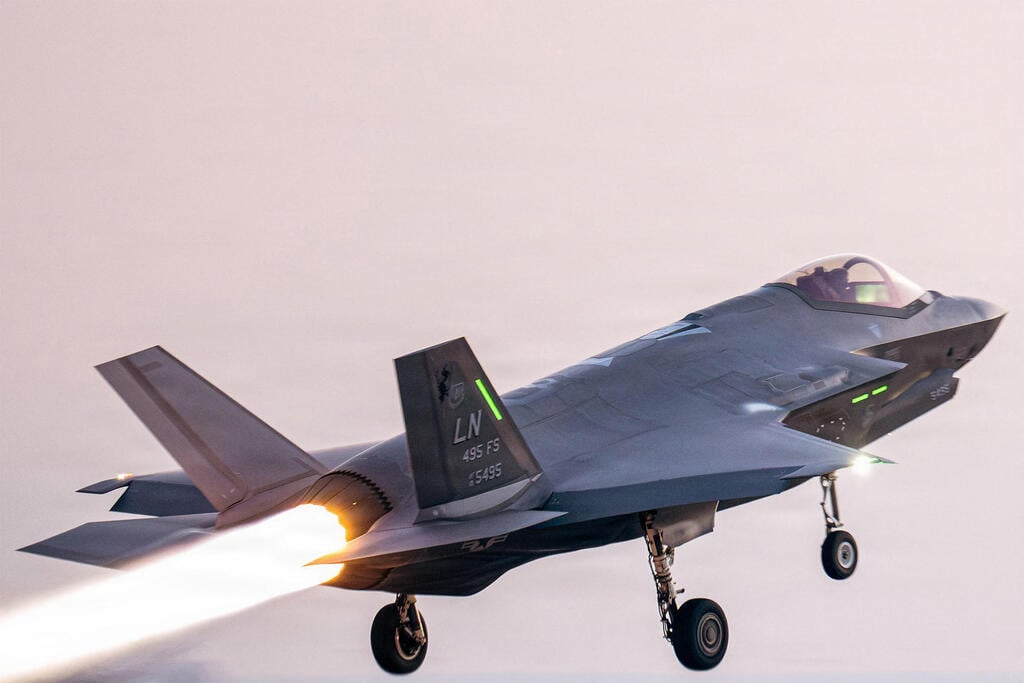
F-35 fighter jet
(Photo: AFP PHOTO / US AIR FORCE PHOTO and US CENTRAL COMMAND / HANDOUT)
“One can only thank Netanyahu for what appears to be Israel’s loss of influence in Washington on an issue critical to our national security,” he added.
Israeli concern centers particularly on the possibility that Saudi Arabia could be permitted to enrich uranium domestically. While enrichment can serve civilian energy purposes, the same technology can bring a country significantly closer to the ability to produce weapons-grade material.
Israeli experts fear that granting Riyadh such a capability could encourage other regional powers to demand similar rights, accelerating a nuclear competition across the Middle East.
The absence of a normalization requirement also removes what had been one of Israel’s most significant potential diplomatic gains from the agreement. Under the previous framework, Saudi access to advanced U.S. nuclear technology and security guarantees was expected to be linked to formal relations with Israel.
Trump’s decision to separate the issues suggests that Washington currently places greater value on strengthening ties with Riyadh and securing Saudi cooperation in the region than on preserving normalization as a condition.
For Jerusalem, the immediate impact may be largely symbolic. But officials and experts warn that the broader message is more consequential: Israel’s ability to shape major U.S. decisions involving regional security, advanced weapons and nuclear proliferation appears to be weakening.