

Bar Bashan and Ayoub Kayuf grew up practically as neighbors. One was from Yokneam Moshava, the other from Isfiya. Yet until they enlisted in the IDF, they had never met. Their shared service as conscript soldiers in Shaldag, the Israeli Air Force's elite special operations unit, turned them into a pair who would travel almost the entire path together.
From the moment they enlisted, they were rarely apart: the training track, command courses, company commander positions, battalion commands and ultimately command of Shaldag itself. Both enlisted in November 2003. They arrived at Shaldag together from the IDF induction center, slept in beds side by side in a tent during basic training and graduated from the IDF Officers School together. During the Second Lebanon War, they rejoined their original team, but their paths later diverged: Ayoub went to Golani and Bar to Givati. At a later stage, they returned to Shaldag as commanders of separate detachments at the same time.
Gallery
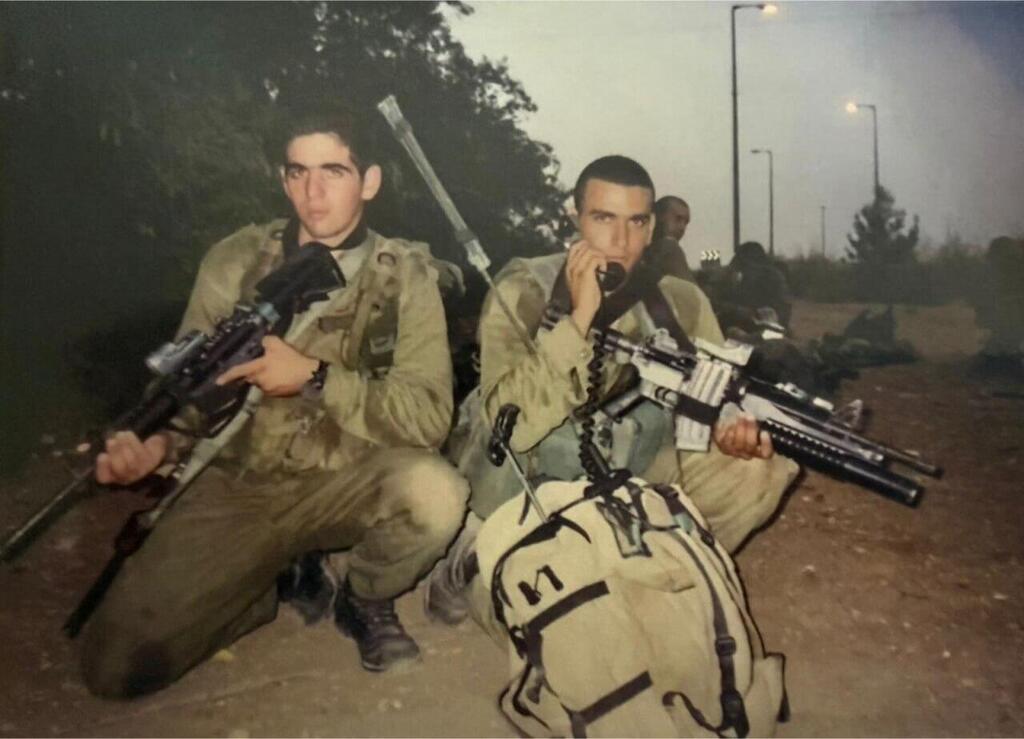
Bar Bashan and Ayoub Kayuf, who began their military service together in Shaldag
(Photo: IDF Spokesperson's Unit)
Their careers also unfolded, to some extent, like an ongoing competition. In the previous round of appointments, they competed for the same position: commander of Shaldag. Ayoub, the first Druze officer in the unit, won the post and became its commander. Most of his operational activity there remains classified. Bashan later succeeded him as Shaldag commander, after also serving as commander of Givati's Shaked Battalion.
Another chapter in their shared journey closed this week. Col. Kayuf has been commander of the Golani Brigade for the past several months. The IDF decided this week that Col. Bashan will be the next commander of the Givati Brigade, taking up the position in about six months. That will put two veterans of the same Shaldag team in command of two of the IDF's five infantry brigades.
A heavy toll in lives
To understand how two officers who came up through the same unit, one that is not part of the infantry brigades, reached this point, it is necessary to look at the extraordinary path Shaldag has taken during this war.
The Air Force's elite combat troops experienced one of the most severe upheavals an elite unit can endure on Oct. 7. They were called up from their homes that Saturday morning and sent directly into the chaos of the Gaza border communities. The unit's rapid-response team landed in Be'eri at 8:47 a.m., entered the kibbutz minutes later and fought terrorists there for hours. Shaldag troops later operated in Re'im, Alumim and other Gaza border communities. They killed terrorists and rescued residents under fire.
Shaldag has paid a heavy price in the war, losing 14 soldiers and commanders. At the same time, the unit's actions in Be'eri became part of an IDF investigation that prompted harsh criticism. For many of its troops, it was an especially difficult period: On the one hand, they had fought under extremely difficult conditions in the opening hours of the war. On the other, they later had to contend with public and institutional criticism over the way the battle was conducted — criticism that was unwarranted.
But one of Shaldag's defining characteristics is its ability to shift rapidly from defense to initiative. Within a short time, the unit's troops found themselves at the forefront of the campaign in Gaza. During the ground offensive, they took part in raids and special operations, including the complex operation at Shifa Hospital. During the operation, troops located a shaft leading to an underground tunnel beneath the hospital complex, with the unit employing an impressive combination of intelligence, technological capabilities and ground forces.
From there, its operations continued in the West Bank, southern Lebanon and other arenas. Much of its activity still cannot be made public. Shaldag's outgoing commander said that since Oct. 7, the unit's troops have carried out many hundreds of operations in Gaza, Lebanon, Syria and other arenas.
Body-camera footage from Shaldag troops in Syria
(Credit: IDF Spokesperson's Unit)


The high point among the unit's operations that have been made public came far from Gaza, on the night of Sept. 8-9, 2024, two years ago this week. Operation Many Ways, deep inside Syria, became one of the most complex and daring operations carried out by the IDF in recent years.
More than 100 Shaldag troops operated in the Masyaf area, deep inside Syrian territory, against an underground facility where precision missiles were being manufactured for Iran and its regional allies. The force was flown in by helicopter and operated deep in hostile territory, combining intelligence, the Air Force, a range of aircraft and other systems. By the end of the operation, the facility had been destroyed.
It was an operation that demonstrated the advantage of a unit like Shaldag: the ability to take intelligence gathered over years, turn it into a complex operational plan, insert a ground force deep into hostile territory and complete a mission that could not be accomplished through an airstrike alone.
The spearhead
This activity is more than a string of successful operations. It is also part of the reason Shaldag has emerged during this war as the spearhead of the IDF's elite units. Its combination of operational capability, intelligence, technology and the ability to deploy forces deep in hostile territory has made it a key asset across multiple arenas. The unit has distinguished itself not only in combat, but also in the sensitive support it provides to bereaved families and in the high proportion of recruits it draws from Israel's geographic and socioeconomic periphery.
Bashan and Kayuf's commanders in Shaldag identified their abilities early on and steered them toward significant command positions, both inside and outside the unit. This reflects an approach Shaldag has followed for years: not keeping promising officers solely in the world of special operations, but sending them into the maneuvering forces, infantry brigades and key command positions as well.
There is a professional rationale behind that approach. An officer coming from Shaldag brings experience working under pressure, making decisions under conditions of uncertainty and integrating intelligence, firepower and ground forces. But to become a senior IDF commander, that officer must also become familiar with the "big army": battalions, brigades, thousands of troops, logistics systems, reserve forces, firepower and the long-term management of large formations.
That is what makes the paths taken by Bashan and Kayuf particularly interesting. They did not spend their entire careers inside the unit. Both left Shaldag for infantry brigades, held command positions in Givati and Golani, returned to command in Shaldag and are now returning once again to the maneuvering forces, this time at brigade level. Both are also regarded as officers who could one day reach the IDF General Staff, perhaps even competing against each other for the position of IDF chief of staff.
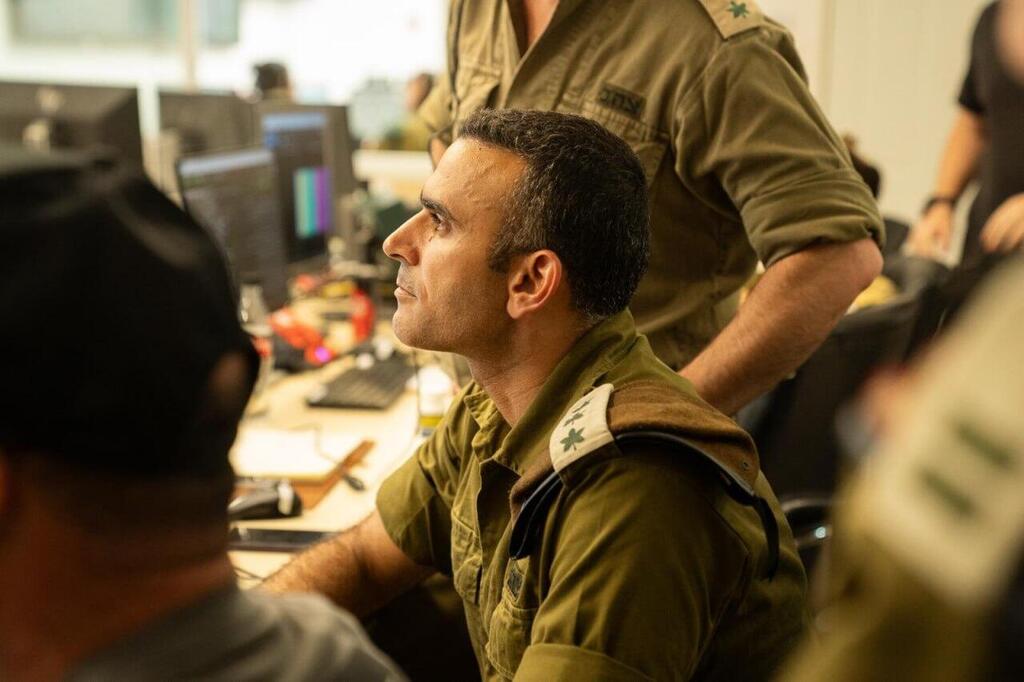
Col. Ayoub Kayuf
(Photo: IDF Spokesperson's Unit)
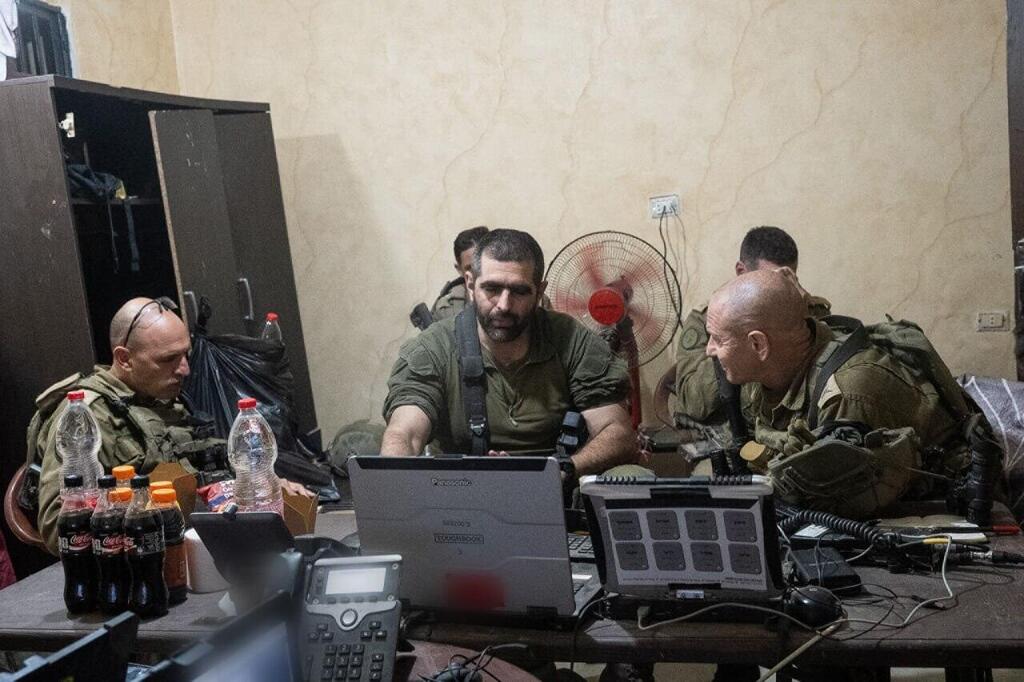
Col. Bar Bashan
(Photo: IDF Spokesperson's Unit)
Over the years, Shaldag has produced numerous officers who have gone on to hold key positions in the IDF. Unit veterans now serve in command positions in special forces units as well as infantry and commando brigades. A new stage is now beginning, with Shaldag veterans taking command of major infantry brigades as well.
A special operations unit is not measured only by the number of missions it carries out or the quality of its troops. In the long term, it is also measured by its ability to develop commanders who can take the knowledge and experience they gained there and bring it to other parts of the IDF.
That is also the test now facing Bashan and Kayuf. The experience they gained in Shaldag is an advantage, but it is no substitute for the experience required to command an infantry brigade in wartime. That is where a commander's ability to deploy a large force over an extended period and bear responsibility for thousands of troops is put to the test.
As the Jewish New Year approaches, the two men who started out together on the same team, sleeping in beds side by side, have reached a new point in their careers. After years in which their paths crossed again and again, they will now stand on two sides of the same mission — the biggest of their lives.