

When will Ali Khamenei’s successor be chosen? Iranian media outlets affiliated with the regime aligned Sunday with claims that there is at least a general consensus on the identity of the next supreme leader — the ayatollah’s son, Mojtaba Khamenei. However, no official announcement has yet been made.
“There is agreement among the majority regarding Khamenei’s successor, but several obstacles still need to be resolved,” Mohammad Mehdi Mirbagheri, a member of Iran’s Assembly of Experts, which is responsible for selecting the next supreme leader, was quoted as saying in one report.
Gallery
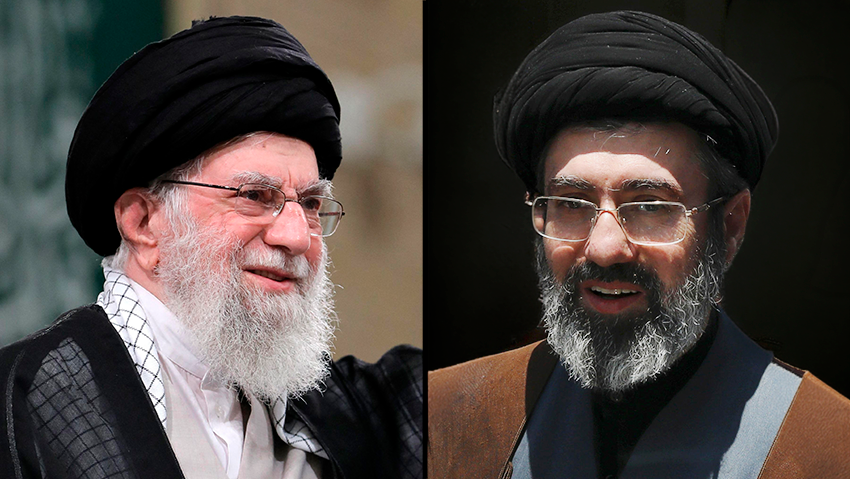
Ali Khamenei and son Mojtaba Khamenei
(Photo: AP Photo/Vahid Salemi, AFP PHOTO/ HO/KHAMENEI.IR)
Another member of the body, Hossein Mozaffari, said Saturday that the meeting to select Iran’s next supreme leader would take place within 24 hours. His comments contradicted assessments in Israel reported by Ynet and claims by the opposition outlet Iran International that the assembly had already chosen Mojtaba Khamenei to succeed his father, who was killed in the opening strike of Operation Roaring Lion.
Meanwhile, as websites affiliated with the Islamic Republic attempted to project control despite reports of cracks within the leadership, the Israel Defense Forces issued a direct warning to the regime in Tehran. In a message posted on its Persian and Arabic social media accounts, the military said that after the killing of Khamenei, Iran’s “terror regime” is attempting to reorganize and choose a new supreme leader.
The post said Iran’s Assembly of Experts, which has not convened in decades, is expected to gather soon in the city of Qom. It warned that Israel’s “long arm” would continue to pursue the successor and anyone involved in appointing him. “We warn all those planning to participate in the session to select the successor: we will not hesitate to strike you as well,” the statement said.
In another report from Iran, Mohsen Heidari Al-Kathir, a representative of Khuzestan province in the Assembly of Experts, said that due to the current conditions it was not possible to hold an official face-to-face meeting to choose the leader. Instead, he said, what he described as “the best possible option” had been approved by most members.
He added that Khamenei had not indicated a preferred successor and had left the decision to the representatives of the Assembly of Experts.
According to Heidari Al-Kathir, the candidate was selected in line with advice attributed to the late supreme leader that Iran’s leader should be hated by the country’s enemies rather than praised by them. “Even the ‘Great Satan’ mentioned his name,” he said, referring to the United States.
His comments came after U.S. President Donald Trump publicly rejected the idea of Khamenei’s son becoming supreme leader. In an interview Thursday, Trump said Khamenei’s son was unacceptable to him and that the United States preferred someone who could bring “harmony and peace” to Iran, adding that he believed he should be involved in the process.
Footage: IDF destroys Ali Khamenei’s underground bunker
(Video: IDF Spokesperson’s Unit)


The opposition network Iran International also reported Sunday that, according to sources familiar with internal discussions, the assembly has already chosen Mojtaba Khamenei, although disagreements remain over how and when to publicly announce the decision.
Lebanon’s Al-Mayadeen network, which is aligned with the Iranian axis, cited remarks attributed to Ahmad Alamolhoda, the supreme leader’s representative in Khorasan province. According to the report, Alamolhoda said the selection had already been made and that claims the Assembly of Experts had not yet reached a decision were false. Under the constitution, he said, no one — not even members of the assembly — has the right to reverse the decision once it has been made.
The reports come amid growing pressure inside Iran for a rapid appointment of a new leader, as uncertainty continues over whether a final decision has been reached. Mojtaba Khamenei was reportedly wounded in the opening strike of Operation Roaring Lion last Saturday but survived the assassination attempt.
How Iran chooses a supreme leader
Iran’s theocratic system was established during the 1979 revolution that toppled the shah. The revolution’s leader, Ayatollah Ruhollah Khomeini, introduced a governing principle under which a senior Shiite cleric rules the state until the return of the 12th Imam, whose absence dates back to the 9th century.
Under Iran’s constitution, the supreme leader is the highest authority in the country and guides both the president and parliament. The leader must be a senior cleric and holds the final say on all major state matters. Whoever is chosen now will assume power during a profound national crisis, making it difficult to consolidate authority.
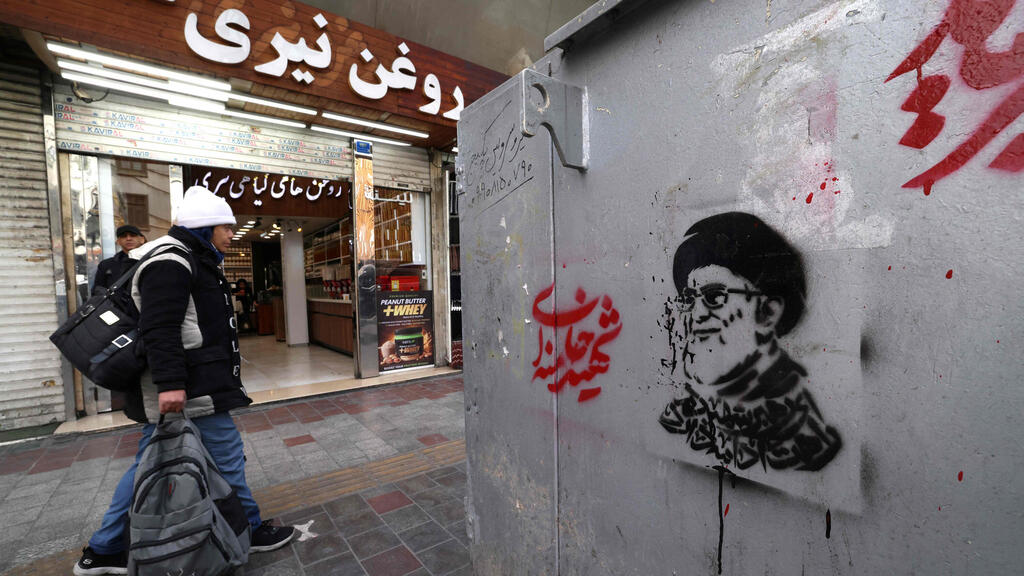
The Iranian public has no influence. Tehran
(Photo: ATTA KENARE / AFP)
According to the constitution, Iran must appoint a new supreme leader within three months. In the interim, President Masoud Pezeshkian, Guardian Council member Ayatollah Alireza Arafi and Chief Justice Gholam-Hossein Mohseni-Ejei are jointly governing as a transitional council.
The formal selection of the new leader rests with the Assembly of Experts, a body of about 90 senior clerics elected every eight years. Because of the ongoing strikes, their discussions are reportedly taking place online. Khamenei never publicly designated a preferred successor, but the final decision ultimately rests with the most senior figures in Iran’s ruling establishment.
The Iranian public has little influence over the process. Citizens vote for the president and parliament every four years, but the government operates within limits set by the supreme leader. Although the Assembly of Experts is elected, all candidates are vetted by the Guardian Council, meaning only figures loyal to the regime are allowed to run.
Iranian president responds to criticism
Reports of divisions within Iran’s leadership have also emerged amid domestic criticism of President Masoud Pezeshkian, who was accused of apologizing to Gulf states for Iranian attacks — remarks he later walked back.
Iranian media on Sunday quoted his son, Yousef Pezeshkian, saying that criticism of the president’s recorded address — even if justified — had come at the wrong time and that media coverage of the criticism was not beneficial to the country.
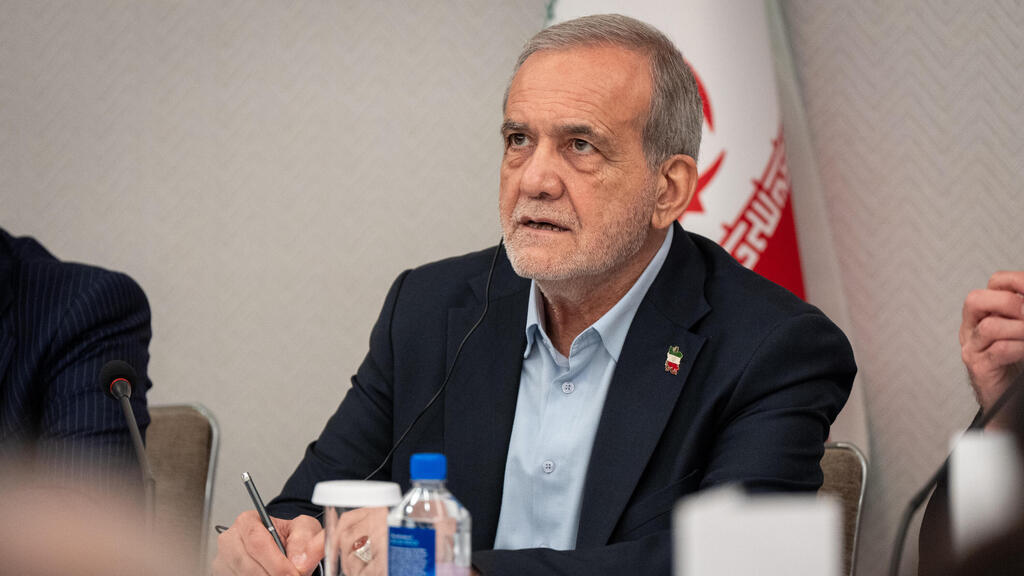
President Masoud Pezeshkian
(Photo: AP Photo/Angelina Katsanis)
A video released Sunday also showed Pezeshkian addressing the issue directly, saying that Iran’s enemies had misinterpreted his remarks.
“The enemy wants us and our neighboring countries to be at war,” he said. “We will not allow even a centimeter of our territory to be taken.”
He added that Iran considers neighboring states to be brothers but would respond if any country attacked its territory. “Iran has not surrendered to pressure and will not do so,” he said, urging the public to remain patient.