

The fierce confrontation that erupted Monday between Prime Minister Benjamin Netanyahu and former Shin Bet chief Ronen Bar is the latest chapter in a dispute that has continued for nearly three years: What did each man know before the Oct. 7 Hamas attack, what did the security service recommend and what decisions did the prime minister make?
Netanyahu accused Bar of “failures and crimes” and said the former Shin Bet director knew of a “real danger” on the night before the attack but failed to alert him. Bar responded unusually forcefully, saying he intends to sue Netanyahu for defamation and accusing the prime minister of selectively and manipulatively releasing documents and meeting transcripts. He called for the records to be published in full.
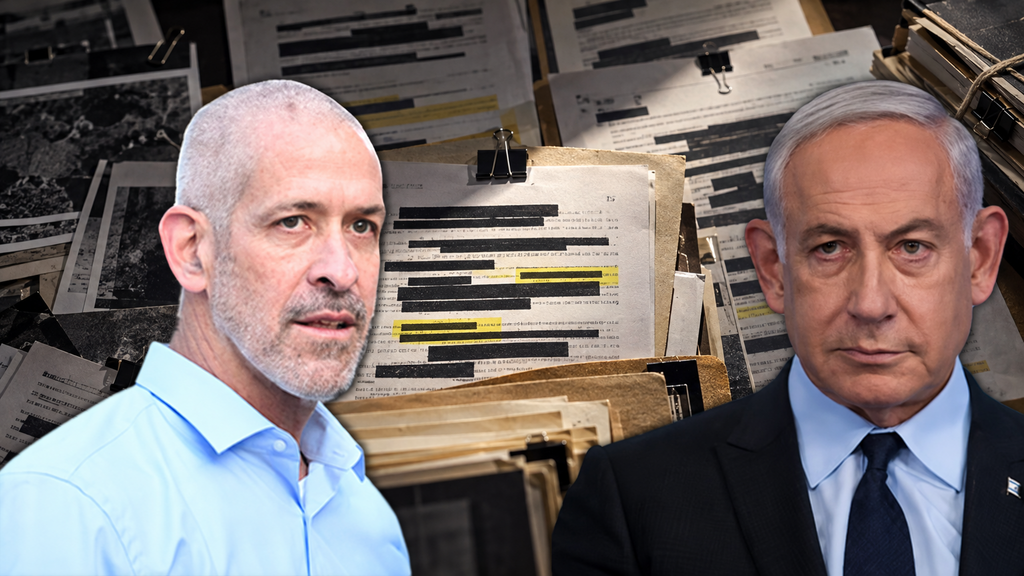
At the center of the dispute are 55 pages Netanyahu released in February as part of his answers to a State Comptroller investigation into the events surrounding Oct. 7. The document contains numerous quotations from security discussions, but in most cases the full transcripts were not released. Instead, Netanyahu authorized selected excerpts for publication, leaving the context of some statements contested.
One of the clearest examples comes from a security assessment Netanyahu convened on Oct. 1, 2023, just six days before the massacre. Netanyahu adviser Topaz Luk pointed Monday to a quotation attributed to Bar from that meeting: “We can be very, very generous, even enticing, on humanitarian issues ... I don’t think that, given the situation as we know it, we can initiate a round of fighting.”
The quotation appears in the transcript excerpts Netanyahu authorized for release. Netanyahu’s document also argues that during that discussion “no official proposed eliminating Hamas’ leadership in Gaza” and says it was Netanyahu who instructed the security establishment to prepare for such targeted killings. The released material also includes assessments that Hamas leader Yahya Sinwar wanted a return to calm, while then-Defense Minister Yoav Gallant said Israel had a “deep interest in achieving calm in the Gaza Strip.”
What was left out of the excerpts
That is where the dispute over context begins.
According to an investigation by ynet and its sister publication Yedioth Ahronoth reporters Ronen Bergman and Yuval Rubovitch, Bar also said during the same meeting: “Sinwar feels strong. We need to confront him. An operational plan for the Gaza Strip must be prepared.” Then-IDF chief of staff Herzi Halevi, according to the investigation, called for preparations for a “broad campaign in the Gaza Strip.”
Bergman reported another detail Monday concerning the quotation highlighted by Luk. He said Bar’s remark that Israel could not at that stage initiate a new round of fighting was only part of his comments. Later in the discussion, in material not included in the excerpts released by Netanyahu, Bar reportedly sought to advance an assassination plan known in the investigation as “Double Rights.”
The plan was intended to kill Sinwar and Hamas military chief Mohammed Deif simultaneously, followed by strikes on commanders beneath them. Bar reportedly said the operational infrastructure for such a move would first have to be rebuilt.
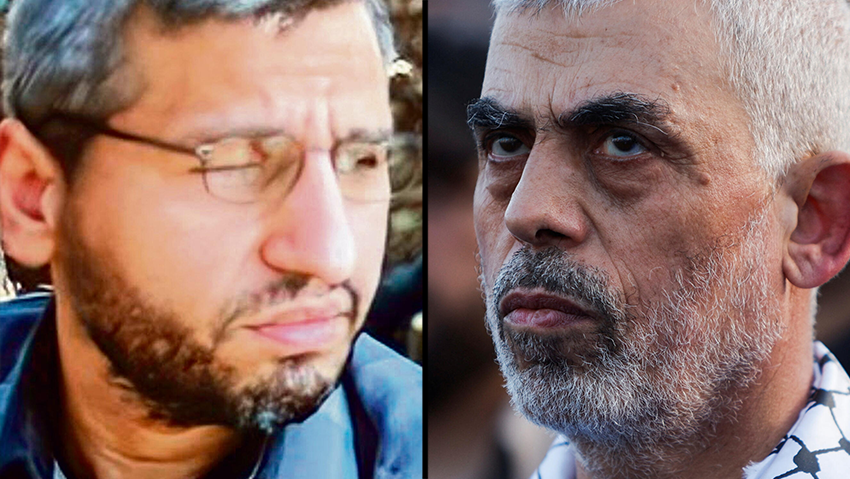
Yahya Sinwar and Mohammed Deif. Ronen Bar sought to advance a plan to assassinate both, but Netanyahu chose not to disclose it
(Photo: Mohammed Salem, Reuters)
A summary of the meeting issued by the Prime Minister’s Office at the time adds another piece to the picture. Alongside instructions to expand the use of humanitarian benefits and advance a civilian arrangement with Hamas, the summary called for “advancing operational readiness for the targeted killings that were recommended.”
Regarding Hamas leaders, the summary emphasized preparations for emergencies; regarding Hamas headquarters directing terrorism in the West Bank, it referred to action during routine periods as well. The wording shows that proposed targeted killings had been discussed within the security establishment, though by itself it does not establish who proposed each action or when.
In other words, the available material allows both points to coexist: Bar did not recommend immediately launching an all-out war in Gaza and did discuss humanitarian measures, while he also regarded Sinwar as increasingly confident, called for confronting him and, according to the investigation, sought preparations for offensive action.
The full transcript of the Oct. 1 meeting has not been released, meaning the public cannot independently examine the complete sequence and context of the discussion.
Bar’s warning to Netanyahu was serious, but not a specific Oct. 7 alert
Bar’s account does not rest only on the Oct. 1 discussion.
In an affidavit submitted to the High Court of Justice in April 2025, Bar said the Shin Bet repeatedly warned political leaders during 2023 that Israel’s internal divisions were creating what its enemies viewed as a “window of opportunity” and could lead the country into a “perfect storm.” He said that as early as April he had recommended a “focused, forceful move” to halt the erosion of Israeli deterrence.
The affidavit also backed up earlier reporting by ynet and Yedioth Ahronoth columnist Nadav Eyal that, in July 2023, before the Knesset vote abolishing the judicial “reasonableness” standard, Bar told Netanyahu he was delivering a “warning of war.”
According to that report, Bar made clear that he had neither a specific date nor time for such a conflict, but warned that Israel’s enemies perceived the country as internally weakened. With Netanyahu’s approval, Bar later delivered a similar message to opposition leader Yair Lapid.
That warning, however, was not intelligence indicating that Hamas was preparing to attack Israel on Oct. 7, nor was it a specific warning of an impending assault from Gaza. At the time, the security establishment’s concern centered on a possible multi-front escalation, with Hezbollah and the West Bank among its major areas of concern. Netanyahu’s office has therefore maintained that the prime minister received no warning from Bar of “a war in Gaza.”
The Shin Bet failure on the night before the attack
None of those earlier warnings removes the Shin Bet’s own intelligence failure, something Bar himself has acknowledged.
According to Bar’s affidavit, IDF officials were informed at around 11 p.m. on Oct. 6 of unusual activity that had been detected. At 3:03 a.m., the Shin Bet circulated an alert describing “unusual preparations and the possibility of offensive intentions by Hamas.”
Bar wrote, however, that the warning level assigned to the information was wrong and constituted a “Shin Bet failure.” The intelligence picture was mistakenly interpreted primarily as Hamas preparing for possible Israeli action and, under the more serious scenario considered, as preparations for a limited raid.
No one, Bar wrote, assessed that Hamas was preparing to launch an attack on the scale that began that morning.
Because of the concerns, a joint Shin Bet-Yamam counterterrorism response team was sent south. Bar has said that at 5:15 a.m. he instructed officials to update the prime minister’s military secretary as well.
Netanyahu ultimately received his first call from his military secretary, Avi Gil, at 6:29 a.m., after the Hamas attack had begun. Who was responsible for the gap between Bar’s claimed 5:15 instruction and the call reaching Netanyahu at 6:29 remains one of the questions not fully answered by the publicly available material.
Bar also accepted personal responsibility shortly after the massacre. In a letter to Shin Bet employees, he wrote that despite actions taken by the agency, it “failed to provide sufficient warning that would have enabled the attack to be thwarted,” adding that as the head of the organization, responsibility rested with him.
His warnings during 2023 and reported recommendations for offensive measures against Hamas therefore do not change the fact that the Shin Bet under his leadership failed during the critical night to identify the developing events as a strategic-scale assault and provide a warning that could have led to a different level of military and national preparedness. Bar himself has acknowledged that failure.
Not simply ‘Bar wanted quiet and Netanyahu wanted to attack’
The material released so far does not fit neatly into a version in which one side consistently sought quiet while the other consistently pushed for military action.
The Shin Bet was also part of the mistaken assessment that stability in Gaza could be maintained through a combination of calm and economic relief. In an intelligence report dated Oct. 3, 2023, four days before the massacre, the agency wrote that renewing understandings with Hamas based on “security calm in exchange for relief measures” offered “potential for maintaining stability in the Gaza Strip,” possibly over an extended period.
Other documents from the days before the attack reflected assessments that Hamas was seeking to advance its goals without being drawn into a military confrontation.
At the same time, public material shows that Bar had warned months earlier about the risk of war, recommended forceful action to restore deterrence and said on Oct. 1 that Sinwar needed to be confronted. According to Bergman’s reporting, Bar also sought to advance preparations for killing both Sinwar and Deif.
Netanyahu’s own meeting summaries similarly show that his approach was not limited to targeted killings. In the days before Oct. 7, he also instructed officials to make greater use of economic and humanitarian measures and advance a civilian arrangement with Hamas.
That is why the unreleased transcripts remain central to the dispute. As long as the public sees only selected sentences approved for release by one participant, alongside affidavits and investigative reports containing additional excerpts, it is possible to establish portions of what was said but much harder to determine the full context, sequence and weight given to each recommendation.
Only an inquiry with access to the complete records, including classified material, could fully establish not merely who said what, but what decisions were ultimately made, who made them and what action followed.