

At the end of a third round of talks with Iran, U.S. Vice President JD Vance said overnight between Saturday and Sunday that the negotiations failed to produce an agreement and that the delegation is returning to Washington.
"The bad news is that we have not reached an agreement, and I think that's bad news for Iran much more than it's bad news for the United States of America," Vance said. "So we go back to the United States having not come to an agreement. We've made very clear what our red lines are."
Gallery

US Vice President JD Vance gestures as he boards Air Force Two, after peace talks with Iran in Islamabad, Pakistan, Sunday, April 12, 2026
(Photo: Jacquelyn Martin/Pool via Reuters)
He added: “There are flaws in the talks with Iran, which chose not to accept the U.S. terms. We were quite flexible. We need to see a positive commitment that Iran will not pursue nuclear weapons. We came here with a very simple proposal — and this is our final and best offer.”
Iranian state television had reported earlier that a third round of talks would take place overnight and that it was “likely” the discussions would not continue for another day. “The third round will determine whether the talks lead to a result or not. Iran arrived in Islamabad with a full delegation, including political, military, legal and security committees, and participated in good faith, but there is still mistrust on the other side,” the report said.
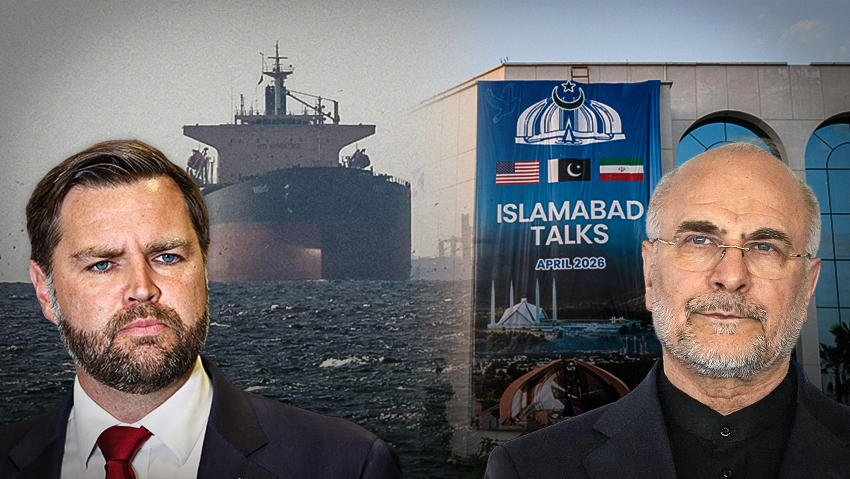
(Photos: Eraldo Peres/AP, Fadel Senna/AFP, Reuters/Stringer, Rebecca Conway/Getty Images)
However, Iran’s delegation later said in a post on X that the talks had ended after 14 hours and that negotiations would resume later in the day, despite “some disagreements” between the sides.
Vance subsequently announced that the talks had failed, and Iranian officials aligned with that position, with state television reporting: “The Iranian delegation conducted intensive negotiations for 21 hours to protect the national interests of the Iranian people. Despite various initiatives on its part, the unreasonable demands of the American side prevented progress in the negotiations. Accordingly, the talks have concluded.”
After the talks, Iranian Foreign Ministry spokesman Esmail Baghaei called on Washington to refrain from “excessive and unlawful demands.” He said that “the success of this diplomatic process depends on the seriousness and goodwill of the other side, on avoiding any excessive and unlawful demands, and on accepting Iran’s legitimate rights and interests.” He added in a post on X that the discussions in Islamabad over the past 24 hours focused on core issues, including the Strait of Hormuz, the nuclear issue, war reparations, sanctions relief and a complete end to the war against Iran and the region.
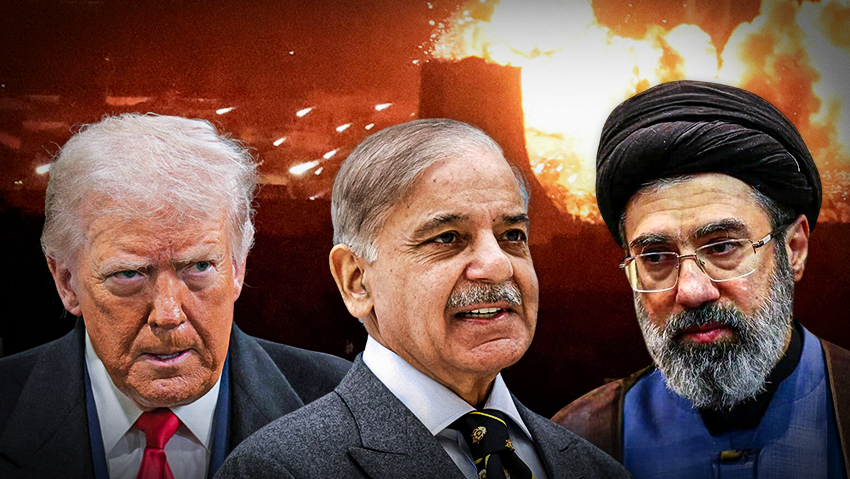
(Photos: Anna Moneymaker / AFP, Atta Kenare / AFP, Sputnik/Alexander Kazakov/Pool via Reuters)
Iran’s Fars news agency reported earlier, citing “a source close to the negotiating team,” that the United States was “making excessive demands regarding the Strait of Hormuz” — the strategic waterway that Iran blocked during the war and now claims sovereignty over, while Washington is demanding it be reopened immediately to free passage without fees.
“It seems that what the United States did not achieve in 40 days of war it now expects to achieve easily at the negotiating table,” the source said, adding: “Beyond Hormuz, the United States has made unacceptable demands on several other issues. The Iranian delegation is determined to defend what Iran has achieved on the ground.” The Financial Times earlier reported that the dispute over control of Hormuz had led to a “deadlock” in the talks.
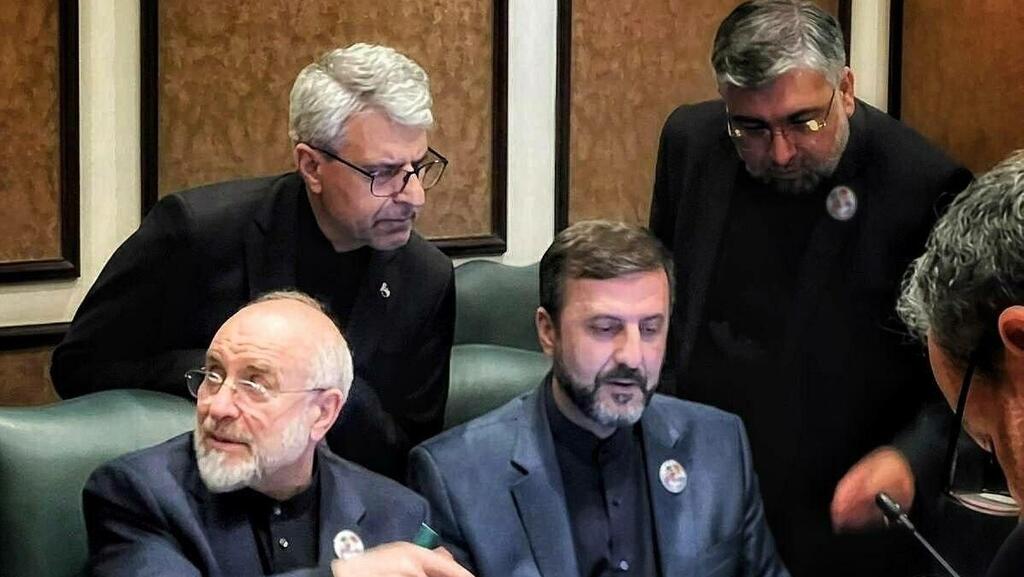
The Iranian delegation
An Israeli official familiar with the details said that despite the seriousness of the negotiations, the assessment in Jerusalem is that there is a strong likelihood they will collapse. “It will be very difficult for Iran to compromise, so the assessment is that in the end it will blow up,” he said. At the same time, Israeli officials say that Vance, along with envoys Jared Kushner and Steve Witkoff, are eager to achieve a breakthrough: “The negotiations are not a show — they are being conducted with full seriousness. No one is dragging their feet. But the gaps are very large, so the assessment is that in the end the talks will collapse.”
At the same time, both Israel and the United States are preparing for a possible resumption of fighting even before the ceasefire expires. Israeli officials say that, if the war resumes, preparations are underway for a broad strike on infrastructure and energy targets. The airlift of munitions and aircraft from the United States to Israel is also continuing. In Jerusalem, officials are confident that Washington shares their view on the required conditions for Iran — chiefly the removal of enriched uranium and the dismantling of Iran’s nuclear program.
Against the backdrop of Iran’s demand for a full ceasefire in Lebanon — which it claims was included in the temporary ceasefire terms, a claim rejected by Israel and the United States — Washington has asked Israel to scale back its strikes in Lebanon, also ahead of direct talks between Israeli and Lebanese representatives in Washington scheduled for Tuesday. Israel has complied and is, for now, refraining from strikes in Beirut. It has been decided that any strike will require special approval from the political echelon. However, the military continues operations in southern Lebanon and is focusing its activity there.
Iran: Praying for 'he victory of the warriors of the battlefield and diplomacy'


The talks in Islamabad are historic — marking the first time since the 1979 Islamic Revolution and the severing of diplomatic ties that such senior U.S. and Iranian officials have met face to face. The goal is to turn the fragile two-week ceasefire reached this week into a permanent one. As President Donald Trump has stated, the basis for negotiations is a 10-point plan submitted by Iran, although there are major disagreements over its details. Iran has presented maximalist demands, including compensation, control over Hormuz and continued uranium enrichment, while Trump has argued that documents circulating include false information.
There is also a deep dispute over the terms of the temporary ceasefire: Iran insists Lebanon is included, while the United States has accepted Israel’s position that the conflict with Hezbollah is a separate issue. Iran had threatened to walk away from the talks if a full ceasefire in Lebanon was not achieved, but after Trump asked Prime Minister Benjamin Netanyahu to scale back strikes — and with no recent strikes in Beirut — Tehran compromised and agreed to begin negotiations, citing what it described as a “ceasefire in Beirut,” while maintaining it would insist on a comprehensive ceasefire in Lebanon.
A source involved in the negotiations told the Qatari newspaper Al-Araby Al-Jadeed that “the inclusion of Lebanon remains a very significant obstacle to any solution. The Iranian side insists that any solution must include Lebanon, and the American delegation is not willing to accept that,” even as Hezbollah continued launching barrages toward northern Israel.
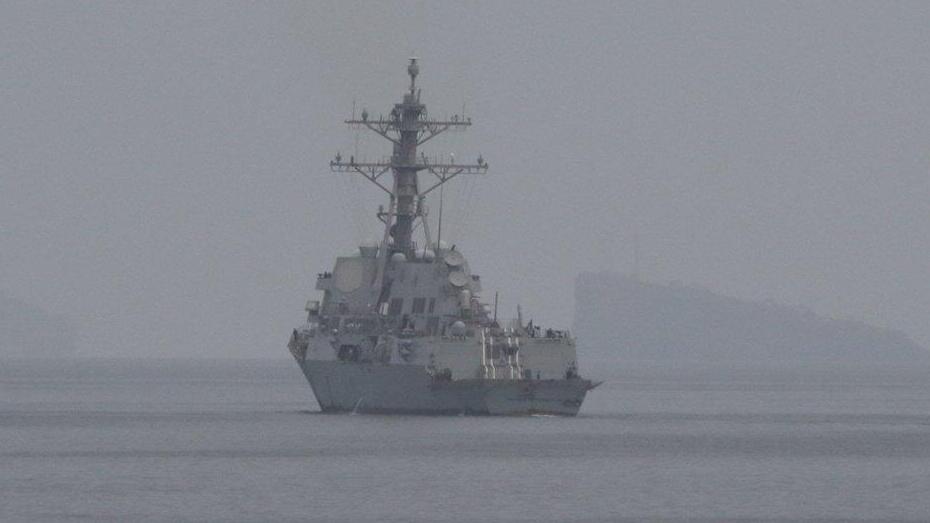
American warship near the Strait of Hormuz. The US military has begun a mine clearance operation
(Photo: CENTCOM)
Another central point of contention is the fate of the Strait of Hormuz. Earlier, the U.S. military announced it had begun “creating the conditions” for an operation to clear mines that Iran has laid in the strategic waterway, through which about one-fifth of global oil consumption passes. The military confirmed that, as part of the operation, two U.S. guided-missile destroyers passed through the strait for the first time since the war began — after Tehran had earlier denied such reports — and pledged to ensure free passage for commercial vessels and oil tankers. Trump said the United States would begin clearing mines from the strait, calling it “a favor to the world’s nations,” and promised it would “open soon.”
The Strait of Hormuz lies between the Persian Gulf and the Gulf of Oman and is the world’s busiest oil shipping lane, with roughly one-fifth of global oil consumption passing through it under normal conditions. After the war began on February 28, Tehran announced it would attack and set ablaze any vessel entering without its permission, rattling global energy markets, driving up oil prices and increasing pressure on Trump to end the war. Iran has used the conflict to shift its strategy regarding the strait, which under international law is meant to remain open to free navigation — and for the first time has asserted sovereignty over it and demanded payment from ships for passage.