


Israelis will head to the polls in 12 days, but voting in the Knesset elections has already begun abroad. Israeli diplomats and state representatives around the world have started casting their ballots, with Israel's ambassador to New Zealand, Alon Roth-Snir, and embassy staff in Wellington becoming the first to vote on Wednesday evening.
They were followed by Ambassador Maya Yaron and her staff in Fiji, who voted for the first time in the country's history, and then by the Israeli Embassy in Canberra, Australia, headed by Ambassador Hillel Newman.
Gallery
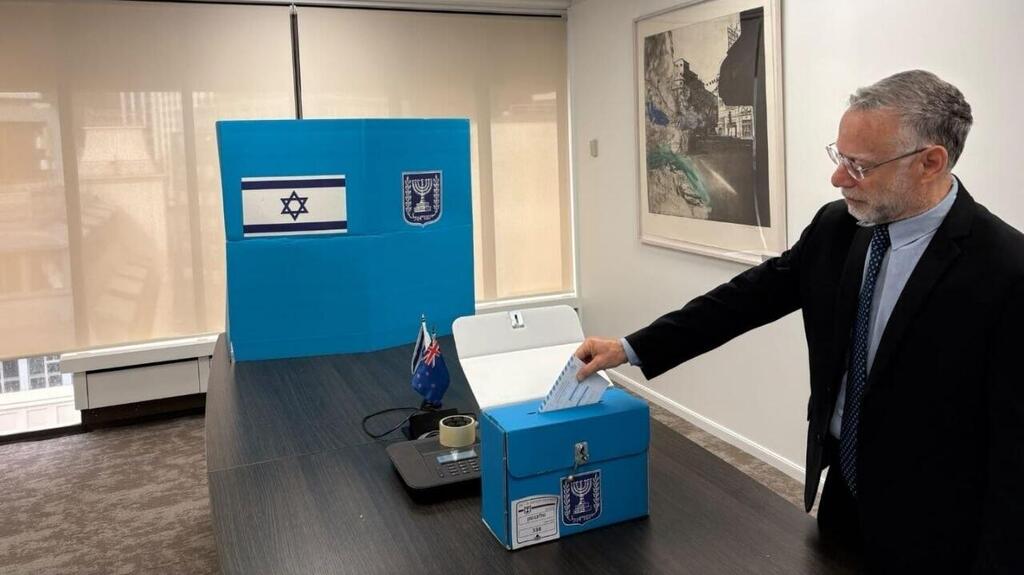
Israel's ambassador to New Zealand, Alon Roth-Snir, is the first to cast a ballot in the 2026 Israeli elections
Overseas voting will conclude Friday at 6 a.m. Israel time on the U.S. West Coast, at Israel's diplomatic missions in San Francisco and Los Angeles.
In total, more than 4,800 diplomats, state representatives and their family members are eligible to vote at 101 polling stations across 99 Israeli diplomatic missions worldwide. The largest number of voters is expected at the Israeli mission in New York, while the smallest will be at the embassy in Kathmandu, Nepal.
All ballots will be flown to Israel by diplomatic mail as part of a complex logistical operation coordinated by the Foreign Ministry and the Central Elections Committee. The ballots will then be transferred to the Knesset, where they will be counted as double-envelope ballots alongside votes cast by soldiers.
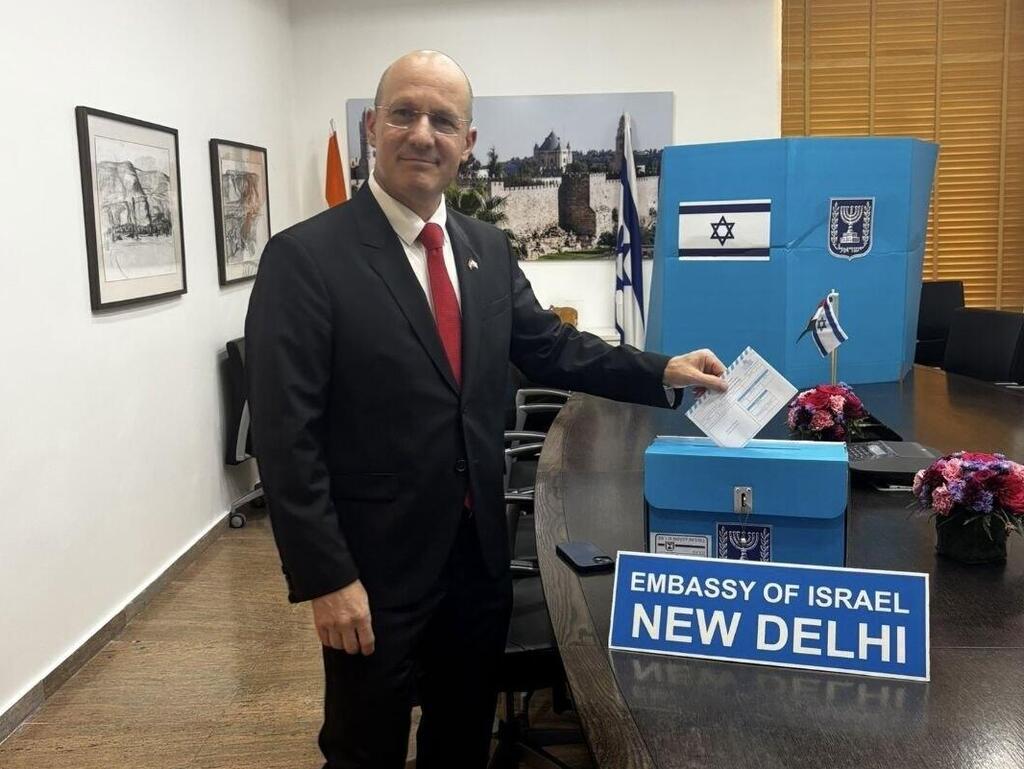
Israeli Ambassador to India Reuven Ezer votes at a polling station in Delhi
On Thursday morning, as voting opened at Israeli missions abroad, President Isaac Herzog visited the Israeli Embassy in Baku, accompanied by Israel's ambassador to Azerbaijan, Ronen Krausz.
"This is a very important moment during my state visit here to Azerbaijan," Herzog said. "I have the opportunity to see how the election process begins and how voting is actually conducted at Israeli diplomatic missions abroad, here at the embassy in Baku."
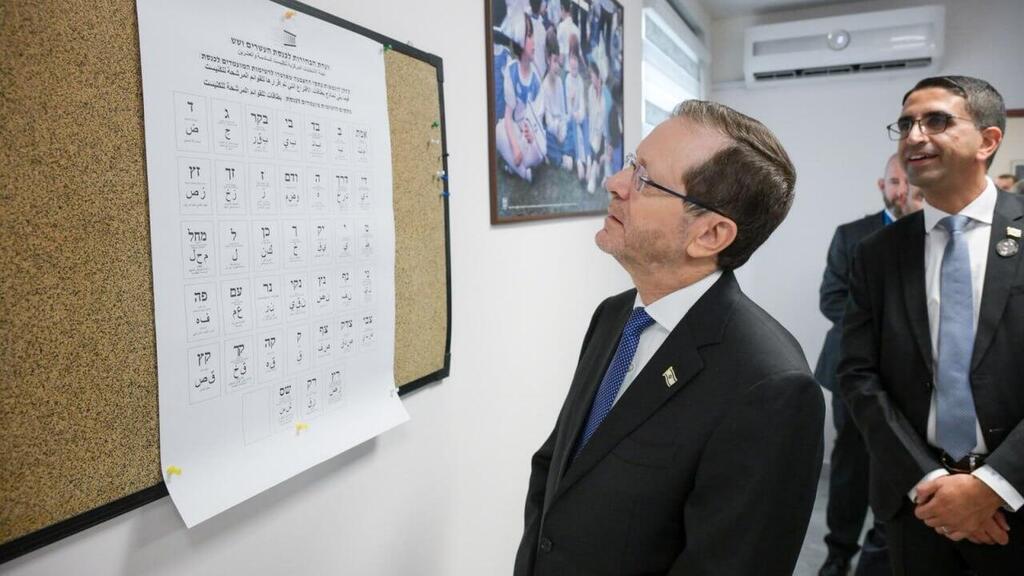
President Isaac Herzog kicks off voting at the Israeli embassy in Baku
(Photo: Maayan Toaf/GPO)
"These elections are a celebration of democracy in Israel and at its embassies abroad," the president continued. "I call on all Israeli citizens to exercise their right to vote and, of course, to influence Israel's future.
"These are very important elections after a difficult period for the State of Israel, and the main thing I want to say to every Israeli citizen is that elections are not a civil war. On the contrary, they are the genuine democratic process through which we influence our lives and determine the direction our country takes."