

Women leaders from across the Middle East and North Africa gathered this week in Abu Dhabi for the Third International Dialogue of Civilizations and Tolerance Conference, highlighting what organizers described as the often-overlooked role of women in shaping the region’s future.
The gathering brought together participants from a wide range of backgrounds, including Jewish, Muslim, Bedouin, Iranian, Lebanese and Christian women, as well as both religious and secular representatives. Delegates took part in panel discussions, professional meetings and regional dialogues focused on promoting trust, civic cooperation and cross-border engagement at a time of heightened tensions across the Middle East.
Gallery
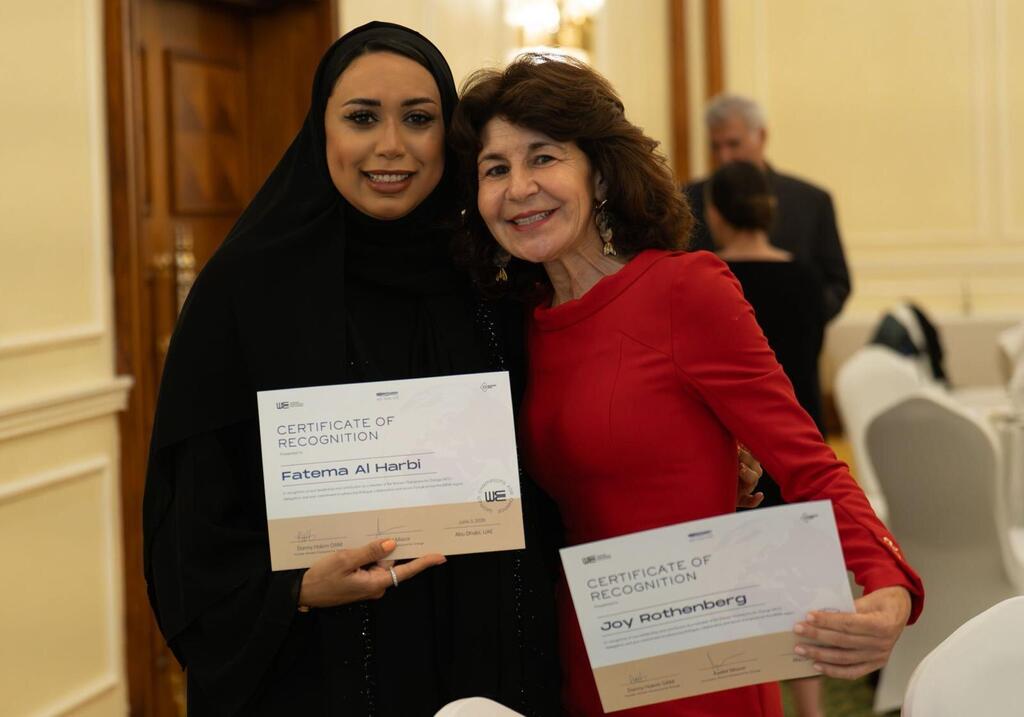
The Third International Dialogue of Civilizations and Tolerance Conference in Abu Dhabi
(Photo: Adam Horwitz)
The event was attended by representatives from governments, academia, media organizations, civil society groups and cultural institutions from around the world.
The delegation was organized by Women Champions for Change, or WCC, a regional initiative that connects women leading social change efforts across the Middle East and North Africa. The organization seeks to promote regional cooperation and strengthen women-led initiatives through cross-border partnerships.
Organizers cited research showing that peace agreements are significantly more likely to endure when women are involved in negotiations and implementation, but said women remain underrepresented in many peacebuilding efforts.
On the sidelines of the conference, WCC partnered with the Combat Antisemitism Movement, the Gulf-Israel Women Forum and the Peres Center for Peace and Innovation to host a private reception titled “Celebrating Women Changemakers of the MENA Region.”
The event brought together more than 70 participants from across the Middle East and beyond, including government officials, academics, diplomats and community leaders. Guests from Israel, the United Arab Emirates, France, the United States, Sudan, Germany and Syria attended discussions on regional cooperation and the role of women in advancing dialogue and tolerance.
During the conference, WCC presented what it described as the first large-scale regional mapping of women-led organizations operating across the Middle East and North Africa.
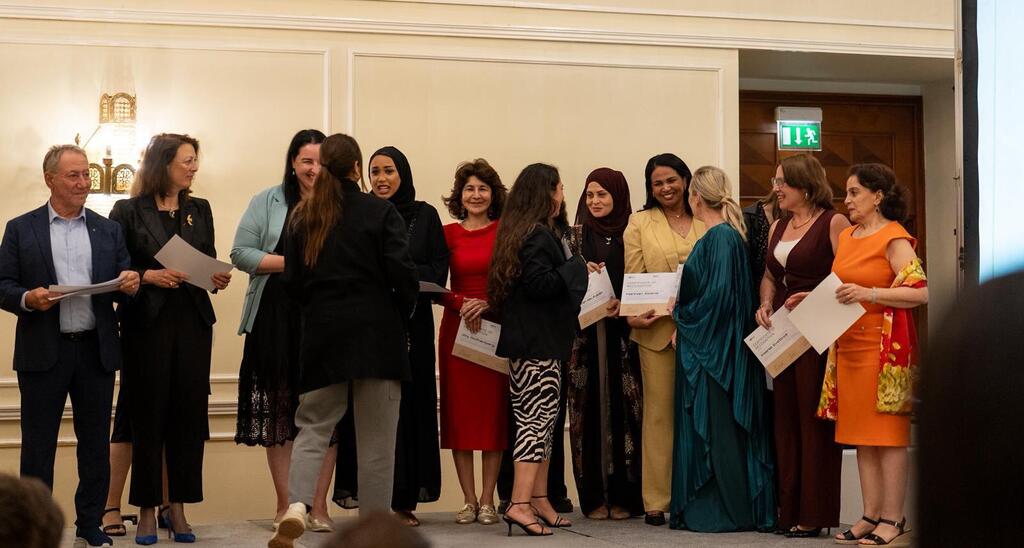
The Third International Dialogue of Civilizations and Tolerance Conference in Abu Dhabi
(Photo: Adam Horwitz)
The study, conducted by Migdalor Consulting, examined approximately 130 women-led organizations and social initiatives engaged in regional and cross-border activities.
According to the findings, about 85% of the organizations surveyed are already involved in cross-border cooperation despite ongoing political tensions and instability across the region.
The report also found that roughly 75% of organizational activity is focused on gender equality, human rights and economic development, highlighting what researchers described as women’s central role in promoting social resilience and regional cooperation.
At the same time, the study identified sports, culture and technology as sectors with relatively limited involvement from women-led organizations, suggesting opportunities for future growth and innovation.
“We are living through extraordinary times that demand extraordinary women to create and lead extraordinary opportunities,” said Danny Hakim, founder of Women Champions for Change. “What we are building here is more than a delegation. It is a network of like-minded women driving meaningful change across the Middle East and beyond.”
Elah Alkalay, chairperson of IBI Mutual Funds and head of the delegation, said women should play a central role in shaping the region’s future.
“At a defining moment for the Middle East, women must be at the center of shaping the region’s future,” Alkalay said. “This delegation brings together an exceptional and diverse group of social changemakers whose different perspectives are our greatest strength.”
Fatema Al Harbi, director of Gulf affairs at Sharaka in Bahrain, said the initiative helps connect women working to create change in their communities.
“We need these kinds of platforms to help connect and amplify the work of like-minded women,” she said.
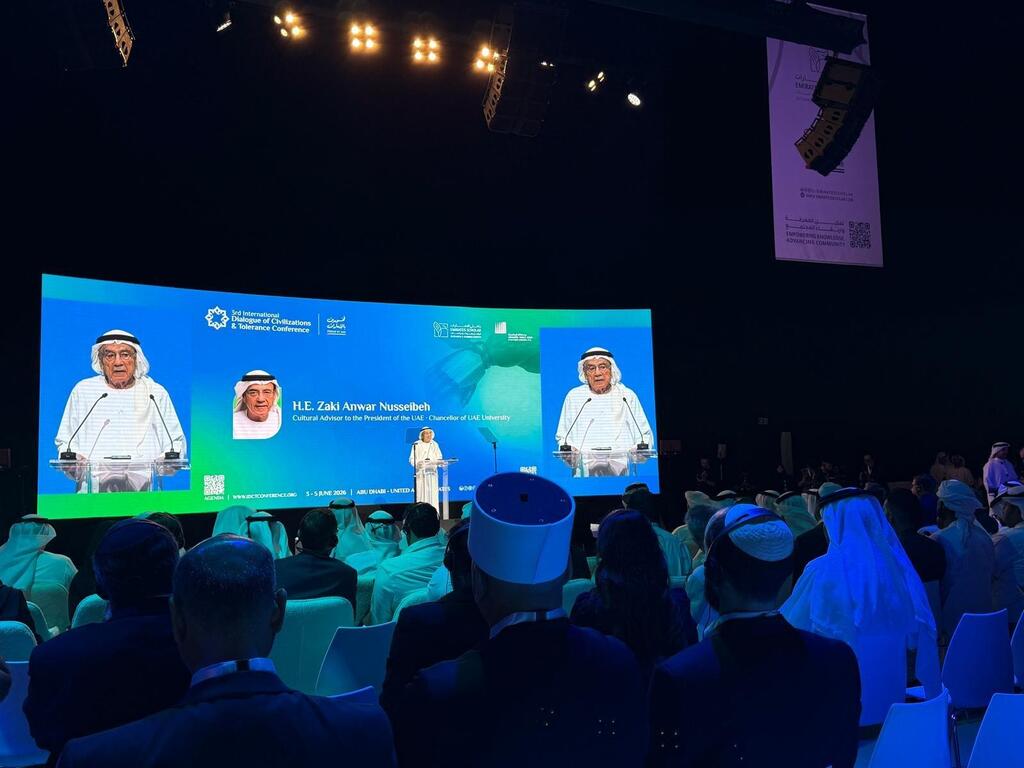
Emirates Scholar Center Director-General Dr. Fawaz Habbal speaks at the Third International Dialogue of Civilizations and Tolerance Conference in Abu Dhabi
(Photo: Adam Horwitz)
Dr. Fawaz Habbal, director-general of the Emirates Scholar Center, said the delegation reflected the role women can play in fostering dialogue and understanding across cultures and societies.
“We are proud to welcome these inspiring changemakers to Abu Dhabi and to provide a platform where diverse voices can come together to shape meaningful solutions for our societies,” Habbal said.