


Israeli families of hostages held by Hamas are reeling after new videos showed their loved ones emaciated and suffering in captivity, intensifying pressure on the government to act as the war in Gaza enters another tense phase.
Despite growing public outrage, Prime Minister Benjamin Netanyahu is not expected to convene Israel’s war cabinet until Tuesday, nearly two weeks after negotiations over a possible deal stalled. The broader government was set to meet Monday to discuss unrelated matters, including the security detail for Netanyahu’s family and a proposal to dismiss Attorney General Gali Baharav-Miara.
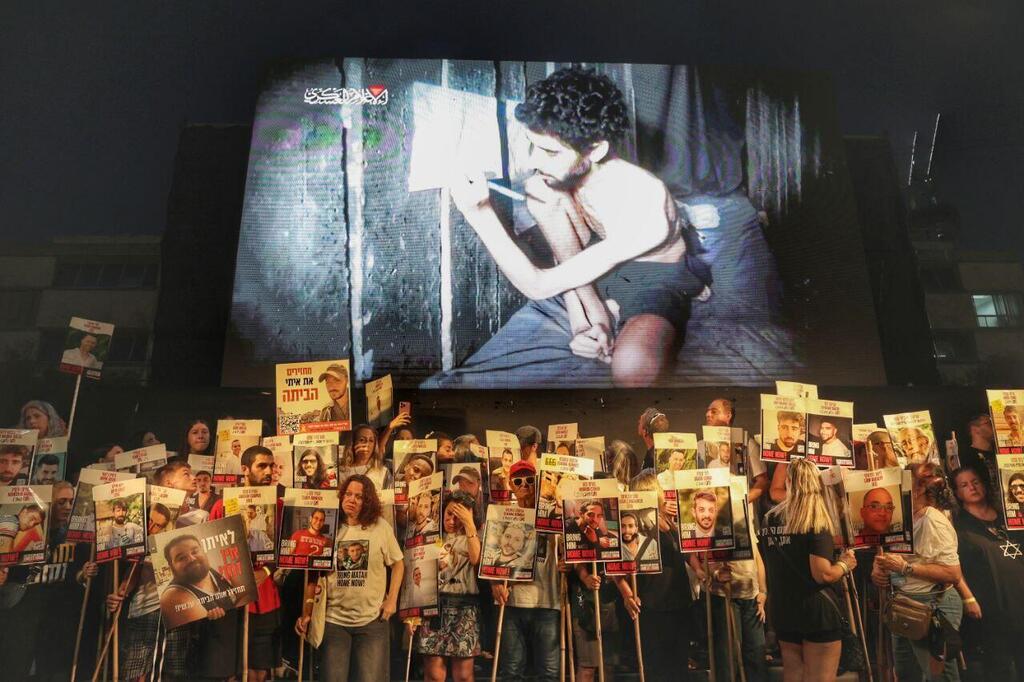
The delay in top-level deliberations has deepened frustration among hostage families and fueled criticism of the government’s strategy.
Three military options on the table
Netanyahu is expected to present three military options to the cabinet:
- Capture parts of Gaza City and central refugee camps, where some of the 120 remaining hostages are believed to be held, while evacuating civilians southward.
- Encircle key areas, including Gaza City, and conduct ongoing raids aimed at weakening Hamas.
- Maintain the current military posture and continue efforts to secure a negotiated release.
Although these options have been under review for weeks, no final decision has been made. Officials now consider the third option increasingly unlikely, with both Israeli and U.S. intelligence reportedly concluding that Hamas has no intention of accepting the deal on the table.
Many hostage families are urging the government to soften its terms in order to secure a deal, even if that means ending the war without achieving what the government once called a "total victory."
Military, political leaders divided
Military officials are reportedly leaning toward the second option: surrounding urban areas and maintaining pressure without launching a full-scale ground invasion. That approach, however, risks prolonging the conflict and leaving hostages in harsh conditions.
Chief of Staff Lt. Gen. Eyal Zamir has warned that a broader military offensive could endanger hostages if troops get too close. He has voiced concerns over troop fatigue and the IDF's ability to sustain long-term operations. Defense Minister Israel Katz and Netanyahu have yet to finalize their positions, while the acting head of Shin Bet remains undecided.
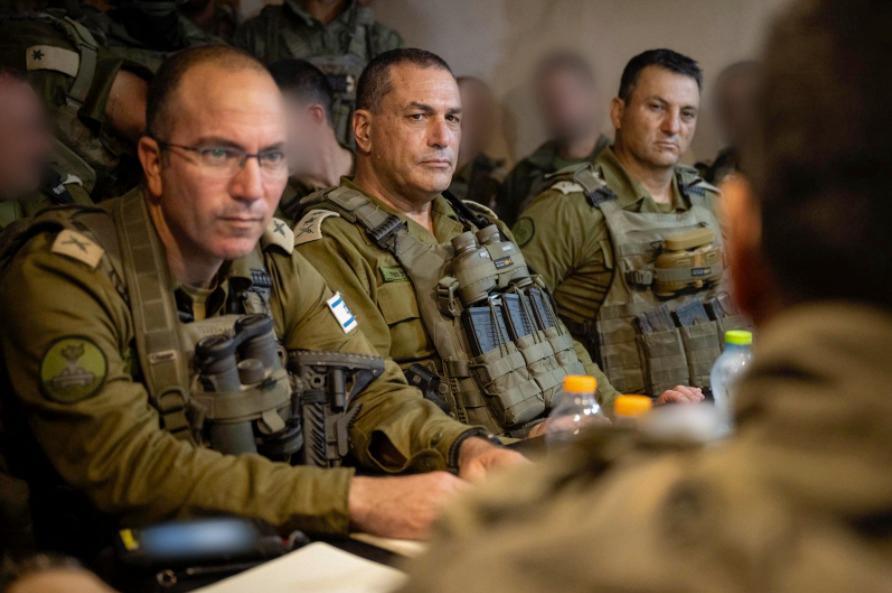
IDF Chief of Staff Lt. Gen. Eyal Zamir
(Photo: IDF Spokesperson's Unit)
In contrast, Finance Minister Bezalel Smotrich and National Security Minister Itamar Ben-Gvir have pushed for a full conquest and Hamas’s destruction. Foreign Minister Gideon Sa’ar and Shas party leader Aryeh Deri have signaled support for the encirclement plan, viewing it as the best option to both pressure Hamas and leave room for a potential deal.
The army’s position is supported by National Security Adviser Tzachi Hanegbi, former deputy Shin Bet director "M" (who recently joined the negotiation team), and IDF hostage affairs chief Maj. Gen. (res.) Nitzan Alon.
A final proposal is expected to be brought before the full cabinet following Tuesday’s war cabinet session. Most indications suggest Israel will adopt the IDF’s recommendation and avoid a full-scale invasion.
Hostages starved as talks stagnate
Meanwhile, the humanitarian conditions for the hostages are rapidly deteriorating. Hamas is reportedly starving them, while captors continue to receive adequate food and medical care. On Sunday, Hamas told the Red Cross it would allow food and medicine for the hostages only if Israel agreed to establish permanent humanitarian corridors and halt airstrikes during delivery windows — a demand Israel views as part of a propaganda campaign.
Evyatar David


Hostage families and advocacy groups say time is running out. Over the weekend, disturbing footage of hostages Evyatar David and Rom Braslavski surfaced. Both appeared skeletal and in life-threatening condition. Families described them as “walking skeletons” and warned that any further military escalation could doom the remaining captives.
Families urge government to shift strategy
Hostage families have escalated their campaign to pressure the government, calling for a return to negotiations and a relaxation of conditions that have stalled a deal. They argue that continued fighting risks not only lives but Israel’s moral standing.
“For 22 months, we’ve been sold the illusion that military pressure would bring the hostages home,” the Hostages and Missing Families Forum said in a statement Sunday. “The expansion of the war endangers hostages who are already facing immediate death.”
Get the Ynetnews app on your smartphone: Google Play: https://bit.ly/4eJ37pE | Apple App Store: https://bit.ly/3ZL7iNv
The forum said most Israelis support a deal to return the remaining 49 hostages — at least 20 believed to be alive — and bring the war to a close. Twenty-seven are presumed dead.
“There is no greater victory than bringing them home,” the statement said. “Only then can Israel begin to rebuild and recover.”