

Since the start of the war with Iran, Iranian television channels aligned with the Islamic Republic have broadcast nightly images and videos of rallies supporting the country’s leadership and armed forces, part of a sustained effort by state media to project national unity and public backing for the government.
The displays come as much of Iran’s population of about 92 million contends with a worsening economic crisis and severe government repression. But the Islamic Republic also retains a significant base of genuine supporters who continue to turn out for pro-government rallies.
Gallery
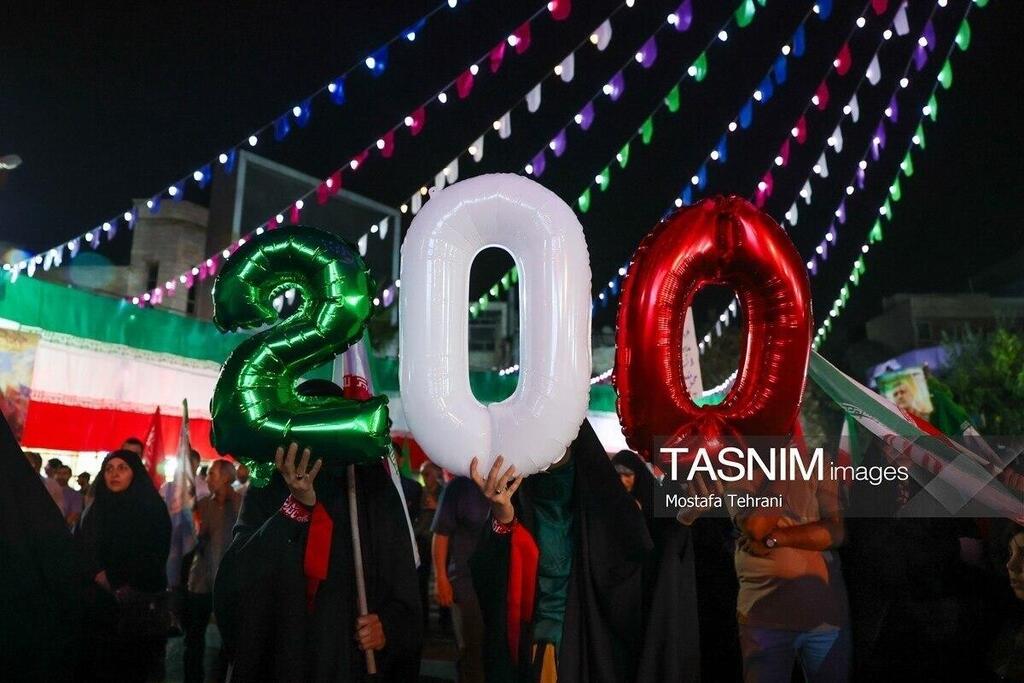
Pro-government rally in Tehran marking 200 days of demonstrations in support of Iran’s leadership since the war began
(Photo: TASNIM)
Throughout recent months, whether amid talk of a possible return to negotiations between Washington and Tehran or during periods of heightened regional tensions, nightly gatherings have continued in public squares across Iranian cities.
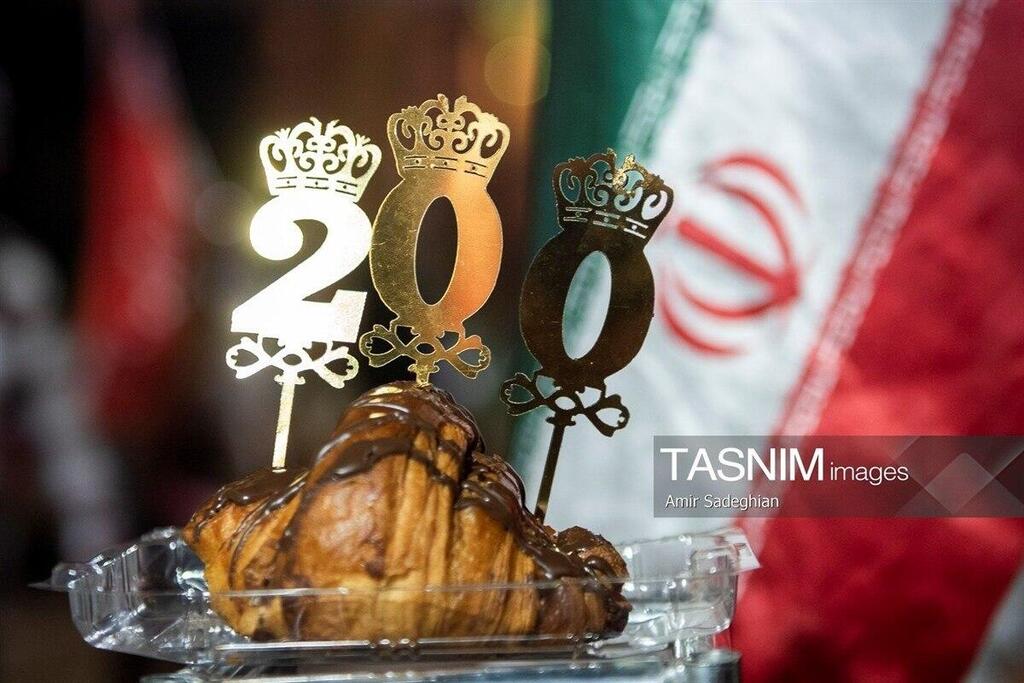
Last week, Iran marked what state-affiliated media described as the 200th consecutive day of pro-government street gatherings, with events beginning Sept. 15 and continuing for several days in cities across the country. Iranian officials and state institutions used the milestone to praise participants and emphasize what they described as the population’s resilience and support for the government.
The Basij, the paramilitary force that played a central role in the violent suppression of mass anti-government protests earlier this year, issued a statement marking the 200th day.
“The Iranian nation will remain in the streets and squares for as long as necessary, and for as long as the interests of the regime dictate,” the Basij said.
Iranian military Chief of Staff Ali Abdollahi also praised the demonstrators.
(Photo: TASNIM)
(Photo: TASNIM)
“Dear Iranian people, I bring you news from the battlefield: Your presence and unity are what strengthened the morale of the fighters, enhanced national resilience and sowed fear in the heart of the enemy,” he said.
Mohsen Rezaei, secretary of Iran’s Supreme National Security Council, described the public as the country’s most important national security asset, saying Iranians had “defended the homeland, its territorial integrity and its independence through their presence and resilience.”
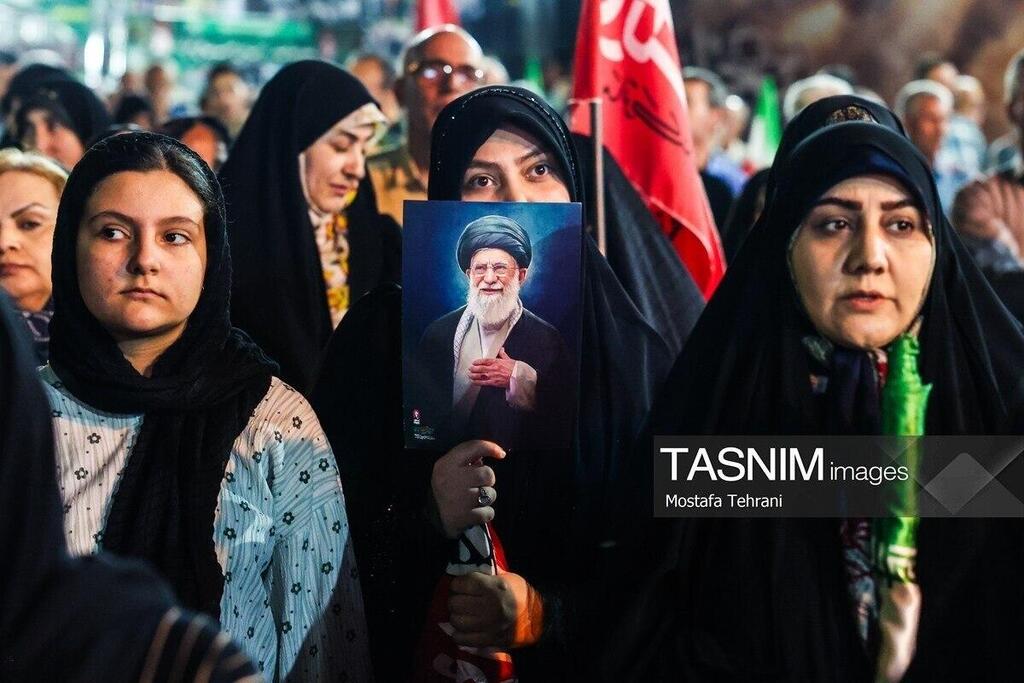
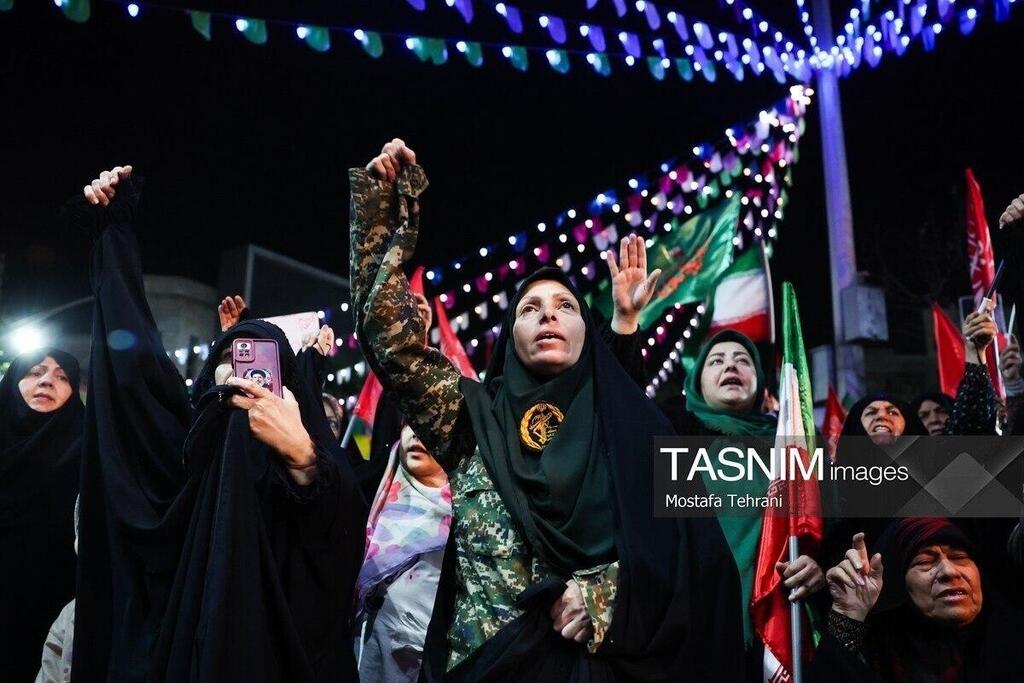
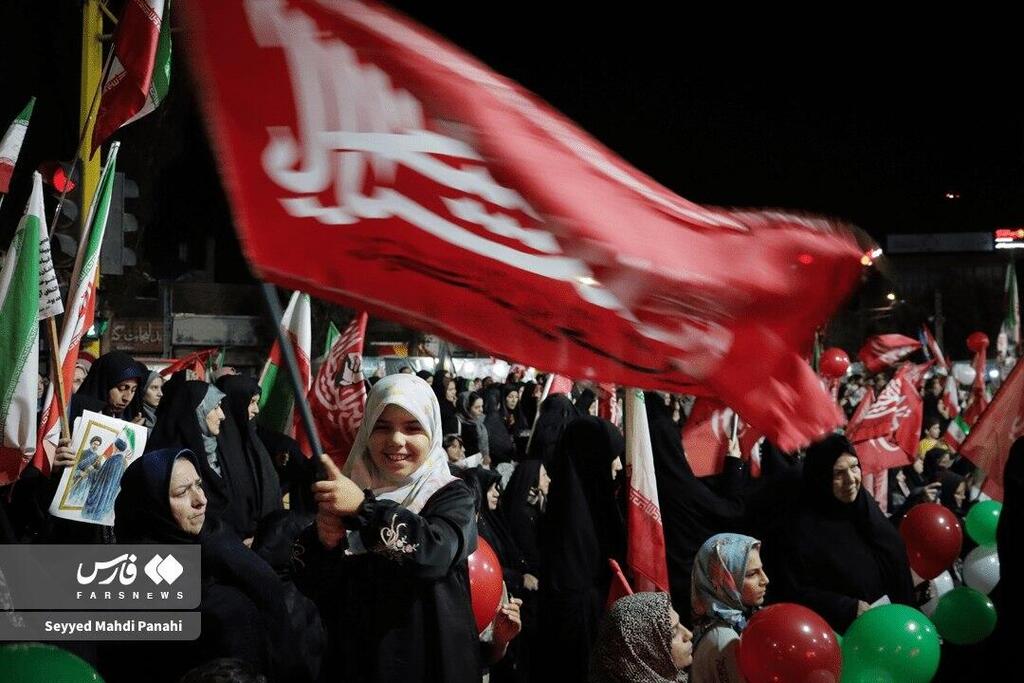
One of the most prominent gathering points has been Tehran’s Revolution Square, known in Persian as Enqelab Square. In recent days, Iranian channels have continued broadcasting videos showing crowds there waving Iranian and Hezbollah flags, praying and singing.
Reporting from the square last Wednesday, an Iranian television correspondent described the gathering as the 200th night of what he called “spontaneous public gatherings.”
“People gathered here to demonstrate solidarity and unity,” he said. “Two hundred nights have passed since the first days of the ‘Ramadan War’” — the Iranian name for Israel’s Operation Roaring Lion — “but not a single moment has passed in which these people have not thought about the slain leader, Ali Khamenei. Mourning for the leader continues to be felt deeply in people’s hearts.”
(Photo: TASNIM)
(Photo: TASNIM)
The reporter said those gathered behind him had come to the square for 200 consecutive nights.
“They will not leave the square until the Zionist regime is destroyed,” he said.
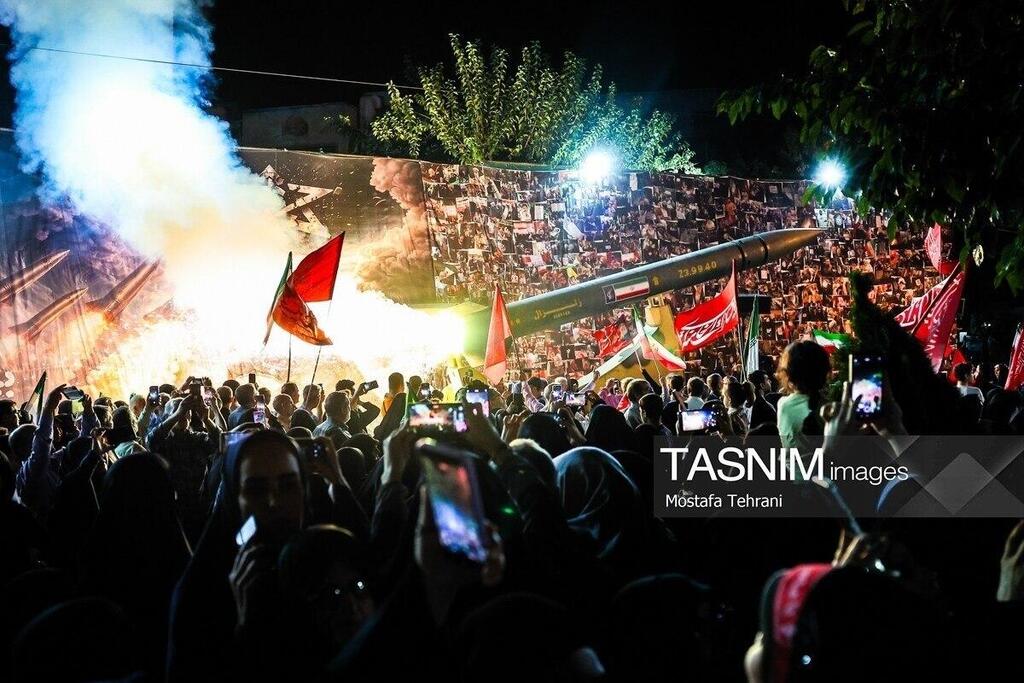
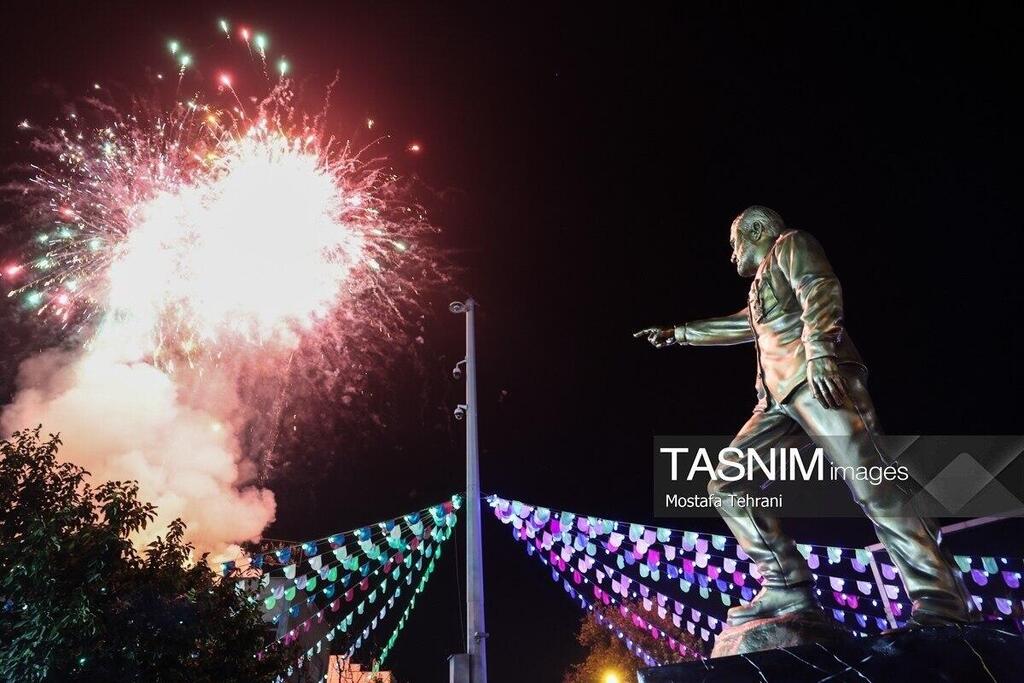
Another event marking the 200th day was held last week in Tehran’s Abu Zar Square, where a statue of Amir Ali Hajizadeh, the former commander of the Islamic Revolutionary Guard Corps’ Aerospace Force who was killed during the war, was unveiled.
Tehran Mayor Alireza Zakani attended the ceremony. Images from the event showed participants holding portraits of slain Supreme Leader Ali Khamenei. The ceremony also featured fireworks, a display of a Zelzal rocket and balloons shaped to form the number 200.
The nightly gatherings across Iran have taken different forms in recent months, at times reflecting developments elsewhere in the region. Some have included demonstrations supporting Yemen’s Houthis during their escalation with Saudi Arabia.
(Photo: TASNIM)
(Photo: TASNIM)
Anti-American and anti-Israel chants have also remained a regular feature, much as they were during the war. Video published from Abu Zar Square on Sept. 15 showed demonstrators chanting “Death to America” and “Death to Israel.”
“Death to America” chants were also heard at Revolution Square that day, shortly after a mass wedding ceremony involving several couples from the pro-government community. The couples arrived at the square in vehicles decorated with flowers.
The nightly displays have not been limited to rallies and slogans. They have periodically included military exhibits. Iran’s Mehr news agency published videos Sept. 14 showing drones on display in Quds Square in Isfahan during a nighttime rally.
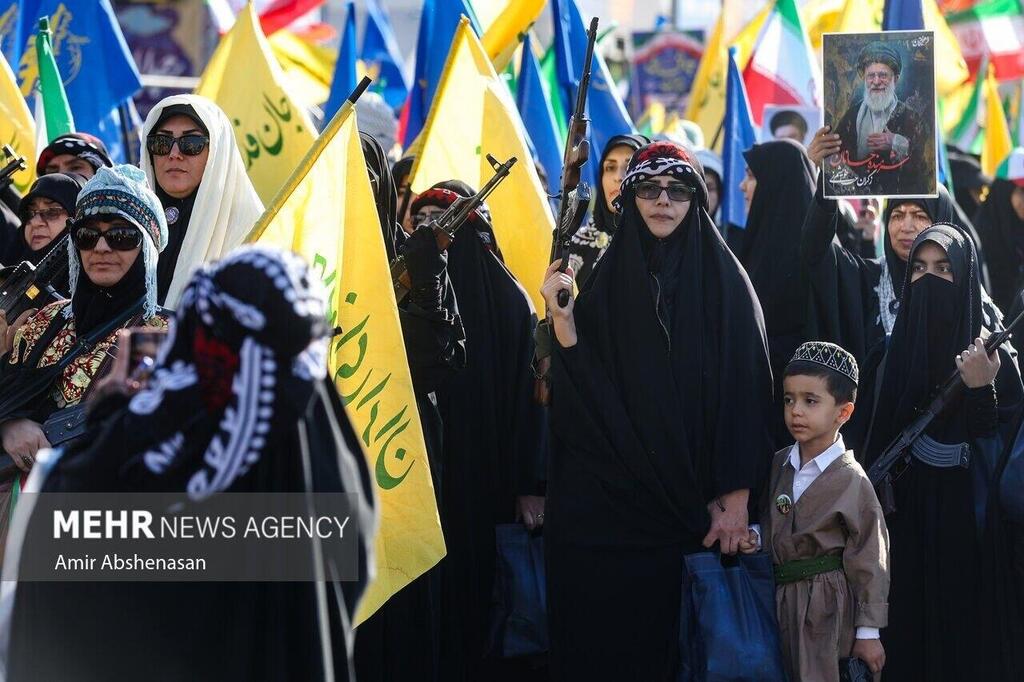
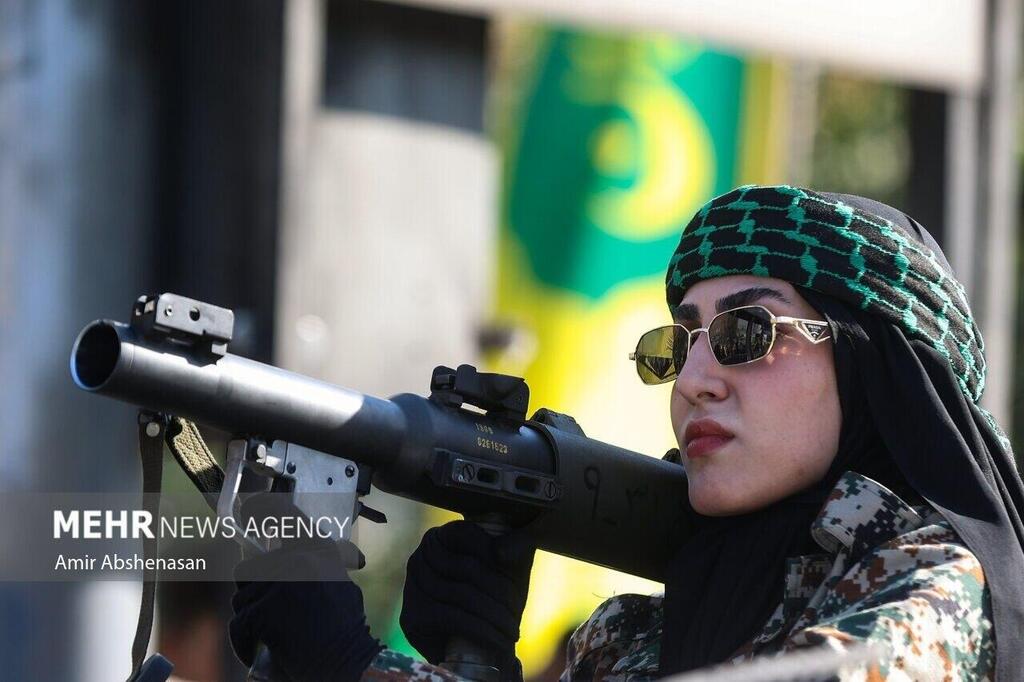
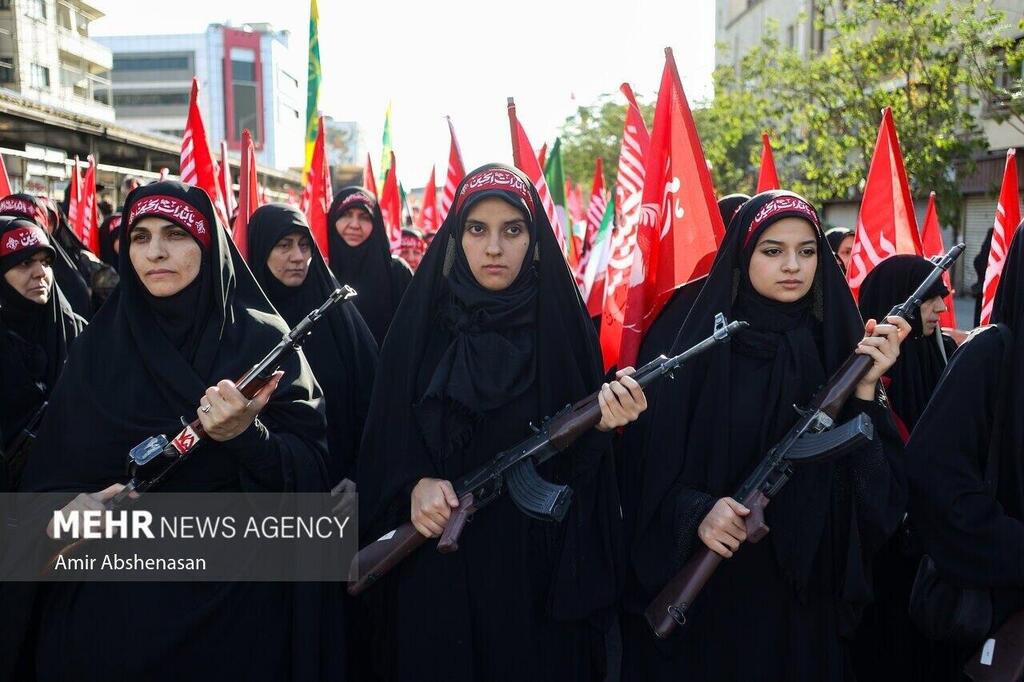
Iranian state news agencies have also reported that some participants in the rallies have joined what authorities call the “Sacrifice of Life” campaign. The government claims more than 30 million people have signed up and declared themselves willing to sacrifice their lives and “defend the country’s territory,” although it remains unclear what participation in the campaign entails in practice.
A drill involving male and female campaign volunteers was held in Tehran last Friday morning. Iranian media aligned with the government said many thousands participated, though images from the event appeared to show something closer to a mass procession.
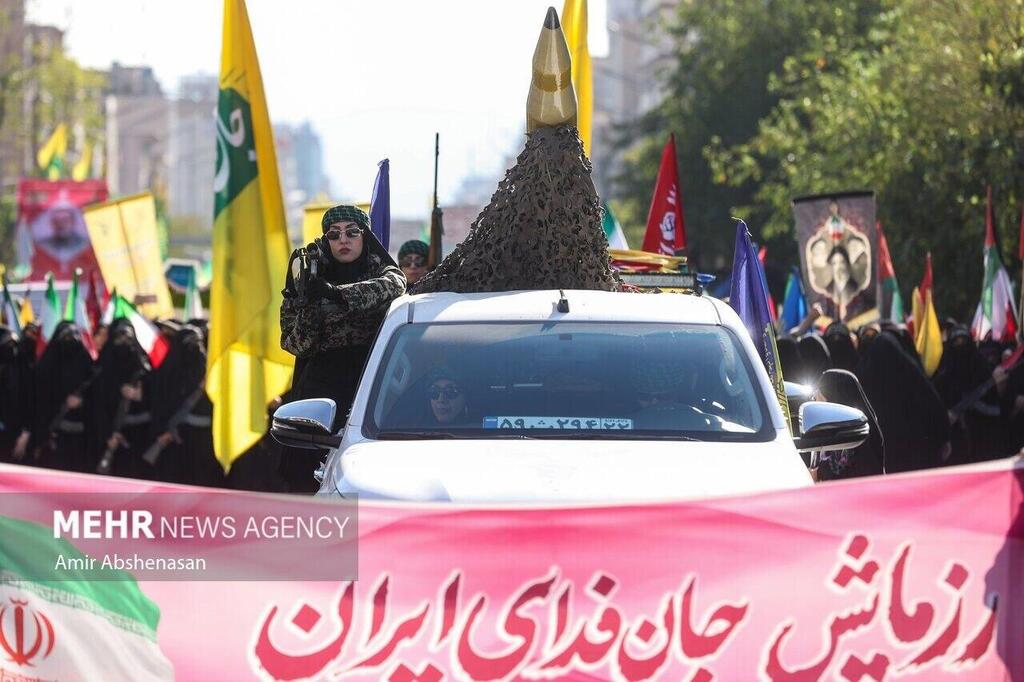
Women carrying weapons during what Iranian media described as a Tehran drill for the ‘Sacrifice of Life’ campaign, whose pro-government volunteers pledge to defend the Islamic Republic
(Photo: TASNIM)
(Photo: TASNIM)
Iranian President Masoud Pezeshkian attended the event and was quoted as saying, “Unity and cohesion, on every issue, will shatter the enemy’s hopes.”
Iranian reports said similar exercises would be held in other cities.
Danny Citrinowicz, a former head of the Iran branch in the IDF’s Intelligence Directorate research division and now a senior researcher in the Iran and Shiite Axis program at the Institute for National Security Studies, cautioned against using the rallies as a measure of the government’s overall popularity or stability.
Iran faces mounting economic difficulties amid continued U.S. pressure and is still dealing with the aftermath of widespread protests earlier this year that were violently suppressed. Nevertheless, Citrinowicz said the government retains millions of supporters whose significance should not be dismissed.
“There is real distress in Iran, and it is very evident, including in the statements of President Pezeshkian, who sees himself as a representative of the population,” Citrinowicz said. “The situation is difficult, but at the same time, I would not dismiss these demonstrations. Ultimately, there is a significant core that supports this regime, even in the current economic situation and amid the economic and social complexity Iran is experiencing because of the war.”
(Photo: TASNIM)
(Photo: TASNIM)
Citrinowicz said the latest gatherings were a direct continuation of the demonstrations held during the war, when tens of thousands of people took to the streets each night in Iran’s major cities, including Tehran.
The rallies, he said, served two purposes: projecting an image abroad that the government retained the confidence of the Iranian public while sending a message to Iranians opposed to the Islamic Republic.
The message to government opponents, he said, was that “there is no point in going out” to protest, even if they were considering taking to the streets, because public spaces had already been filled by government supporters and the leadership retained enough backing to make an uprising appear futile.
“We are seeing the same logic in the current demonstrations,” Citrinowicz said.
He said the government’s promotion of the “Sacrifice of Life” campaign fit the same strategy.
“The regime’s entire focus right now is on demonstrating both the support it enjoys and the Iranian citizen’s willingness to make sacrifices, in the sense of, ‘You will not break us. People will be willing to fight if necessary,’” Citrinowicz said. “It all serves the same strategic purpose. Even when the numbers are exaggerated, I would not underestimate the base of support the regime has.”