


Israel’s Supreme Court has frozen the government decision to shut down Army Radio. Supreme Court Chief Justice Yitzhak Amit on Sunday evening issued an interim injunction halting the planned closure of the military broadcaster on March 1, following a petition by the station’s workers’ committee.
Amit issued the order after Attorney General Gali Baharav-Miara wrote in her legal opinion that such an injunction should be granted until the court rules on the petitions. “I have reached the conclusion that the request should be granted, and that the government decision should be frozen in all its implications, until a further decision,” Amit wrote. “This decision is given, among other reasons, in light of the fact that the government’s response did not include an explicit commitment to refrain from irreversible actions until the legal proceedings are concluded.”
Gallery
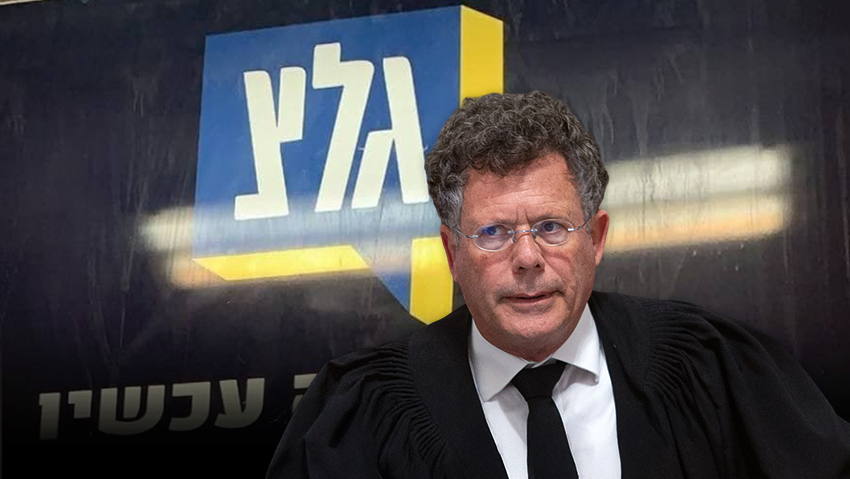
Supreme Court chief justice Yitzhak Amit freezes closing of Army Radio
(Photos: Alex Kolomoisky )
In her position submitted earlier Sunday to the court, the attorney general said the decision to close the station was riddled with flaws. “The damage that would be caused by taking steps to close the station is significant and irreversible,” Baharav-Miara stressed. She wrote that “there is a serious concern that the closure of the station constitutes a goal that was marked in advance. This concern is reinforced in light of the significant question marks that arise regarding the factual and professional basis laid by the advisory committee to support its recommendations.
According to the attorney general, the advisory committee “did not genuinely consider alternative options that had been recommended in the past, with the aim of minimizing the inevitable harm to freedom of expression that would result from closing the station, because it approached the examination of alternatives under the assumption that ‘a connection between the people’s army and political disputes is a contradiction that cannot be reconciled,’ as the committee declared.”
Attorneys Boaz Ben-Zur, Carmel Ben-Zur and Guy Roh, who represent the Army Radio workers’ committee, said in response: “We welcome Amit’s decision. This is an important decision that will allow Army Radio to continue operating as it has until now, until a ruling is issued on the petition. The continued regular operation of Army Radio is an important pillar for the realization of freedom of the press and freedom of expression.”
It was also announced Sunday that the justices who will hear the petition are Daphne Barak-Erez, Ruth Ronen and Yechiel Kasher, who are considered liberal. Responding to criticism of the panel’s composition, the Courts Administration said in an unusually blunt statement: “The truth regarding the composition of the judges in the Army Radio High Court case is that it was determined by the court calendar, subject to conflicts of interest of three of the 11 sitting Supreme Court justices. The only instruction was that the presiding justice be one of the three most senior judges. That is all. There was no engineering of the panel and no engineering of the outcome.”

Attorney General Gali Baharav-Miara wrote in her legal opinion that such an injunction should be granted
(Photo: Amit Shavi)
Earlier, Defense Minister Israel Katz sharply attacked the Army Radio workers’ committee in the government’s response to the court, accusing it of attempting to mislead the justices through false affidavits. He said the committee’s claim that the Defense Ministry sought to halt the employment of Army Radio advisers starting in January was incorrect. “One can only regret the blatant attempt to mislead the honorable court,” the response said.
“The matters are particularly serious. All of this was done by the Army Radio workers’ committee. It seems the journalists among them forgot that they owe a special duty to verify the full facts before publishing them, and certainly before submitting them to the court,” Katz added, accusing the committee of “lack of clean hands.”
On Monday, the government unanimously approved Katz’s proposal to close the station. Katz said the station was an “anomaly that does not exist in democratic countries,” arguing that it provides a platform for views that often “attack the IDF and IDF soldiers themselves.” He claimed the station’s political content “harms the unity of the army and its messages are interpreted by the enemy as being conveyed by the IDF.” Prime Minister Benjamin Netanyahu backed the move, saying that the existence of a military radio station broadcasting under the army’s authority was a situation “that perhaps exists in North Korea,” but is not suitable for Israel.