

Italy’s unusual “cheese banks” are being forced to spend significantly more on energy as Europe’s heat wave threatens hundreds of thousands of wheels of Parmigiano Reggiano held as collateral for loans.
Credito Emiliano, which operates two major storage facilities holding cheese valued at about $350 million, has upgraded cooling and heating systems, improved insulation and expanded its use of renewable energy to keep conditions stable. Even so, extreme heat is pushing daily electricity consumption at the facilities up by about 30%, squeezing profitability as the bank works to maintain the precise temperature and humidity required for the cheese to mature safely.
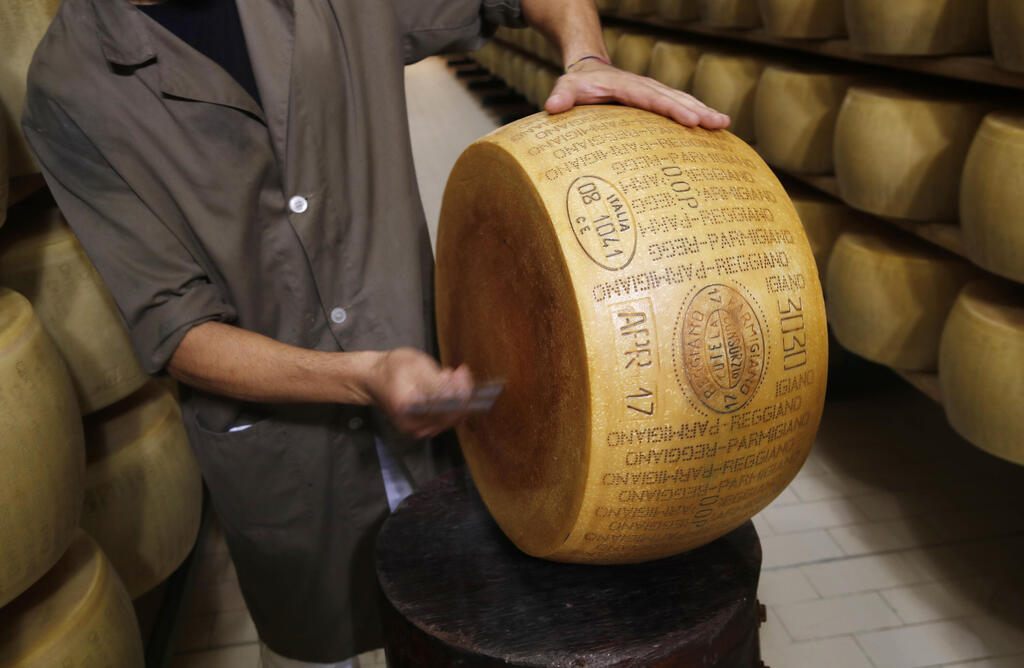
The model, in place since 1953, allows Parmesan producers to receive an advance worth roughly 60% to 80% of a wheel’s value while the cheese is still young. The wheels then age for between 12 and 36 months in bank-controlled warehouses in Reggio Emilia and Modena before reaching full market value.
Around 500,000 wheels are held in such “cheese banks,” out of total annual Italian production of roughly 4 million wheels. One vault alone contains cheese worth more than 300 million euros. A bank spokesman described the facility as the “Fort Knox of cheese,” noting that high outdoor temperatures require increasingly large amounts of energy to preserve the stable environment the product needs.
The heat is also affecting the industry before the cheese even reaches storage. Cows eat less and become less active during periods of extreme heat, reducing milk output by as much as 10% and affecting both the quantity and quality of milk available for production.
That vulnerability is increasingly becoming part of lenders’ credit-risk calculations. If climate conditions reduce production or damage aging cheese, the value of the collateral underpinning the loans can also be affected.
The broader Parmesan economy is estimated at about $4.7 billion, making climate-related disruption a concern not only for farmers and cheesemakers but also for lenders whose financing model depends on the future value of the product.
The same heat is disrupting other key parts of Italy’s food and beverage industry.
In Lombardy, the 2026 wine harvest began on July 30, the earliest start on record, while producers in Sicily stretched harvesting across nearly 100 days in an effort to cope with repeated heat waves.
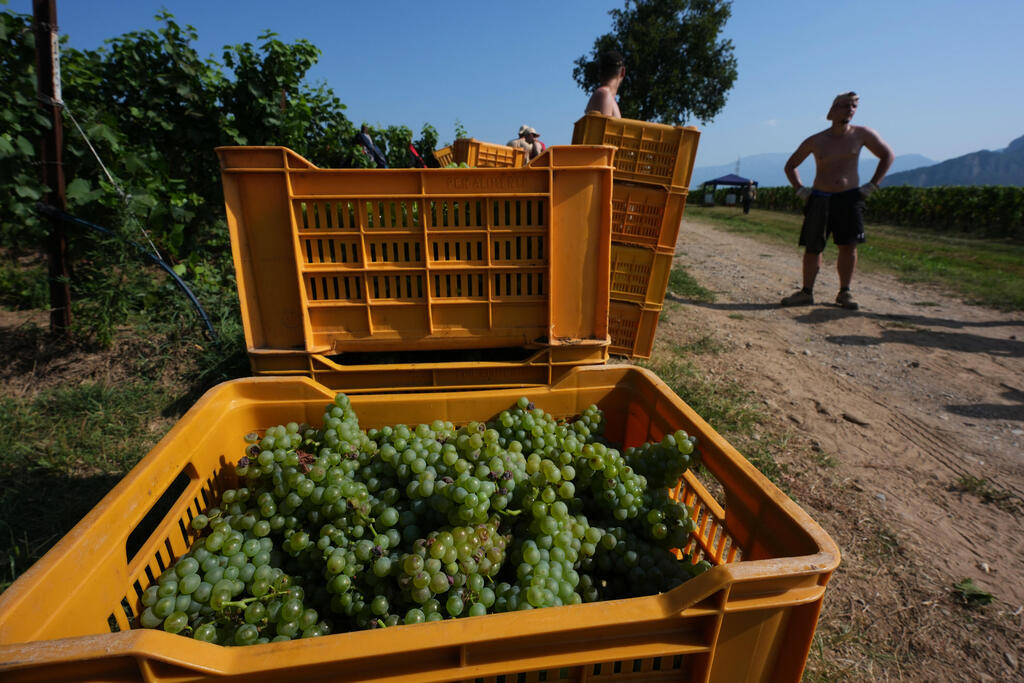
(Photo: Antonio Calanni\AP)
Italian agricultural organization Coldiretti estimated additional costs of about 250 euros per hectare for energy, fertilizer and other inputs, while export values fell 7% during the first four months of 2026.
Olive oil production has also been affected. National output this year is estimated at around 270,000 to 300,000 tons, compared with a historical average of more than 350,000 tons.
Economists warn that the headline losses may understate the longer-term damage because heat shocks can ripple through supply chains. Lower output at one stage can create shortages and higher costs elsewhere months later, magnifying the financial impact.
At the same time, Italy has pushed back the planned closure of its coal-fired power plants to 2038 amid cost pressures, highlighting the tension between climate-related disruption and the pace of Europe’s transition to renewable energy.
For Italy’s cheese banks, that tension is already tangible. The hotter the climate becomes, the more expensive it is to preserve the cold, controlled conditions on which both Parmesan production and a decades-old lending model depend.