

Global media coverage and a report from the Integrated Food Security Phase Classification (IPC) warn of a severe humanitarian crisis in Gaza. The IPC stated that “a worst-case scenario of famine is currently playing out in the Gaza Strip,” predicting widespread death unless immediate action is taken.
Yet behind these dire headlines is another reality: Israel’s ongoing and often overlooked efforts to provide food, water, electricity and medical assistance to Gazan civilians during the war.
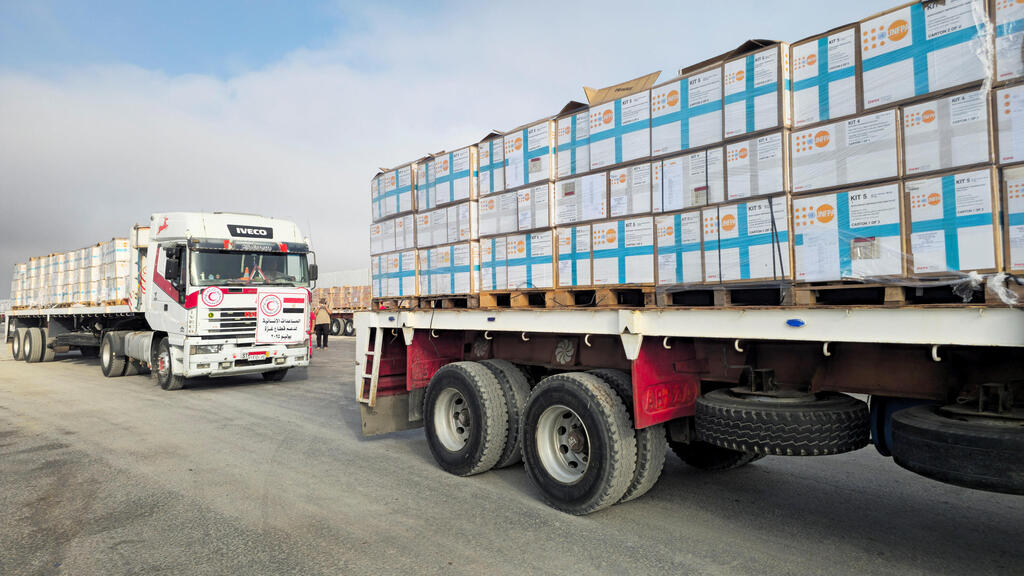
An IDF official gave a detailed briefing on the activities associated with the Coordination of Government Activities in the Territories (COGAT) recently gave a detailed briefing to international journalists, laying out Israel’s humanitarian infrastructure since the war began.
Nearly 100,000 aid trucks have entered Gaza since October 7, carrying food, medical supplies, hygiene products and other essentials. “It’s not only about trucks going in,” the official said. “You have to create entry points with all kinds of procedures and inspections. You have to enable humanitarian routes.”
Israel maintains several entry points, including Kerem Shalom, gate 147 near Kisufim, gate 96 into the Netzarim Corridor and the Sikkim crossing in the north. Aid also arrives via Egypt’s Rafah crossing, Jordan’s Allenby Bridge and Israel’s Ashdod Port.
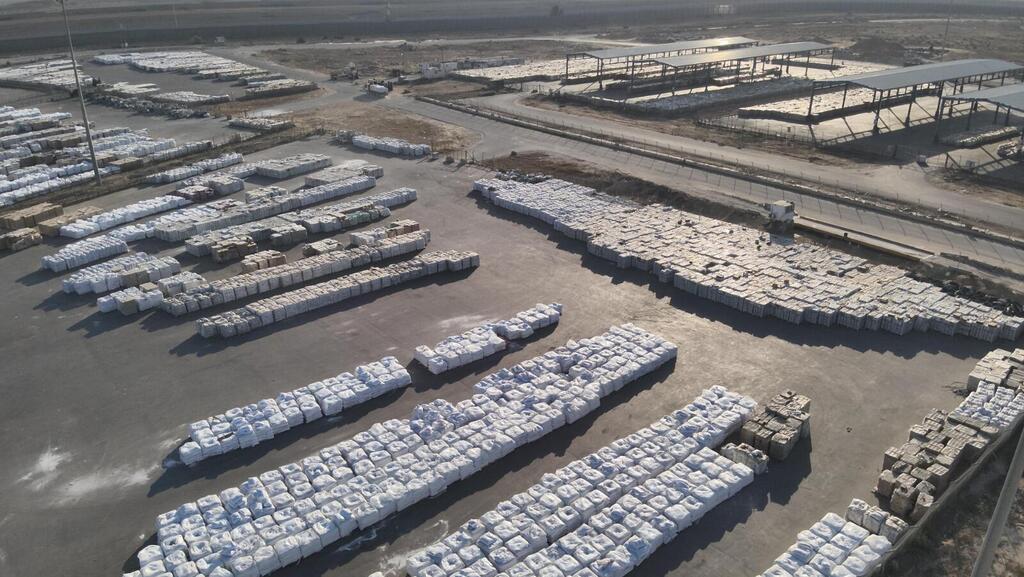
Gaza aid waiting to be picked up
(Photo: IDF)
Orchestrating the movement of trucks requires cooperation among some 60–70 partners, from UN agencies and NGOs to medical missions. “It’s like an orchestra,” the official said, describing how logistics are coordinated across multiple borders and agencies.
Electrical infrastructure, damaged when Hamas bombed 10 power lines at the start of the war, has been partially restored by Israel. One of the original lines has resumed functioning, powering facilities like the Al-Mawasi desalination plant. Water supply is further supported by a UAE-funded pipeline project that draws from Egypt and is being expanded into southern Gaza with Israeli and Palestinian engineering cooperation.
Telecommunications in Gaza continue operating due to Israeli coordination with Palestinian providers. Fuel deliveries, paused when Hamas-controlled reserves were sufficient, have since resumed for use by the UN and NGOs to support generators, hospitals and aid convoys.
Hospitals, the official said, have been repeatedly used as Hamas military assets. “At the European Gaza Hospital, we eliminated Mohamed Sinwa, who was hiding under the hospital. Hostages were held there. Attacks were managed from command centers beneath medical facilities,” he noted.
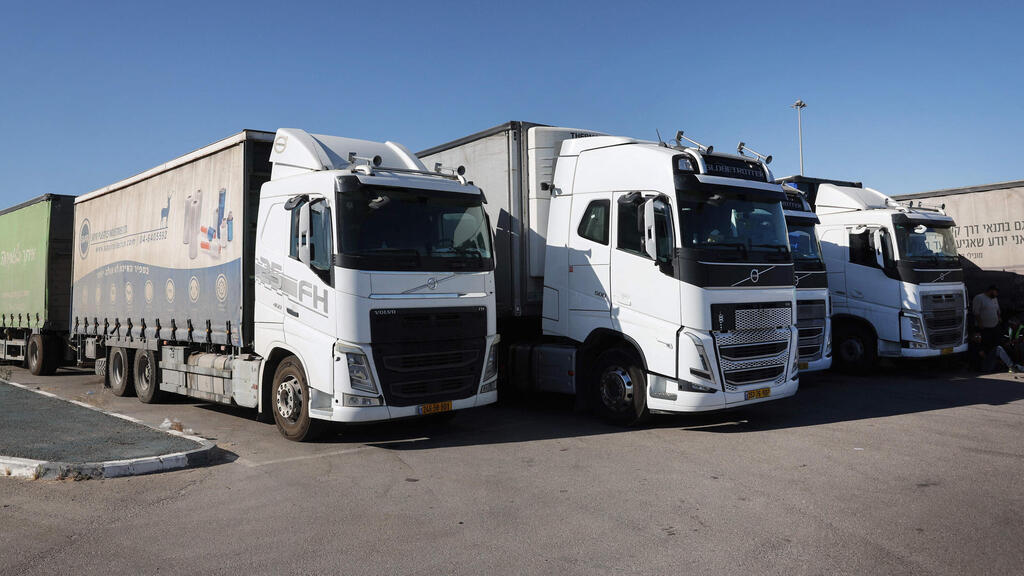
Kerem Shalom crossing
(Photo: Jack Guez/ AFP)
To preserve civilian access to care, Israel helped establish 14 field hospitals during the war. These were operated by countries and organizations, including the UAE, Jordan, the Red Cross and Médecins Sans Frontières. Israel coordinated the inspection and transfer of thousands of dual-use medical items such as oxygen filters and X-ray machines.
Tens of thousands of patients have also been medically evacuated from Gaza. Most now leave via Israel, using overland crossings or flights from Ramon Airport. Planes from the UAE and the EU (including Romanian military aircraft) have transported patients to hospitals abroad.
Humanitarian conditions in Gaza are assessed weekly in cooperation with UN agencies, measuring indicators such as food availability, sanitation, infrastructure and medical care. These assessments draw on reports from international partners, intelligence and direct communications with Gazans.
Two key coordination mechanisms are used: the Joint Coordination Board—an “ops room” where IDF officers, NGOs and UN agencies manage day-to-day aid—and a separate daily planning session with the UN.
More than 17,000 humanitarian movements inside Gaza have been coordinated with the IDF to safely transport supplies and staff. “You have 250 international staff inside Gaza who need to move from guesthouses to hospitals. How do you escort a convoy from Kerem Shalom to Deir al-Balah?” the official asked, underscoring the difficulty.
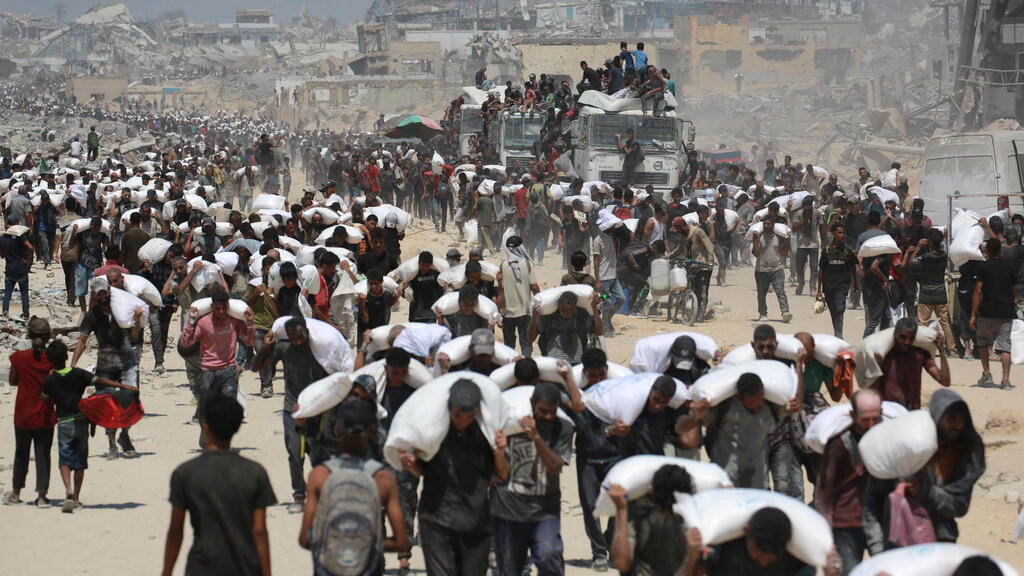
Gazans recieve aid
(Photo: Bashar Taleb/ AFP)
While aid enters Gaza in significant quantities, distribution has not always followed. “The responsibility of collecting and distributing the aid is with the humanitarian organizations,” the official explained. If aid sits uncollected, it spoils.
Bottlenecks, he said, often stem from logistical challenges such as limited vehicles or changes in routes—not Israeli obstruction. “There are hundreds of trucks in Gaza. Many are UN-owned. It’s not about bureaucracy—it’s about security,” he said. “This is a war zone. You can’t just send convoys through where terrorists are operating.”
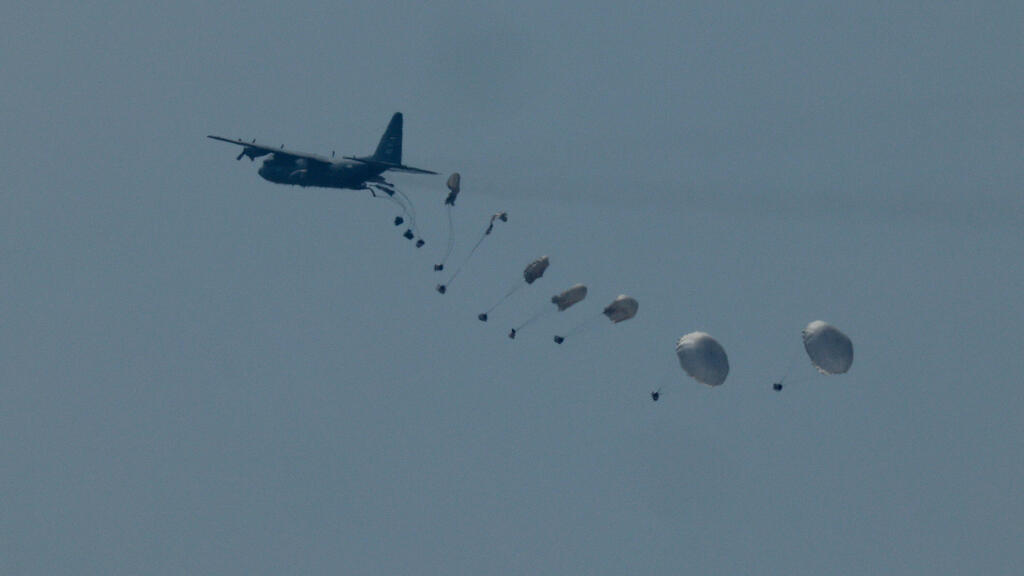
COGAT has also facilitated airdrops of humanitarian aid by foreign militaries. The Israeli Air Force clears airspace for these operations, which are carried out by countries such as the UAE. While “nothing replaces trucks,” the official acknowledged, airdrops can reach high-need areas cut off by ground fighting.
To increase access, COGAT has also implemented daily humanitarian pauses and designated corridors where military activity is suspended. These zones allow for safer movement of both civilians and aid deliveries, even without prior coordination.
During the Q&A portion of the briefing, a question was raised that reflected many international concerns: “Many media outlets are painting a picture of starvation. How do you respond? Why hasn’t a comprehensive briefing like this been presented more widely? Are there areas where Hamas is embedded that are still having trouble accessing food? And are people receiving basic perishables like fruits and vegetables, or only dried goods that require cooking?”
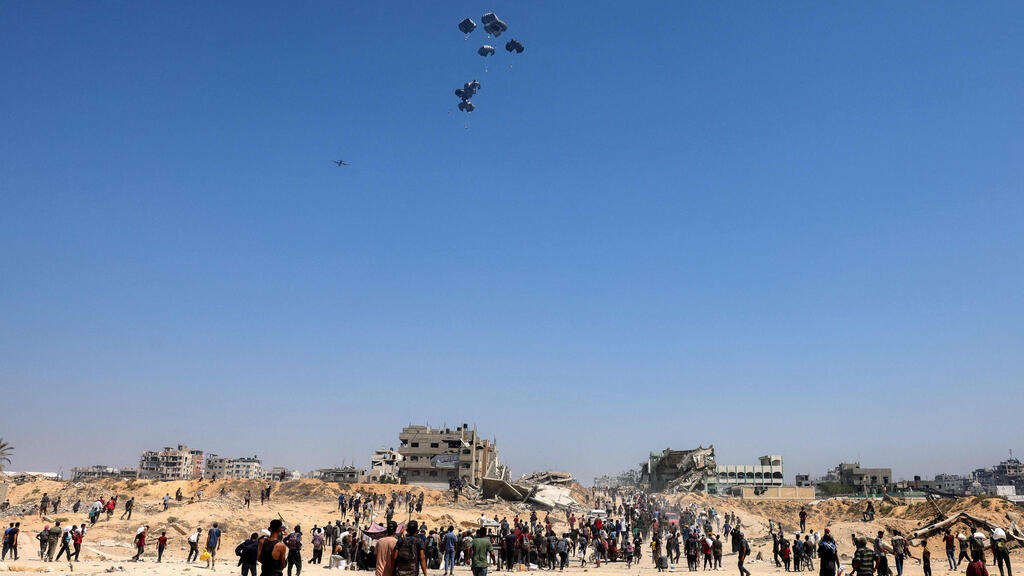
Air drops in Gaza
(Photo: Bashar Taleb/ AFP)
The official rejected the idea of starvation as a policy. “Starvation is an intentional action to create hunger,” he said. “What we’ve been doing—every day for the last year and 10 months—is a significant humanitarian effort.”
He noted that the war targets Hamas, not the population, even though Hamas embeds itself in civilian areas, including schools, mosques and hospitals. “It’s not like a hurricane in Haiti or an earthquake in Turkey. Once those are over, you’re just dealing with land and logistics. Here, it’s an active war zone, and Hamas doesn’t comply with anything,” he said.
Regarding food access, he said there is “no limit” on the types of aid that can go in, and that the deliveries include not just flour, pasta, rice and legumes, but also oil, fruits and vegetables. “You might be surprised, but there is also agriculture in Gaza,” he added. While conditions have deteriorated, local crops are still grown, and markets still operate.
Get the Ynetnews app on your smartphone: Google Play: https://bit.ly/4eJ37pE | Apple App Store: https://bit.ly/3ZL7iNv
Distribution remains a challenge, especially in conflict zones, but Israel has implemented multiple mechanisms to address it. In addition to distribution sites in southern Gaza, Israel supports UN and NGO deliveries to more remote areas and has opened the Sikkim crossing to serve the north. “Those are the efforts to attempt and reach all areas,” he said.
(Photo: Reuters/Amir Cohen)
Medical and nutritional needs have also shaped Israel’s coordination. One example involved blood donations: when shortages arose, Israel facilitated deliveries from the West Bank to Gaza.
The official also noted that Israel had responded quickly to a polio outbreak in Gaza by coordinating vaccine deliveries through humanitarian channels. “We understood the urgency and acted on it,” he said, emphasizing the role of public health coordination in the broader humanitarian effort.
The official also criticized inefficiencies within some international organizations. For instance, he said, the World Health Organization (WHO) relied too heavily on Egypt-based logistics. When trucks were stuck in the West Bank, Israel intervened. “We did a special coordination from the West Bank to Gaza,” he said, bypassing delays.
Additional efforts included responding to shortages in baby food. “If we understood in a conversation that there is a need for a boost ... we spoke with whoever we needed among the UN agencies and NGOs and pushed for that to go in,” he said, noting that such goods were even prioritized at customs and ports.
According to the official, aid shipments have often exceeded international requirements. “We have figures of plenty of aid that went in, even much more than the requirements,” he said.
He emphasized that aid coordination is not solely Israel’s responsibility. “Sometimes people forget this,” he said. “Israel is not the only one with obligations here. There are many more actors in this court.”
Recent improvements include the resumption of fuel deliveries, the activation of the UAE desalination pipeline, and the approval of spare parts and telecom gear requested by the UN.
“The war is against Hamas,” he said. “Not the population.”
And while Israel’s critics accuse it of weaponizing hunger, the official insisted that the opposite is true: “We comply with international humanitarian law not just because it’s required, but because it reflects our values.”