

Tel Aviv shut off water at beach faucets and began reducing other nonessential water use Monday as most of Israel’s privately operated desalination plants remained disrupted by unusually severe sea turbidity caused by the weather.
The municipality said it was reducing water use in irrigation systems, beach showers and faucets and other nonessential services. “We are updated on the malfunction and are in continuous contact with the national Mekorot water company,” the city said.
Tel Aviv curbs water use as most Israeli desalination plants remain shut
(Video: Yariv Katz)


Tel Aviv officials said municipal teams were prepared for different scenarios, were working to maintain essential services and were holding regular situation assessments with the relevant authorities. Givatayim also urged residents to conserve water.
A preliminary investigation by researchers at Israel Oceanographic and Limnological Research indicates that the turbidity that forced most desalination plants offline was likely caused by a bloom of microscopic algae that may have originated in the Nile Delta. Researchers said satellite images show large algal blooms near the delta, while currents in the eastern Mediterranean can carry material northward toward Israel’s coast.
The algae are particularly problematic because they are small enough to pass through some of the filters at desalination plant intakes. Algal blooms are a natural phenomenon influenced by weather, sea currents and the amount of organic material in the water, but researchers said further testing is needed to determine exactly which species are involved and whether they produce toxins. Samples have already been collected near Ashkelon and Palmachim for genetic sequencing and analysis.
Alon Zask, director general of Israel Oceanographic and Limnological Research, said it would not be surprising if algae that bloomed near the Nile Delta eventually reached southern Israel. He noted that Ashkelon, Israel’s southernmost major desalination plant, was the first to shut down, although factors such as the depth and location of each plant’s seawater intake can affect when individual facilities are hit.
Later Monday, the Sorek A desalination plant resumed operations, providing some relief to the national system. The National Cyber Directorate also clarified that the shutdowns were not caused by a cyberattack and said the disruptions stemmed from unusual turbidity in seawater following the recent weather, as reported by the Water Authority.
Earlier in the day, the Water Authority said most private desalination facilities in Israel had temporarily stopped operating because of the water conditions. The shutdowns began Saturday but were only publicly disclosed Monday.
The Water Authority instructed local authorities and water corporations Monday afternoon to halt public landscaping irrigation. It had already ordered reductions in freshwater supplies to agriculture in southern Israel, where the Ramat Negev Regional Council temporarily stopped freshwater supplies for farming altogether.
Facilities in Eilat and Hadera were not affected and continued operating, along with 20 local facilities run by Mekorot.
The Water Authority said the national water system remained under control and that Mekorot was increasing production from all available sources. “According to current estimates, some desalination plants will return to operation soon,” it said, adding that professional teams were closely monitoring water quality and would restart the plants as soon as seawater conditions allowed.
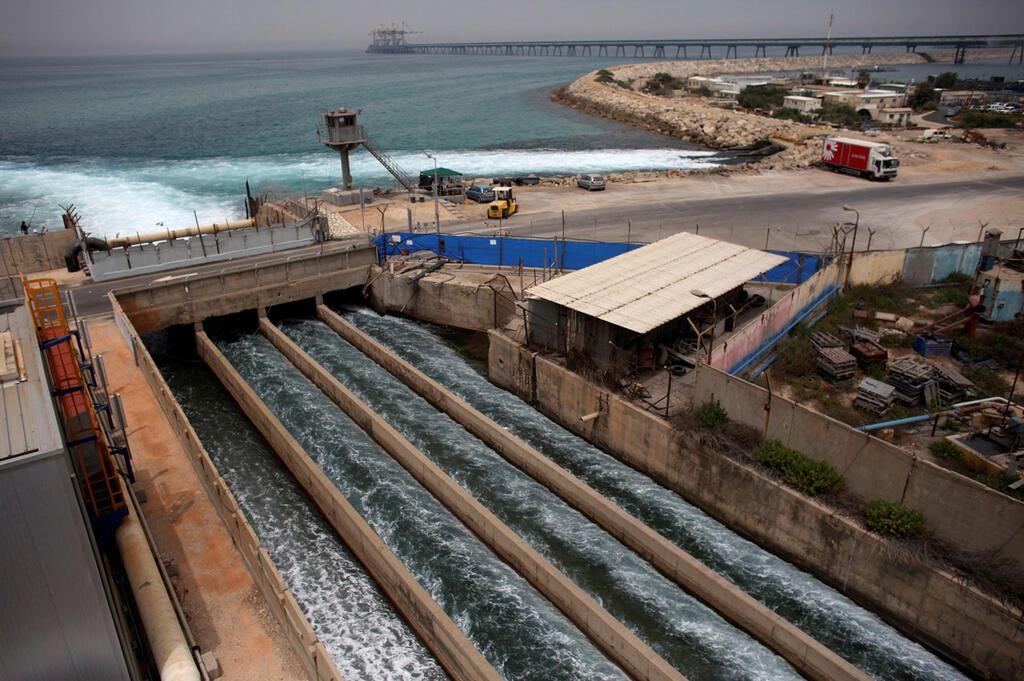
IDE seawater desalination plant in Hadera
(Photo: Reuters)
High turbidity prevents desalination plants from operating because suspended material can clog membranes and interfere with filtration. Different facilities may return to service at different times even when they are geographically close because of differences in intake depth and location.
Water Authority Director General Yehezkel Lifshitz said the main impact was currently being felt by freshwater consumers in southern Israel.
“Those suffering at the moment are those consuming fresh water in the southern region,” he said.
Asked why the public had not been informed earlier, Lifshitz said temporary shutdowns are not unusual in themselves.
“There are routine events and maintenance incidents in which facilities are shut down,” he said. “This event is indeed unusual, but desalination plants shutting because of malfunctions is something that happens.”
He added that the Ashkelon desalination plant had previously been shut because of pollution originating from Gaza without attracting public attention.
“You didn’t even hear about it,” Lifshitz said. “It happened, and it will happen again.”
First published: 17:04, 08.31.26