

Prime Minister Benjamin Netanyahu said the war with Iran is “not over,” warning that Tehran still has highly enriched uranium, active enrichment sites, proxy forces and ballistic missile capabilities despite U.S. and Israeli efforts to degrade them.
In an interview with CBS News’ 60 Minutes airing Sunday, Netanyahu told chief Washington correspondent Major Garrett that Iran’s nuclear material must be removed and its enrichment facilities dismantled.
Netanyahu: Iran war ‘not over’ until enriched uranium is removed
(Video: 60 Minutes)


“I think it accomplished a great deal, but it’s not over,” Netanyahu said, referring to the war. “There’s still nuclear material, enriched uranium that has to be taken out of Iran. There are still enrichment sites that have to be dismantled.”
International monitors estimate Iran still has about 970 pounds of nearly bomb-grade uranium.
Asked how the uranium should be removed, Netanyahu said: “You go in and you take it out.”
Pressed on whether that would involve Israeli or U.S. special forces, Netanyahu declined to discuss military options. He said U.S. President Donald Trump had spoken to him about the matter and that removing the uranium could be done physically. “If you have an agreement and you go in and you take it out, why not?” Netanyahu said. “That’s the best way.”
Netanyahu would not say what Israel or the United States would do if no agreement is reached with Iran. “I’m not going to talk about our military possibilities, plans, or anything of the kind,” he said.
He also refused to give a timeline for achieving the goal, calling it “a terrifically important mission.”
Gallery
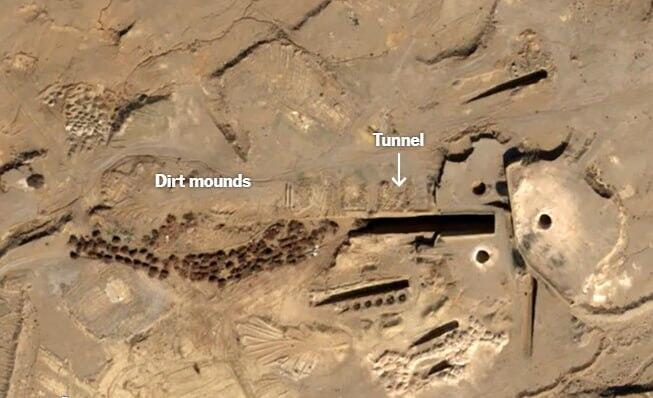
Satellite image shows tunnel entrances and dirt mounds at Iran’s Isfahan nuclear facility following US strikes
(Photo: New York Times)
Netanyahu said Iran’s nuclear capabilities, regional proxies and missile production capacity had been significantly damaged, but not eliminated.
“Now we’ve degraded a lot of it,” he said. “But all of that is still there, and there’s work to be done.”
Meanwhile, Iranian state media said that Tehran has submitted its response to the latest U.S. ceasefire proposal through Pakistani mediators, with Tehran seeking to shift the immediate focus of negotiations away from its nuclear program and toward ending the war across all fronts, especially Lebanon.
According to Iranian state TV and IRNA, Iran’s proposed text calls for the current phase of talks to focus exclusively on halting hostilities in the region, ensuring maritime security and restoring stability. Tehran wants more contentious issues, including the future of its nuclear program, addressed only at a later stage.
The latest U.S. proposal reportedly sought a broader arrangement that would end the war, reopen the Strait of Hormuz and roll back Iran’s nuclear program. Sources in both camps told Reuters that the current diplomatic effort is aimed first at reaching a temporary memorandum of understanding that would pause the fighting and allow shipping through the Strait of Hormuz while the sides negotiate a fuller deal.
There was no immediate White House response to Iran’s reply. U.S. Ambassador to the United Nations Mike Waltz said President Trump was giving diplomacy “every chance we possibly can before going back to hostilities.”
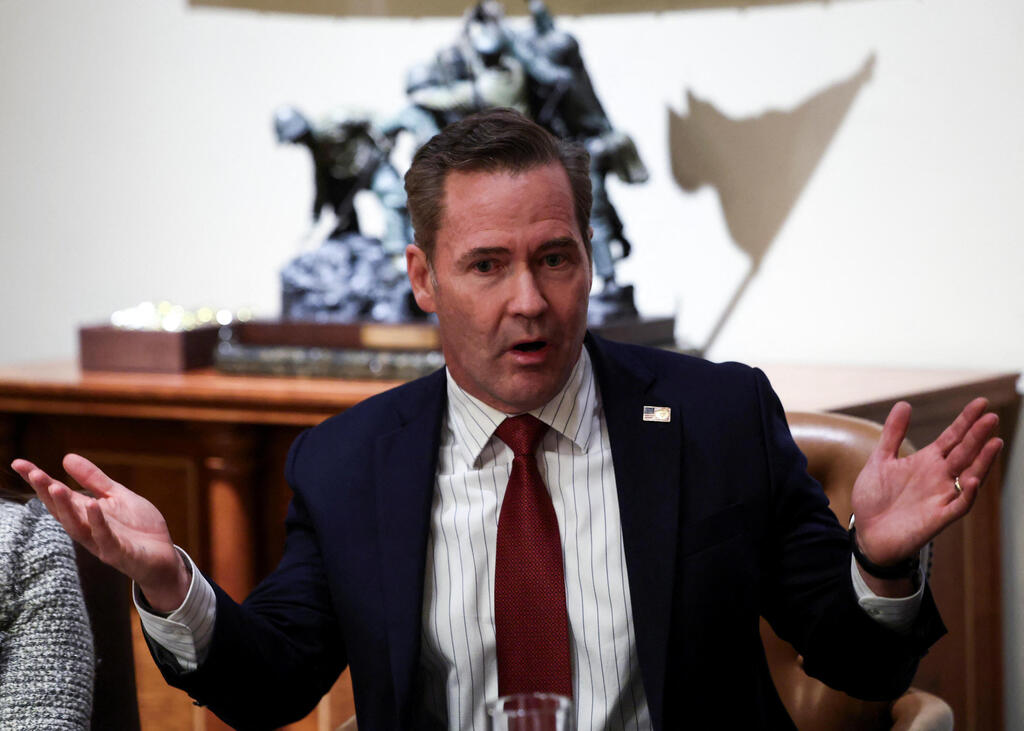
US Ambassador to the United Nations Mike Waltz
(Photo: REUTERS/Evelyn Hockstein)
The diplomacy is being led largely through Pakistan, which previously hosted face-to-face talks between the United States and Iran. Pakistani army chief Field Marshal Asim Munir said Islamabad remains committed to helping end the conflict. Pakistani Prime Minister Shehbaz Sharif also spoke by phone with Qatari Prime Minister Sheikh Mohammed bin Abdulrahman Al Thani, whose government is also involved in mediation.
Qatar has emerged as another key channel. U.S. Secretary of State Marco Rubio met Saturday in Miami with the Qatari prime minister, joined by Trump envoy Steve Witkoff. Axios reported that the talks focused on a possible memorandum of understanding to end the war, though the State Department statement did not mention Iran, saying only that the sides discussed deterring threats and promoting stability in the Middle East.
The Iranian response comes as the fragile ceasefire is being tested in the Gulf. A drone attack caused a small fire aboard a commercial ship near Qatar, while the United Arab Emirates and Kuwait reported hostile drones entering their airspace. The UAE said it intercepted two drones launched from Iran. Kuwait said hostile drones entered its airspace early Sunday and that its forces responded according to established procedures, though it did not say where the drones came from.
Qatar said a drone targeted a commercial ship that had arrived from Abu Dhabi and was heading to Mesaieed port in Qatari territorial waters, setting a small fire that was extinguished. The United Kingdom Maritime Trade Operations Center said the attack occurred 23 nautical miles northeast of Doha. No casualties or environmental damage were reported, and there was no immediate claim of responsibility.
There have been several attacks on ships in the Persian Gulf over the past week. South Korea said preliminary findings showed two unidentified airborne objects struck the stern of the South Korean-operated vessel HMM NAMU about a minute apart while it was anchored in the Strait of Hormuz, causing an explosion and fire. Officials said they had not determined who was responsible.
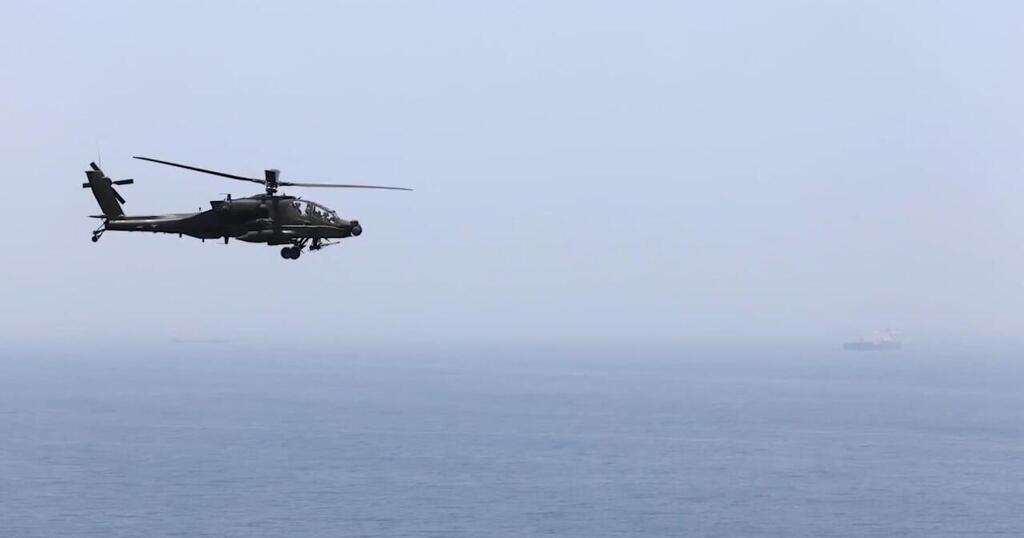
US helicopter flies over Strait of Hormuz
(Photo: US Central Command)
The Strait of Hormuz remains central to the crisis. Iran has effectively blocked most non-Iranian shipping through the waterway since the war began Feb. 28, while the United States has imposed a blockade on Iranian ports. Trump has threatened to resume full-scale bombing if Iran does not accept an agreement to reopen the strait and roll back its nuclear program.
In recent days, the U.S. military struck two Iranian or Iran-linked oil tankers that it said were attempting to breach the blockade and enter an Iranian port, forcing them to turn back. Iran’s Revolutionary Guard navy warned that any attack on Iranian oil tankers or commercial vessels would be met with a “heavy” or “harsh” assault on U.S. bases in the region and on enemy ships.
At the same time, Iran appears to be making limited gestures toward mediators. Iranian sources said Tehran approved the passage of a Qatari liquefied natural gas tanker through the Strait of Hormuz en route to Pakistan as a confidence-building move. If completed, it would be the first passage of a Qatari LNG vessel through the strait since the war began.
Iran has also warned against European naval involvement. Iran’s deputy foreign minister said on X that the deployment of destroyers around the Strait of Hormuz under the pretext of “protecting shipping” would amount to an escalation. He said the presence of French and British warships, potentially accompanying what Tehran called illegal U.S. actions, would be met with an “immediate decisive response.”
Britain said Saturday it would deploy the destroyer HMS Dragon to the Middle East as part of an international mission promoted by Britain and France to protect vessels crossing the Strait of Hormuz. The British Defense Ministry described the mission as defensive and independent.
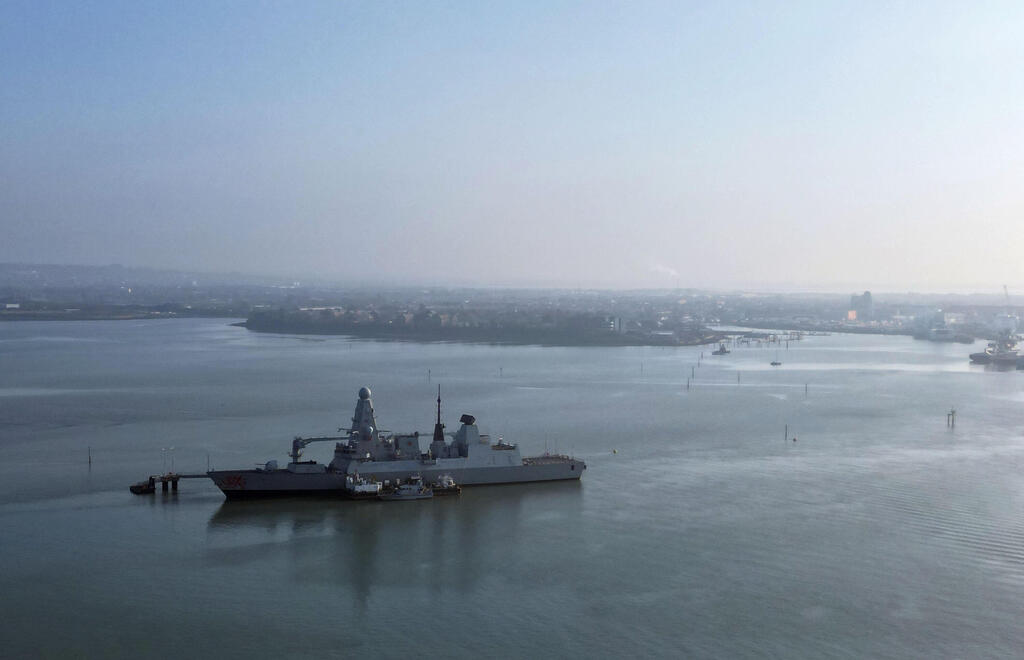
A British destroyer in the Strait of Hormuz
(Photo: JUSTIN TALLIS / AFP)
Another major obstacle is Iran’s nuclear program, especially its stockpile of highly enriched uranium. The UN nuclear watchdog says Iran has more than 440 kilograms, or 970 pounds, of uranium enriched up to 60% purity, a short technical step from weapons-grade levels. Iran wants that issue deferred, while Washington is seeking limits as part of any broader deal.
Iranian military officials say they are prepared to defend nuclear facilities. Brig. Gen. Akrami Nia told state media that Iranian forces are on “full readiness” to protect sites where uranium is stored, saying Tehran had considered the possibility of infiltration or heliborne operations aimed at seizing nuclear material. International Atomic Energy Agency Director-General Rafael Mariano Grossi previously said most of Iran’s highly enriched uranium is likely at the Isfahan nuclear complex, which was hit in earlier U.S.-Israeli airstrikes.
Iran’s public messaging has remained defiant. Foreign Minister Abbas Araghchi accused Washington of choosing “military adventure” whenever diplomacy is possible, saying, “Iranians never surrender to pressure.” Iranian state broadcaster also reported that Ali Abdollahi, commander of Iran’s central military headquarters, briefed Supreme Leader Mojtaba Khamenei on the readiness of the army, Revolutionary Guard, security forces, border police, Defense Ministry and Basij militia. Abdollahi said Iranian forces were prepared “defensively and offensively” and would respond “quickly and forcefully” to any attack.
Trump, meanwhile, has continued to signal that military options remain on the table. He mocked Iran overnight on Truth Social with AI-generated images showing alleged U.S. damage to Iranian forces, including drones falling, a U.S. destroyer firing a laser at drones and Iranian ships sinking. Speaking to reporters outside the White House, he said the United States expected Iran’s response soon and threatened to renew Project Freedom, a naval operation to rescue ships from the Strait of Hormuz, saying Washington had “other ways” to act if talks failed.
For now, Iran’s response appears to leave diplomacy alive but narrows the immediate agenda: halt the war first, stabilize the region and the Strait of Hormuz, and push nuclear concessions into a later phase. The U.S. position, by contrast, continues to link any durable ceasefire to reopening the waterway and curbing Iran’s nuclear program.