

Following the massacre at a first-night Hanukkah candle-lighting event of the Jewish community in Bondi Beach, Sydney, on Sunday, Israel’s security officials are warning of the risk of jihadist copycat terror attacks elsewhere around the world. Officials say potential targets include both Jewish community sites and official Israeli diplomatic missions.
Against that backdrop, Israeli embassies and missions worldwide have been instructed to avoid holding public Hanukkah candlelighting events in open spaces over the coming week, citing concerns over attacks similar to the one carried out in Australia. The directive comes alongside a further increase in security alert levels, measures that are routinely taken during Jewish holidays, including ahead of Hanukkah.
Minute by minute of the Bondi Beach Hanukkah massacre


Security at Israeli missions was already heightened following the October 7 massacre, amid a sharp rise in antisemitic and anti-Israel incidents globally, and those measures were not rolled back even after the end of the war. In parallel, Israeli diplomats in several countries have been instructed not to attend synagogues or Jewish community offices due to terror threats. In other countries, such decisions remain at the discretion of the embassy’s security officer.
Israel has limited direct control over events organized by Jewish communities abroad, but officials say coordination is ongoing with local security services in various countries. On Sunday, Russian authorities issued a warning to Jewish community leaders in Moscow. As a result, for the first time in 35 years, the traditional Hanukkah candle-lighting ceremony in Red Square was canceled. Similar events at Chabad centers in the city were also called off.
Israel’s National Security Council and the Mossad are in continuous contact with their counterparts overseas, repeatedly urging stronger security measures for Jewish events. One of the challenges, officials note, is that many countries do not permit Jewish communities to independently hire armed security guards.
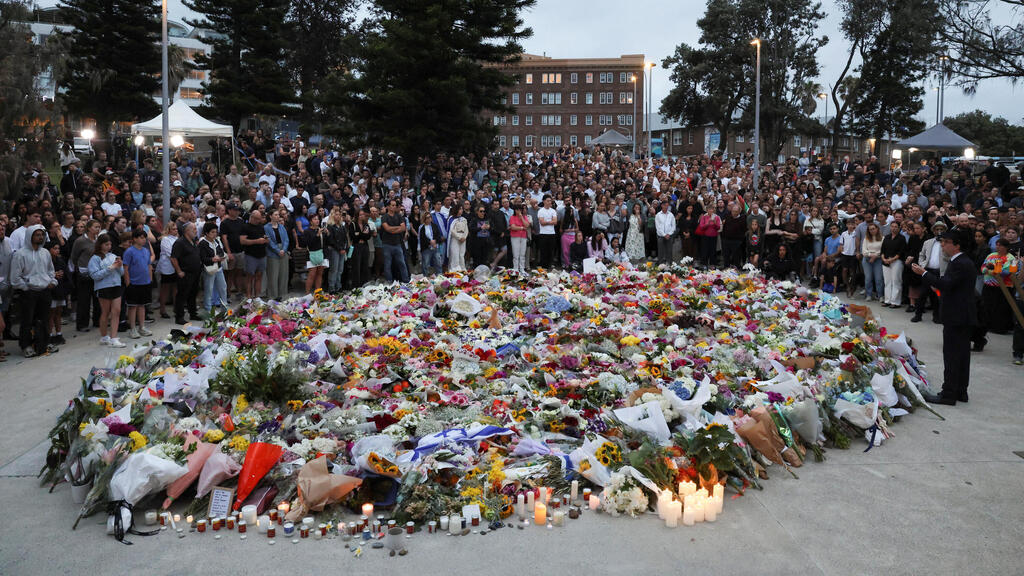
At the Sydney event, armed police officers were present, but according to Israeli security assessments, they failed to prevent the shooting and did not engage the terrorists for several minutes.
As a result, some are turning to private-sector solutions. Former Mossad chief Yossi Cohen currently serves as a senior adviser to the Secure Community Network, which provides security services to 141 Jewish federations across North America. Cohen helped establish a technological system designed to monitor threats against more than 13,000 Jewish institutions.
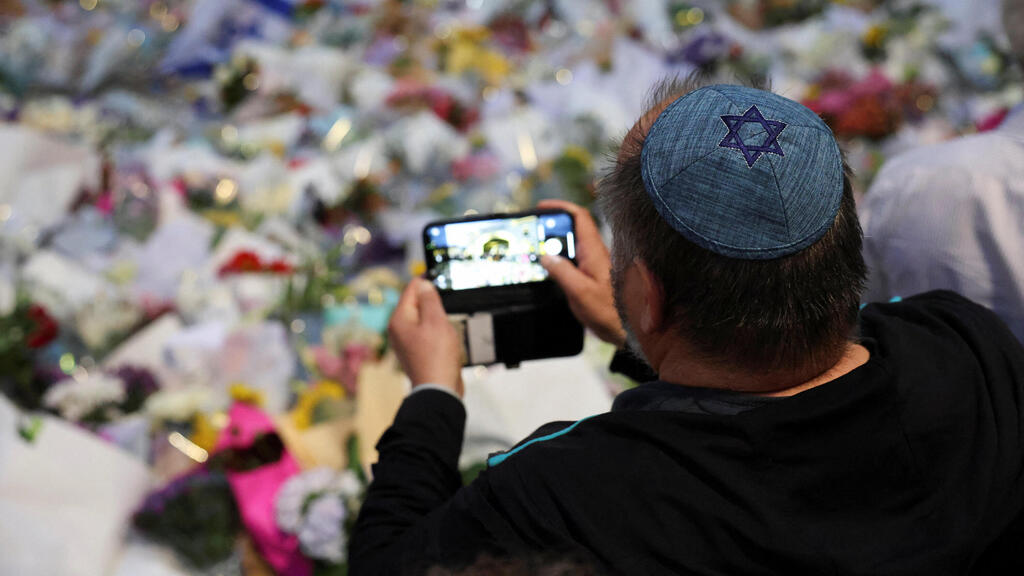
(Photo: Hollie Adams/ Reuters)
In one recent week alone, the system identified approximately 3,400 high-level threats. These were not general expressions of hostility online, but credible threats of physical harm or murder.
The system shares intelligence with Jewish communities and local law enforcement agencies. For example, if an individual in New Jersey who has previously threatened Jews travels to California and then to Utah, Jewish institutions in those areas are alerted. A senior official at a Jewish federations organization recently said the system has contributed to arrests in states including Arizona, Alabama, Georgia and Virginia.
The goal, officials say, is to use technology to stop potential attackers before they act. However, security officials stress that no technological solution is foolproof. The terrorist who murdered 11 worshippers at the Tree of Life synagogue in Pittsburgh in October 2018 posted online about his intentions before carrying out the attack, but the threat was not detected in time.
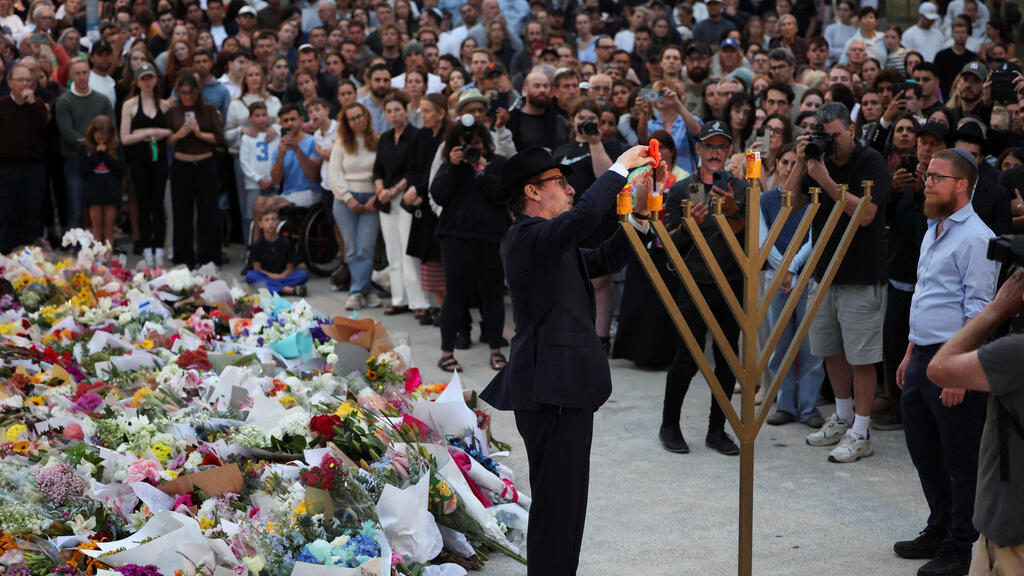
(Photo: Hollie Adams/ Reuters)
Community leaders acknowledge that not every terrorist signals intentions online. For that reason, Jewish institutions must also be protected by armed security personnel as a last line of defense.
Speaking recently at a closed panel during the General Assembly of Jewish Federations of North America, Cohen said federations approached him after realizing they lacked sufficient intelligence about threats against their communities.
“Together with SCN, we built an alert system that learns the threats against every synagogue, every Chabad house and every Jewish community center,” Cohen said. “Hate crimes coming from within American society are on the rise. I travel across the United States and see awareness of the threat, but unfortunately we have encountered it at the doors of our synagogues. They will not come on airplanes like September 11.”