

After overnight U.S. military strikes on targets near the Strait of Hormuz, Iran’s Revolutionary Guard Corps accused Washington on Saturday morning of violating its commitments. Iran said IRGC naval forces attacked U.S. military positions in the area in response. Shortly afterward, Bahrain said it had come under attack Saturday morning by drones launched from Iran. Bahrain’s Foreign Ministry condemned the attack, saying it constituted a blatant violation of the kingdom’s sovereignty, threatened civilian security and breached international norms and conventions.
The ministry added that Iran’s attacks, coming as regional and international efforts were underway to reduce escalation, placed sole responsibility on Tehran for undermining peace efforts. It said peace cannot be built through intimidation and affirmed Bahrain’s full and legitimate right to defend its sovereignty.
The footage released by CENTCOM from the strike in Iran
(Video: CENTCOM)


Gallery
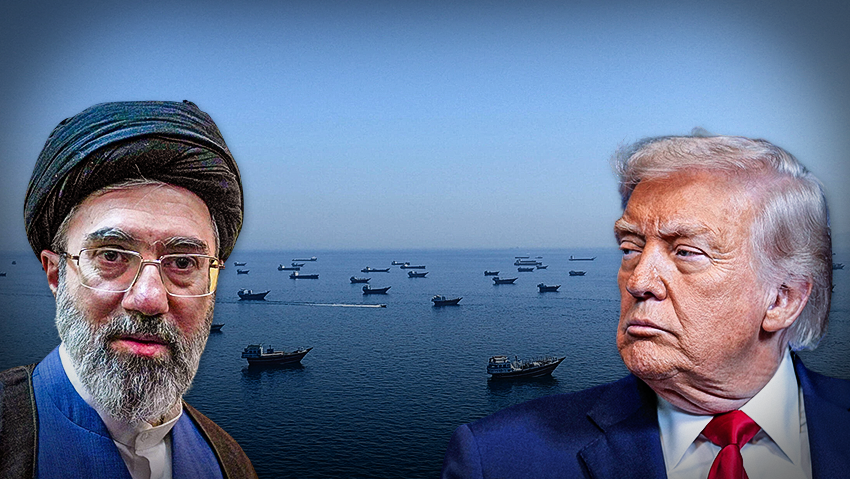
The US struck Iran, which launched drones toward Bahrain
(Photo: Hamed Jafarnejad/ISNA/WANA (West Asia News Agency) via REUTERS, AP/Alex Brandon, REUTERS/Stringer)
Back to the confrontations around the Strait of Hormuz: Iran on Saturday morning warned countries in the Persian Gulf against allowing the United States to attack the Islamic Republic from their territory. The Revolutionary Guards claimed that, under the agreement, arrangements for monitoring maritime traffic and passage through the Strait of Hormuz are coordinated with Iran. They said the United States had tried to violate those arrangements through various parties and had received an appropriate response, warning that any renewed aggression would draw a broader Iranian response.
At the same time, Iran’s Khatam al-Anbiya headquarters, its emergency command, also issued threatening messages about possible escalation, saying Iranian forces were fully prepared to reinforce the country’s sovereignty.
Ebrahim Azizi, head of the National Security and Foreign Policy Committee in Iran’s parliament, called U.S. President Donald Trump the defeated president and wrote on X that Trump had again shown he was not committed to the principles of negotiations or to the ceasefire. Azizi said what he described as an unwise U.S. violation of the ceasefire would, as in the past, force Washington to back down and regret its actions.
Azizi added that Iran was fully prepared to respond firmly to any conduct that violates the memorandum of understanding, undermines security or crosses the country’s red lines. He said the forces’ decisive response to the latest U.S. violation of the ceasefire proved that point, and that any further violation of U.S. commitments would be met with a response.
According to Azizi, the United States and all countries planning to pass through the Strait of Hormuz should understand that passage through the waterway is possible only while respecting Iran’s authority and the designated routes. He said the strait is under strict management, especially by the Revolutionary Guards’ navy, and that any violation of the rules or routes would be dealt with firmly.
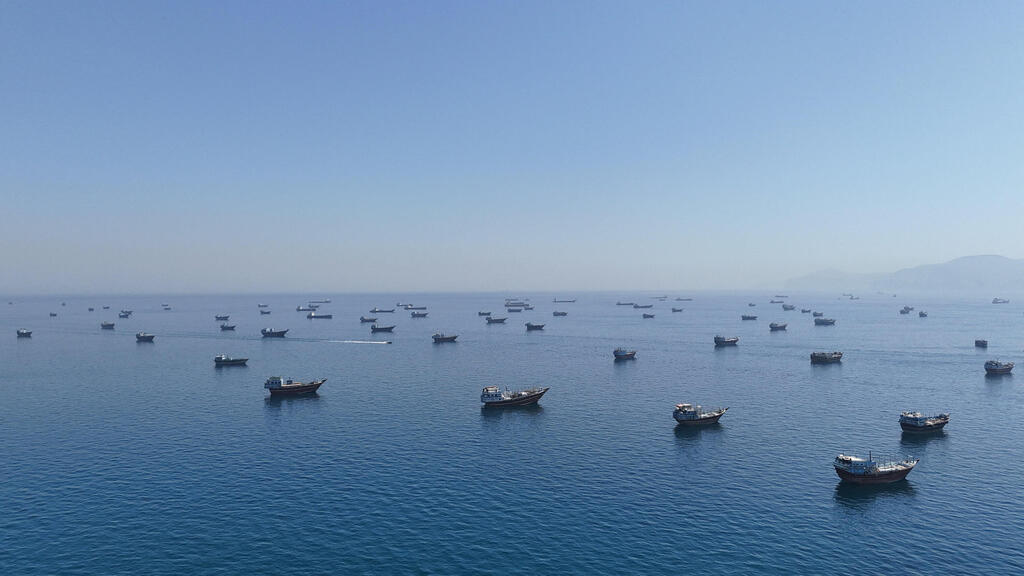
Strait of Hormuz
(Photo: REUTERS/Stringer)
Iran’s Foreign Ministry issued a statement condemning the overnight U.S. strikes, saying they amounted to a blatant violation of the U.N. Charter and the memorandum of understanding. Iran also claimed Israel had attacked in Lebanon in coordination with the United States. According to the Iranian Foreign Ministry, that constituted a violation of Paragraph 1 of the memorandum of understanding on ending the war. It said Iran would defend its sovereignty, security and national interests with all its power, and that Iran’s defensive strikes against targets linked to U.S. attacking forces were carried out on that basis. The ministry also said all countries on the southern coast of the Persian Gulf must uphold the principle of good neighborliness.
The U.S. strikes came shortly after Trump issued a veiled threat toward Tehran, which had attacked ships in the Strait of Hormuz a day earlier using drones. Asked by reporters in the Oval Office whether there would be consequences for the attack, Trump said he objected to Iran firing the drones. He said four were intercepted and three hit a ship that was not allied with the United States but was valuable and sustained some damage. He warned that Iran should not take such actions and said the response would become clear when it happened.
Shortly afterward, U.S. Central Command announced that the strikes were a powerful response to the attack on the commercial ship crossing the strait. CENTCOM said U.S. aircraft struck Iranian missile and drone storage sites and coastal radar sites after Iran hit the cargo ship M/V Ever Lovely on June 25 with an explosive drone. It added that the Singapore-flagged cargo ship had exited the Strait of Hormuz along Oman’s coast when Iran attacked.
CENTCOM added that the Iranian forces’ unjustified aggression against commercial shipping clearly violated the ceasefire. It said Iran’s dangerous conduct undermined freedom of navigation as commerce increasingly moves through the vital international trade corridor. CENTCOM said its forces continue to coordinate and support safe passage for commercial vessels crossing the strait, and that the U.S. military remains present and fully vigilant to ensure all aspects of the agreement with Iran are upheld, maintained and remain in full force operationally.