

A dispute between an IDF division and Southern Command has led to an unusual step not seen around the Gaza Strip since before Israel’s 2005 disengagement: agricultural equipment owned by residents of western Negev communities has been loaned to the military in recent weeks for work beyond the border fence.
Residents of the Gaza border towns said some of the tasks took on the character of “actual agricultural cultivation,” particularly near Beit Hanoun in northern Gaza, a sector that has been under Israeli control for about two years rather than governed by Hamas. The IDF denied that characterization, saying the tractors were loaned to the division strictly to improve lines of sight by clearing dense vegetation along the Gaza side of the border.
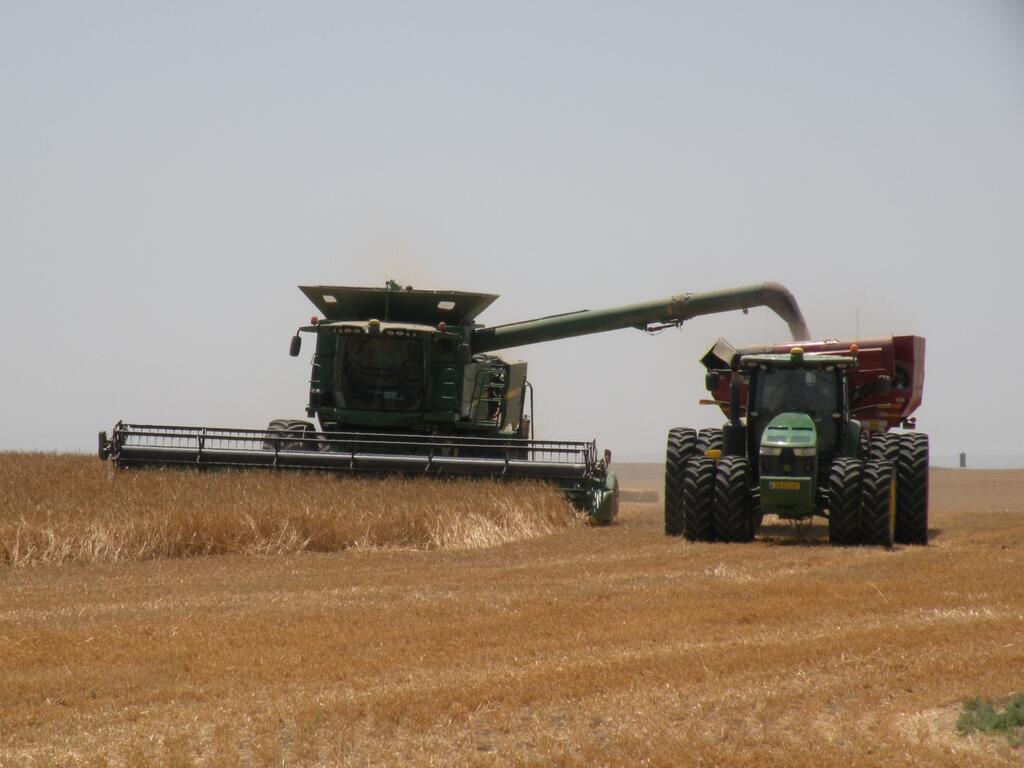
(Photo: Nir Ben Zaken)
The army division supported the unusual move, but Southern Command expressed reservations, in part because of the symbolic link it creates between the use of land captured in war and its yet-to-be-determined future status. Recently, right-wing activists crossed into Gaza, planted Israeli flags and demanded resettlement there more than two decades after the evacuation of Israeli communities from the Gaza Strip.
During the long war, the army struggled to carry out many engineering tasks, including tunnel detection and the demolition of Palestinian buildings, because of shortages of bulldozers. As a result, the military has contracted such equipment from Israeli firms across multiple sectors.
With the end of major offensive operations, the need for heavy engineering equipment has diminished, and Southern Command was reportedly surprised that privately owned agricultural machinery was being used for these tasks. The work has largely been performed by reservists.
Less than half of the Gaza Strip remains under Israeli control, divided into two areas. The first is a fortified perimeter known as the “buffer zone,” averaging about 700–800 meters from the border to the 70-meter ridge that affords greater protection for the surrounding Israeli communities. That ridge ends near Khan Younis, where the terrain in the southern strip is flatter.
The second area under IDF control extends to the so-called “yellow line,” to which Israeli forces withdrew at the end of the war in October, reaching an average depth of 3–4 kilometers from the border. If phase two of an agreement between Israel and Hamas materializes this year, forces are expected to withdraw from the yellow line area back to the buffer zone.
Israeli airstrikes in Gaza City, Thursday


Israeli officials have said that, in any scenario, troops will remain at least in the security zone established during the war — the buffer area. That zone was cleared of Palestinians early in the war, accompanied by the leveling of thousands of dunams of agricultural land and Palestinian structures.
Early in the war, Israeli authorities were barred from disclosing the clearing operations due to U.S. objections and concerns over allegations of war crimes. The IDF now acknowledges that it is flattening dozens of additional structures daily as it expands work even in the yellow line area.
As part of this effort, troops continue to search for and uncover numerous shafts and tunnels left by Hamas on the Israeli-controlled side of the yellow line. The army also released footage showing the demolition of a tunnel after its inspection was completed.
Southern Command says there are many more tunnels on the Israeli side of the yellow line, at varying depths and lengths yet to be revealed, and that it could take many more months — if ever — to neutralize the subterranean threat.
“There is no entry of civilian farmers into the security zone," the IDF said in response to questions. "The only activity occurring in the area is operational, for the purpose of organizing the space and providing optimal protection for residents.”
A military official added: “These are machines requisitioned for the IDF and operated by enlisted soldiers. Equipment of this type is typically used for clearing vegetation and leveling ground. The forces are reorganizing the area to allow improved fields of view.”