

Spanning roughly 250 pages, with hundreds of footnotes and references to more than 10,000 documented items, a new report lays out what it describes as a systematic pattern of sexual violence, humiliation and abuse committed by terrorists and civilians who infiltrated from Gaza during the Oct. 7 massacre and throughout the captivity of hostages held in Gaza.
The report, excerpts of which are being published Tuesday for the first time in ynet and Yedioth Ahronoth, details testimony, video documentation and forensic findings pointing to sexual and gender-based crimes at massacre sites, military bases and during the transport and captivity of hostages in Gaza. It identifies recurring patterns indicating that these were not isolated incidents, but acts that were “documented, celebrated and systematically disseminated in order to intensify fear and trauma.”
The report, the product of more than two years of work, was compiled by members of the Civil Commission on Oct. 7 Crimes by Hamas Against Women, Children and Families. The civil society organization was established shortly after the outbreak of the war.
“We understood that we needed to create evidentiary documentation at standards that could not be denied,” said Dr. Cochav Elkayam-Levy, who heads the commission.
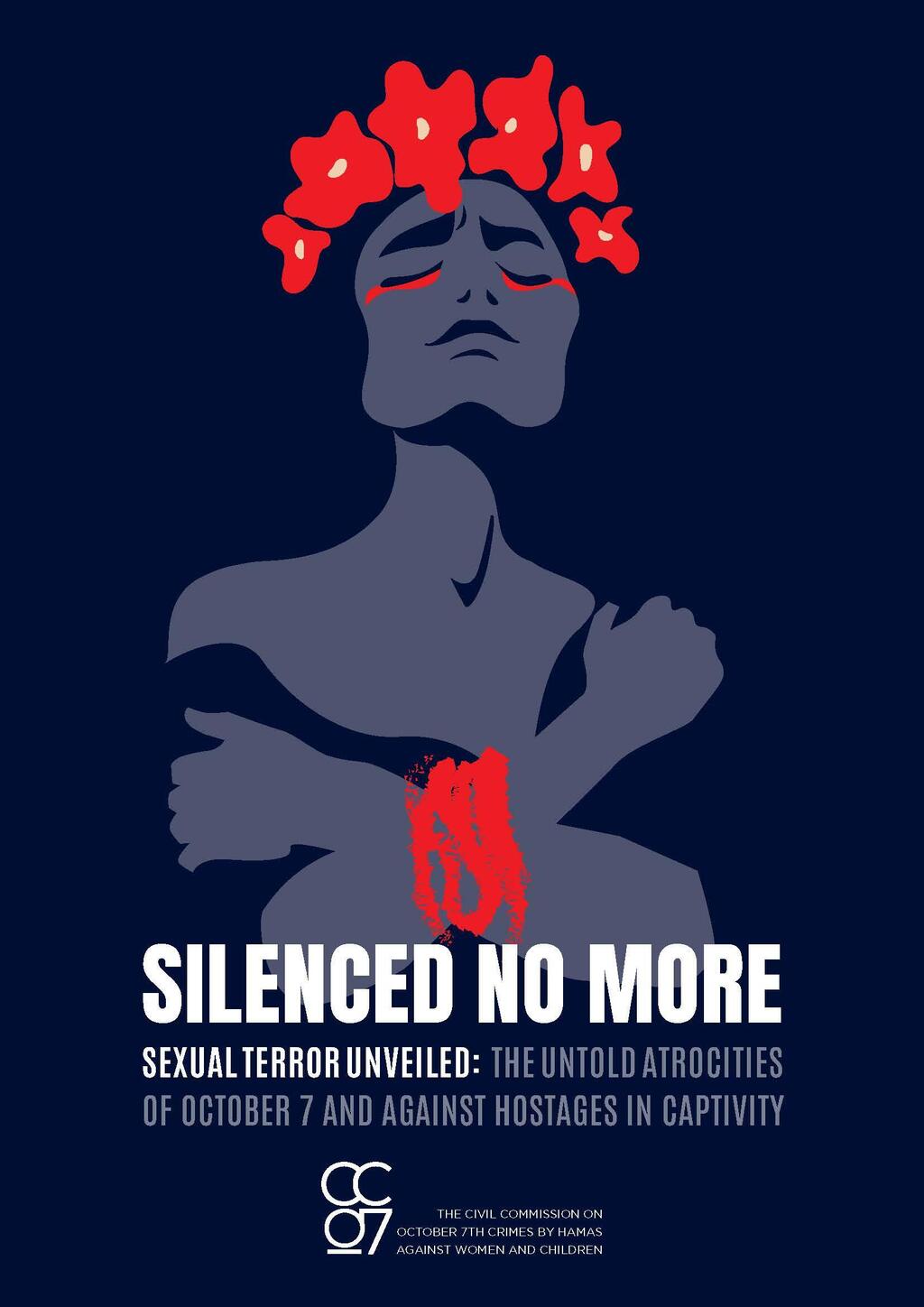
Some of the findings are based on documentation and testimony from teams involved in identifying bodies at the Shura military base, as well as opinions from pathologists who examined evidence from the day of the attack. These were supplemented by detailed testimony from some of the hostages who returned from Gaza.
At the center of the report is a digital archive cataloging and documenting thousands of videos, photographs and testimonies from survivors, rescue forces and relatives relating to the sexual and gender-based crimes committed by the attackers, who used victims’ bodies to intensify humiliation and terror.
Alongside testimony published in the media and through various documentation initiatives, the commission’s database also includes about 400 testimonies collected independently.
“We wanted the testimony to serve legal purposes, while ensuring the interviews were sensitive to the interviewees’ trauma,” said commission CEO attorney Merav Israeli-Amarant. “After we began reviewing the materials that started flowing in, we understood that our mission was to build an archive of war crimes.”
A secure digital archive was subsequently established, inaccessible to the public, containing all documented findings collected on the issue, many of which were initially circulated on social media before later being removed. Without organized documentation, Israeli-Amerant said, “they will disappear and be erased.”
‘To maximize humiliation’
Efforts to document Hamas’ sexual crimes and raise international awareness began in the first days after the war broke out, initially as a spontaneous initiative by researchers and activists in the field, and later through various organizations and projects. The report published Tuesday is another link in that chain, though its scope and the archive underlying it may provide a foundation for future research.
The report presents testimony and findings according to the locations of the attacks: the Nova music festival; Route 232 and surrounding areas; kibbutzim; military bases; and the abuse of hostages en route to and inside Gaza.
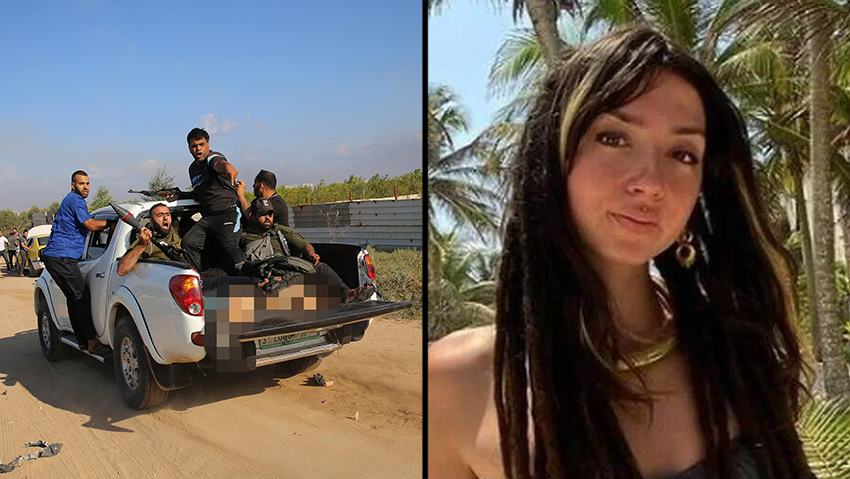
Footage of Shani Louk’s abduction
(Photo: AP Photo/Ali Mahmud)
Researchers identified 13 patterns of sexual and gender-based assault, including rape and gang rape, assault before and during murder, forced stripping, threats of forced marriage and assaults committed in front of victims’ relatives. According to the report, these patterns recurred across multiple locations, indicating that the use of such practices was intentional, widespread and systematic, “carried out with particular cruelty in order to maximize the pain, humiliation and suffering of the victims.”
The report also states that assaults were filmed and distributed on social media to amplify the atrocities.
Alongside the historical purpose of preserving the material for future generations and potentially supporting future legal cases against perpetrators, the researchers say they seek another goal: official recognition by parliaments and international institutions that these crimes occurred.
“No prosecution will reflect the depth and breadth of what happened,” Elkayam-Levy said. Still, Israeli-Amarant added, “institutional international recognition creates the beginning of justice.”
The mission has only begun
Efforts to amplify the voices of victims of atrocities and sexual crimes began shortly after the massacre. What started as an ad hoc initiative by researchers in gender studies and international law later evolved into the establishment of the commission, a civil society organization that undertook an ambitious mission: to collect evidence as comprehensively as possible, cross-check and verify it wherever possible and identify patterns of abuse.
Attempts to document the scale of sexual violence at massacre sites face an inherent difficulty: many victims were murdered, and in numerous cases bodies were burned or completely destroyed. Nevertheless, testimony from rescue personnel, analysis of photos and videos and accumulated witness accounts combine to form what the report describes as a clear and disturbing picture: severe sexual violence and deliberate mutilation of victims’ bodies — women and men alike — accompanied the massacres.
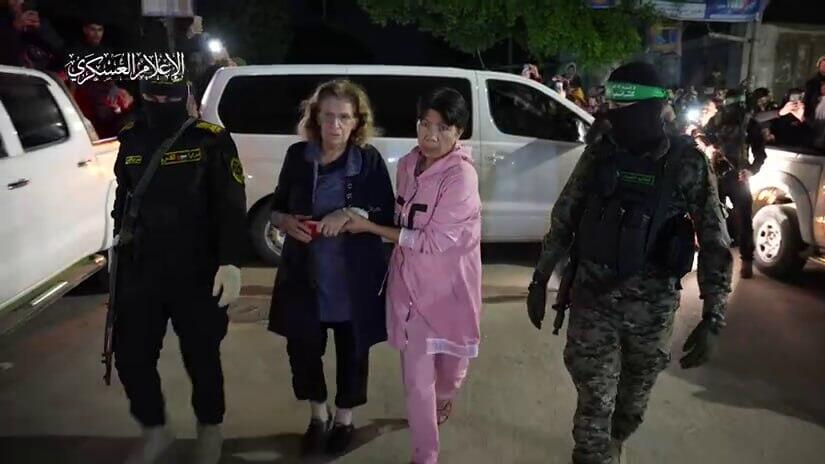
The release of Ofelia Roitman
“Additional information may emerge over time,” the report states, “as survivors and rescue personnel find the words and trust needed to share their experiences.”
In other words, the mission of documentation and research is not over — it is only beginning.
While victims who were killed cannot testify, the section devoted to hostages includes extensive and explicit testimony regarding sexual assault, sexual humiliation, forced stripping and public exposure.
The report divides testimony according to stages of abuse during the kidnapping. Victims were often abducted in short pajamas or underwear. “She didn’t even have time to put on pants,” a mother abducted with her children from their kibbutz home told the commission. Another hostage testified: “That’s how they took me, almost naked, half asleep.”
Another recurring pattern during the kidnappings was terror inflicted within the family unit: abductors murdered relatives in front of family members who were later taken to Gaza. In many cases, the attackers documented and distributed footage of the kidnappings and, according to numerous testimonies, women appeared naked, beaten and humiliated.
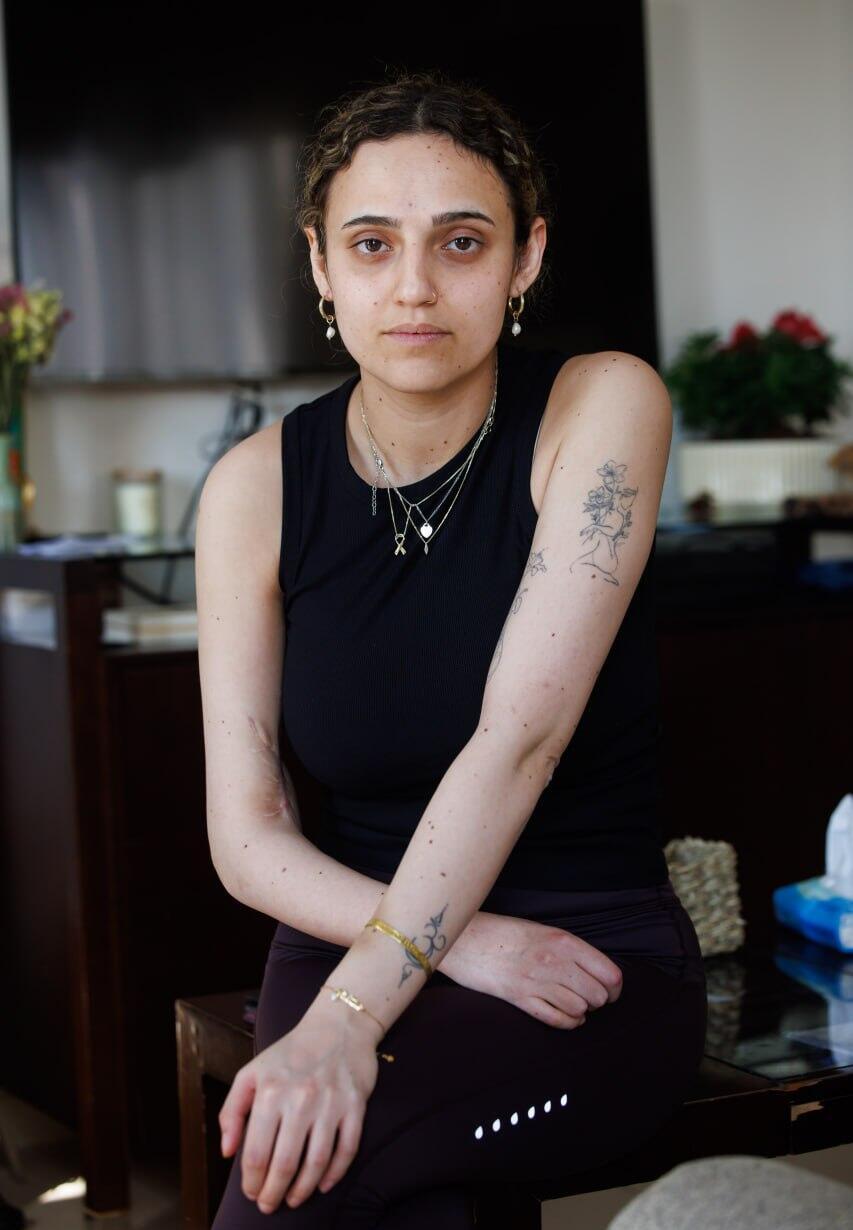
Romi Gonen
(Photo: Ziv Koren)
“In some cases,” the report states, “victims’ bodies were abducted, desecrated and displayed publicly” — an act indicating the deliberate use of sexual humiliation to terrorize victims, their families and the broader public.
This was the case in footage of the late Shani Louk, who was filmed wounded and partially naked in the streets of Gaza. Additional videos documenting kidnappings showed women being dragged by their hair, injured and humiliated during their abduction.
Ofelia Roitman, who was abducted from her home in Kibbutz Nir Oz and released in the first hostage deal, told the commission she was forcibly stripped on the orders of a doctor upon arriving at a tunnel in Gaza.
“I was left with nothing, but I thought that at any moment they would beat me or do something to me,” she testified. “I thought about it for a moment, but then one of them came and put a robe on me.”
The report concludes that “the testimonies, footage and materials reviewed by the commission establish a clear and consistent pattern of sexual and gender-based violence and deliberate humiliation during and after the abduction of hostages on Oct. 7. Examination of the materials reveals clear recurring patterns indicating that sexual and gender-based violence was an integral part of the kidnappings themselves.”
A constant threat of rape
The sexual violence, according to the report, did not stop during captivity.
“Captors routinely threatened rape and forced marriage, and in some cases forced victims to engage in or witness sexual acts and torture involving others, including family members,” the report states. “Sexual assaults occurred routinely and systematically in homes, tunnels and other locations.”
About six months ago, former hostage Romi Gonen described in an interview with the Israeli television program “Uvda” sexual assaults she endured in captivity.
“I go into the shower and he allows himself to come in because he’s the medic and he’s there to help me shower, and I’m wounded and I have no power over them,” she said in remarks quoted by the report. “And I’m in a situation where there’s nothing I can do.”
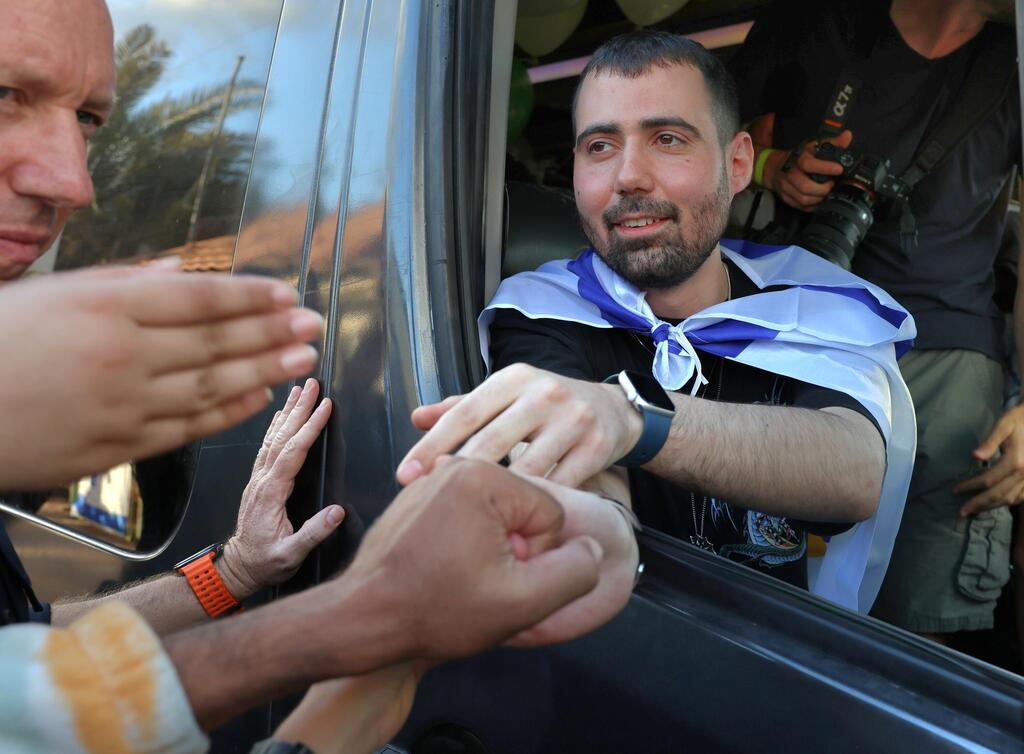
A welcome-home reception for Guy Gilboa-Dalal
(Photo: Shaul Green)
The sexual abuse was not limited to women. The report cites an interview given by Guy Gilboa-Dalal to Channel 12 News in which he described sexual abuse by a terrorist.
“He came up behind me, started touching my whole body, and I froze in that moment,” Gilboa-Dalal said. “He really started touching me and kissing the back of my neck, kissing my back.”
His testimony joins additional accounts from male hostages who returned from captivity. In one particularly severe testimony, two relatives reportedly were forced to perform sexual acts on one another. Their identities were not disclosed.
“The fact that men were also subjected to sexual violence does not diminish the gendered nature of these crimes,” the report states. “Courts view sexual violence as gender-based violence not because only women are targeted, but because sexual abuse is often used as a tool to control victims.”
‘Not isolated acts’
In July, the Dinah Project published a full report portraying Hamas’ sexual violence during the massacre and captivity as a systematic, intentional and premeditated weapon of war. Like the Civil Commission report, the Dinah Project included layers of survivor testimony, forensic and digital evidence and field reports.
It was preceded by a 2024 report by Pramila Patten, the U.N. secretary-general’s special representative on sexual violence in conflict, presenting evidence — largely circumstantial — that sexual violence was used during the Oct. 7 attack.
Shortly before that, the Association of Rape Crisis Centers in Israel also published a report mapping the various sites of abuse and the main patterns of assault known at the time. Alongside these initiatives, additional research projects on the subject continue to operate.
The Civil Commission report is exceptional in both scope and ambition in documenting testimony and findings from the massacre and the period of captivity.
In the introduction, the authors state that the report “provides the first systematic documentation of these crimes” and therefore “identifies recurring patterns of sexual violence across different locations and stages of the attack. The report demonstrates that these crimes followed identifiable patterns and methods and were not isolated acts.”