

A senior Hamas official told the BBC the terror group will reject U.S. President Donald Trump’s peace plan, claiming it “serves Israel’s interests and ignores those of the Palestinian people.” He said Hamas would not agree to disarmament or the deployment of an international force in Gaza, describing such a move as “a new form of occupation.”
According to the BBC, Hamas’ most senior military commander still in Gaza, Izz al-Din al-Haddad, is determined to continue fighting rather than accept Trump’s proposal. The report also said that Hamas officials abroad have recently been sidelined from internal talks because they lack direct control over hostages.
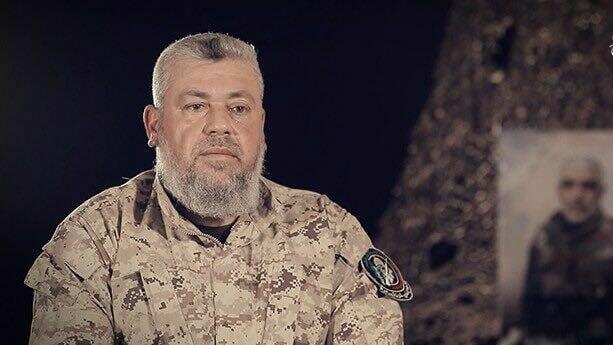
Yet the Saudi newspaper Asharq al-Awsat reported that Haddad conveyed a message urging the movement to treat the plan “positively,” passing that sentiment on to Hamas’ external leadership. Still, the group has framed other recent offers in a “positive spirit,” only for talks to collapse due to lack of agreement with Israel. Israeli officials involved in negotiations expect Hamas’ response to be another “yes, but,” meaning more drawn-out discussions if not an outright breakdown.
Hamas sources told the Saudi daily that the organization feels confused over how to respond, describing the plan as “unjust and unfair,” but added it would approach it in a “positive way.” Addressing the clause on disarmament, a senior Hamas figure said, “All issues related to weapons and urgent matters are under discussion and will be decided unanimously together with other resistance factions.”
Talks within Hamas, which include Islamic Jihad and other Palestinian groups that rejected the plan outright, are expected to continue for several days. Militants are also protesting the plan’s requirement that all hostages be released at once—or within 72 hours—stripping them of what they call their “only bargaining chip.” They argue that not all hostages can be located so quickly and express distrust that Israel will refrain from resuming military operations after their release. The plan’s map, which shows a buffer zone along the Philadelphi Corridor without clarifying whether Israel will control it, is also seen as a sticking point.
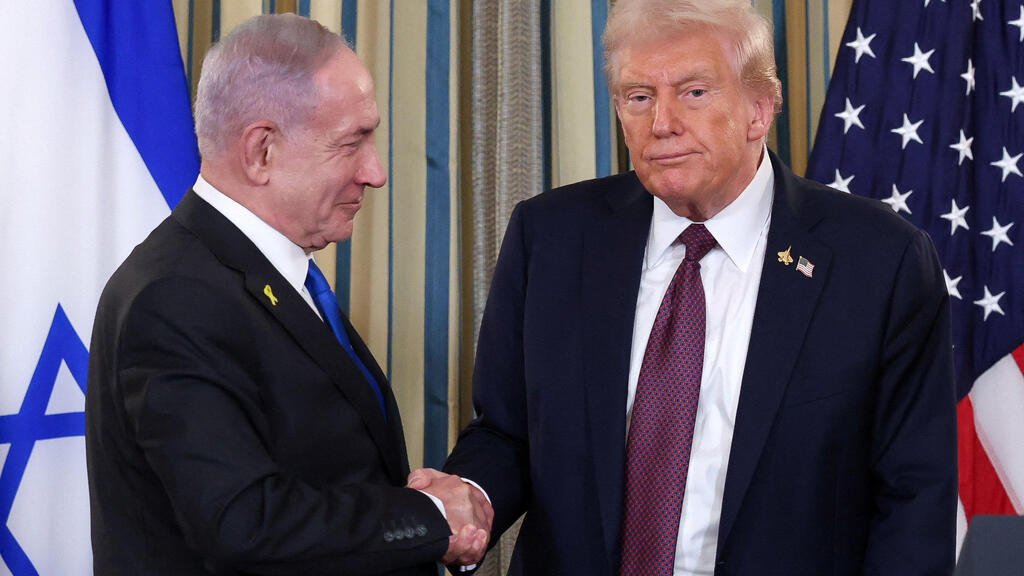
Benjamin Netanyahu and Donald Trump
(Photo: Reuters/Jonathan Ernst)
Hamas sources further said the U.S. plan includes “ambiguous points that carry no real commitments or guarantees for implementation and leave Israel with freedom of action in Gaza, particularly regarding the phased withdrawal.” They suggested only minor adjustments may be offered on the hostages issue and the return of bodies. Internal meetings began as soon as the plan was delivered.
Mediators have urged Hamas to speed up its response within two days. “The issue does not bind the organization, but there is consensus on the need to respond positively to any proposal that ensures a complete end to the war, reconstruction, lifting of the blockade and full Israeli withdrawal,” Hamas sources told Asharq al-Awsat. But while some leaders argue for a positive stance, others see the plan as “misleading,” accusing the U.S. of seeking a political win for Trump while focusing only on the return of hostages, after which the war would resume “by other means.”
The BBC noted that Prime Minister Benjamin Netanyahu himself, despite already agreeing to the plan, has distanced himself from parts of it—chiefly the path toward a Palestinian state—stating that Israel opposes such a development.
In the Arab world, where governments have publicly expressed support for the plan, officials admit much work remains before it can be realized. Lebanon’s al-Akhbar reported that an Egyptian diplomat said he expects “initial approval from Hamas” soon, followed by implementation talks that “could take a week or more if both sides show willingness.”
He said, “The process of releasing hostages requires specific security arrangements that Israel must first implement, including withdrawal from certain sites in Gaza.” But Trump’s proposal envisions only a minimal pullback to facilitate the release, raising doubts about whether it will meet Hamas’ demand for a more substantial withdrawal.
An Egyptian official clarified: “The principled agreement to Trump’s plan is natural, but there are details that must be discussed—such as the withdrawal timetable, the entry of civilian security forces, mechanisms to ensure they are not targeted by the IDF, and the nature of Israeli movements during the three days in which the hostages are released.”