

At least 53 Yemeni soldiers were killed and 200 others wounded Monday when Iran-backed Houthi rebels launched ballistic missiles at a military training camp in southern Yemen, in one of the deadliest attacks since fighting intensified earlier this year, Yemeni military officials said. The strike came as Saudi Arabia canceled a major international investment conference following repeated Houthi attacks on its territory.
The missiles struck a camp in Shabwa province operated by forces loyal to Yemen's internationally recognized, Saudi-backed government. According to a Yemeni military official, the attack occurred as newly recruited soldiers were lining up for a training session. The provincial government warned that the death toll could rise as authorities assessed the casualties.
Clashes between Houthi rebels and pro-Saudi forces in Yemen
(Video: Daily Maill)


The Shabwa authorities condemned the strike as a major escalation, saying it had targeted recruits undergoing training and preparation. They called on Yemen's presidential leadership and the Saudi-led coalition to accelerate the deployment of air defense and early warning systems to protect the province against further attacks.
Rashad al-Alimi, chairman of Yemen's Presidential Leadership Council, promised a "firm response," accusing the Houthis of resorting to terrorist attacks when facing military pressure. The rebels acknowledged carrying out the strike, claiming that the camp was operated by Saudi officers and that some had been killed. They provided no evidence to support that assertion, and Saudi authorities did not immediately comment.
The attack marks another escalation in Yemen's civil war, which has intensified since the broader conflict involving Iran began in February. The renewed fighting shattered a ceasefire established in 2022 that had largely halted major hostilities between the Houthis and government forces.
The Houthis, who control Yemen's capital, Sanaa, and much of the country's north, have expanded their military operations in recent weeks, targeting Saudi airports, oil infrastructure and military facilities while also capturing territory along the Red Sea coast near the strategically important Bab el-Mandeb Strait.
On Monday, the rebels claimed to have conducted six additional attacks against Saudi Arabia, including strikes targeting oil facilities, military installations and Riyadh's international airport. They did not specify when the operations occurred. Saudi Civil Defense authorities issued danger alerts, although there were no immediate reports of casualties or damage from those latest claims.
The continuing attacks have begun disrupting major economic events in the kingdom. Saudi Arabia announced Monday that it was canceling an international investment conference scheduled for the following week, which had been expected to attract senior executives from Wall Street and other international financial institutions. The decision underscored the growing consequences of the Houthi campaign for Saudi Arabia's economy and international business activities.
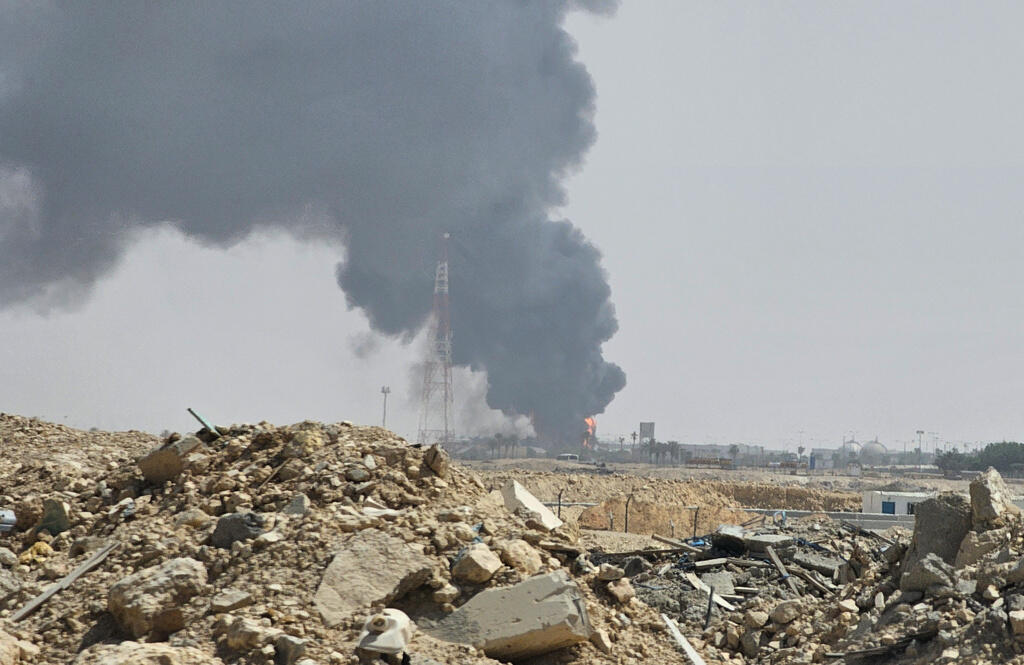
Fire at an oil facility in Riyadh
(Photo: AP Photo/STR)
The latest escalation follows a series of deadly incidents inside Yemen. On Sunday, the Houthi-run Health Ministry accused Saudi-led forces of carrying out an airstrike in the rebel-held northern province of Saada that killed at least nine people, including five children and two women. The rebels said additional strikes over the weekend had left more than 30 people dead or wounded. Saudi Arabia did not immediately respond to those allegations.
Saudi Arabia entered Yemen's civil war in 2015 after the Houthis seized Sanaa and large areas of northern Yemen. Riyadh has long viewed the movement's military capabilities and its ties to Iran as a threat to its security. According to U.N. experts, Iran and allied groups in Lebanon and Iraq have provided the Houthis with military expertise, training and advanced weapons, although Tehran denies supplying arms to the rebels.
The conflict has taken on renewed strategic importance as Houthi forces advance near Bab el-Mandeb, a vital maritime chokepoint connecting the Red Sea to the Gulf of Aden. Earlier this month, the Saudi-led coalition launched a major offensive aimed at removing the rebels from recently captured territory along the coast.
Meanwhile, the U.S. State Department renewed its demand Monday for the release of more than 20 Yemeni employees of the American Embassy in Sanaa, marking five years since their detention by the Houthis. The embassy suspended operations in 2015, but local employees continued providing security and maintenance services. Washington called for their immediate and unconditional release.