

Brazil's left-wing President Luiz Inácio Lula da Silva scored a dramatic and unexpected victory overnight Sunday into Monday in the country's fiercely contested presidential election, defeating far-right candidate Flávio Bolsonaro, son of jailed former President Jair Bolsonaro. With 99.9% of the votes counted, Lula secured 51.77%, compared with 48.23% for Bolsonaro. Although relatively narrow, the margin was clear and decisive, defying polls that had predicted a razor-thin victory for Bolsonaro.
Bolsonaro's defeat is a blow to U.S. President Donald Trump, who did not explicitly endorse him but would have seen his growing influence in Latin America expand further with a right-wing victory. Lula, by contrast, has frequently clashed with Trump. His victory is also unwelcome news for Israel. The incumbent president, who at 80 will begin his fourth nonconsecutive term, is one of Israel's fiercest critics worldwide and has repeatedly accused it of "genocide."
Gallery
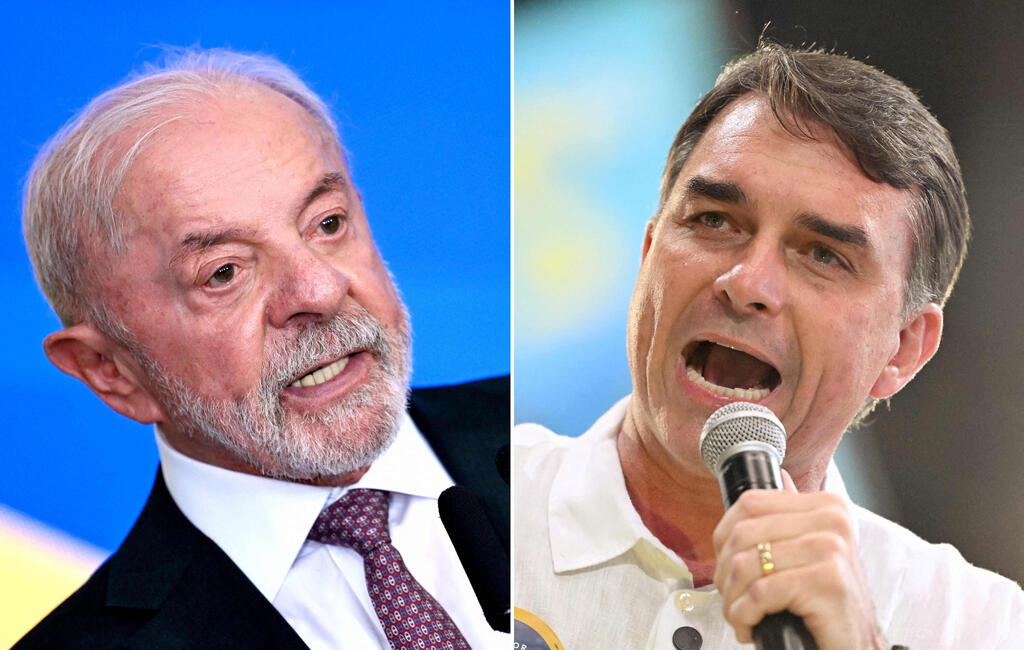
Incumbent President Lula da Silva and Flávio Bolsonaro; will the right-wing wave sweeping Latin America reach the region's largest country?
(Photo: Evaristo SA and Mauro PIMENTEL / AFP)
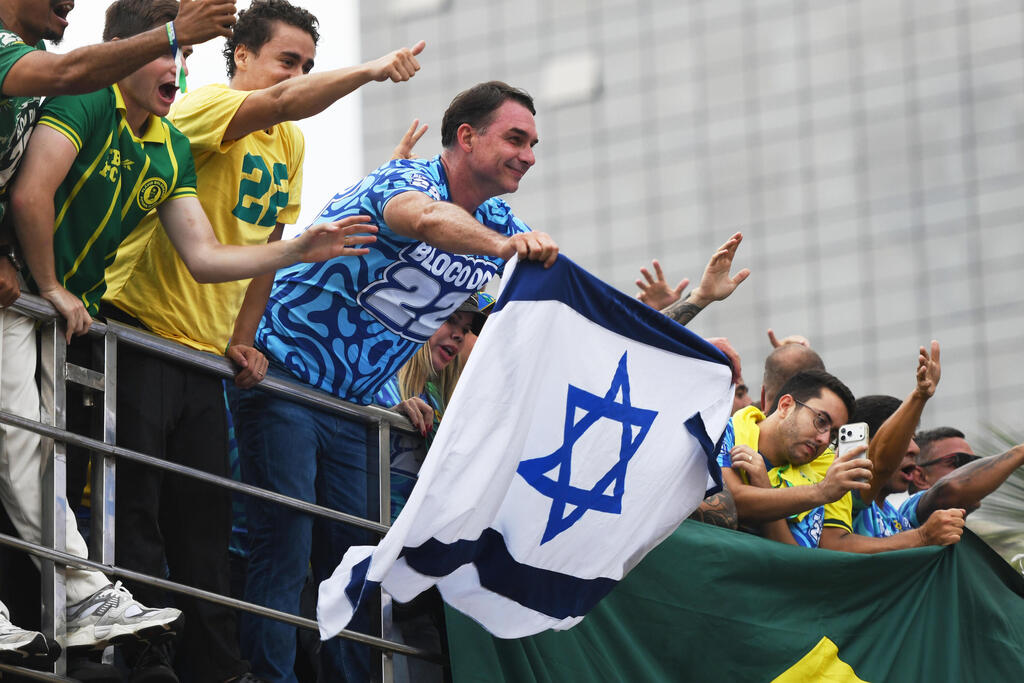
Bolsonaro waves an Israeli flag at a campaign rally Saturday; he has visited the West Bank and pledged to move Brazil's embassy to Jerusalem
(Photo: AP Photo/Lucas Landau)
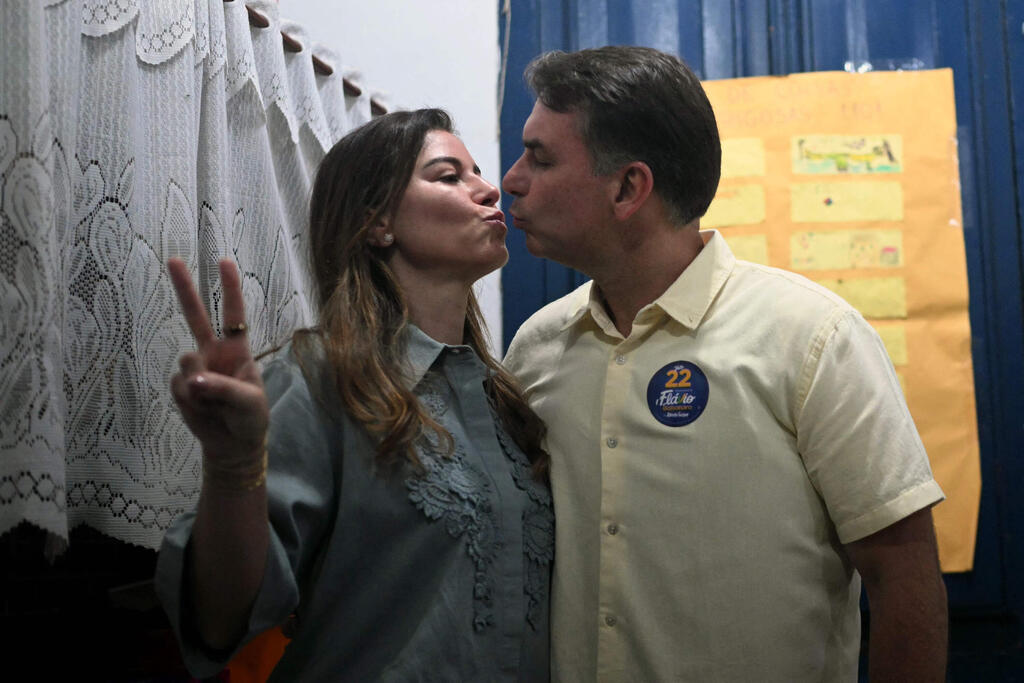
Bolsonaro kisses his wife, Fernanda, at a polling station in Rio de Janeiro on Sunday
(Photo: MAURO PIMENTEL / AFP)
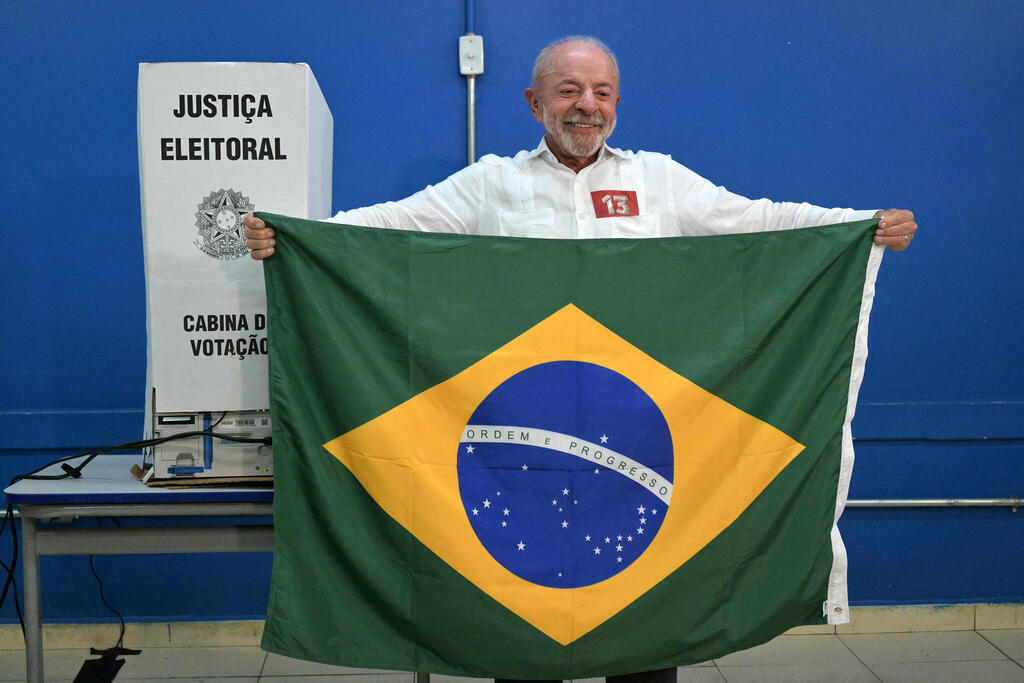
Lula waves the Brazilian flag at a polling station in São Paulo, accusing Bolsonaro of wanting to 'govern under the U.S. flag'
(Photo: NELSON ALMEIDA / AFP)
Brazil uses electronic voting machines, allowing results to be counted rapidly overnight. Polling stations were originally scheduled to close Sunday at 5 p.m. local time (10 p.m. in Israel), but Lula's campaign petitioned to extend voting following reports of public transportation disruptions in several areas, including São Paulo. Brazil's Supreme Court subsequently extended voting nationwide by two hours. Bolsonaro's campaign also requested an extension, citing rainy weather in the country's south.
Bolsonaro's defeat came as a surprise after he entered the decisive runoff as the favorite. In the first round earlier this month, when several other candidates were also competing, he finished first with 47% of the vote, compared with 45% for the incumbent. That result had surprised pollsters, who predicted Lula would finish first by a relatively comfortable margin. In the 2022 election, when Lula defeated his current rival's father, Jair Bolsonaro, his margin of victory was also much narrower than polls had forecast, prompting speculation that surveys were once again underestimating the younger Bolsonaro's support. Historical precedent had also favored Bolsonaro: Never before had a candidate who finished second in the first round of a Brazilian presidential election gone on to win the decisive runoff. That changed overnight with Lula's victory.
The ideological divide between the two candidates could hardly have been greater. Bolsonaro, 45, and Lula, 80, hold sharply opposing views on a range of issues, from Brazil's relations with the United States to climate change and welfare policy. Lula's victory also dashed hopes among Latin America's right-wing movements that the conservative wave sweeping the region over the past year, with election victories in Chile, Peru and Colombia, would reach its most populous country and largest economy. Instead, Lula's reelection leaves Brazil and Mexico, Latin America's second-most populous country, led by President Claudia Sheinbaum, under center-left leadership.
A victory visit to the Western Wall?
As noted, incumbent President Lula secured his fourth nonconsecutive term overnight. He previously served as Brazil's president from 2003 to 2010 and won the presidency again in 2022. He was released from prison in 2019 after spending more than 500 days behind bars, and his corruption convictions were annulled in 2021. In recent months, he faced an increasingly difficult election campaign amid public dissatisfaction over the cost of living and concerns about personal security. His rival, Bolsonaro, made a tough stance on crime the cornerstone of his campaign and pledged to lower food prices. Bolsonaro, who has served as a senator since 2019, also promised judicial reform, which he planned to pursue in part through the next president's power to appoint at least three of the Supreme Court's 11 justices, with several retirements expected in the coming years.
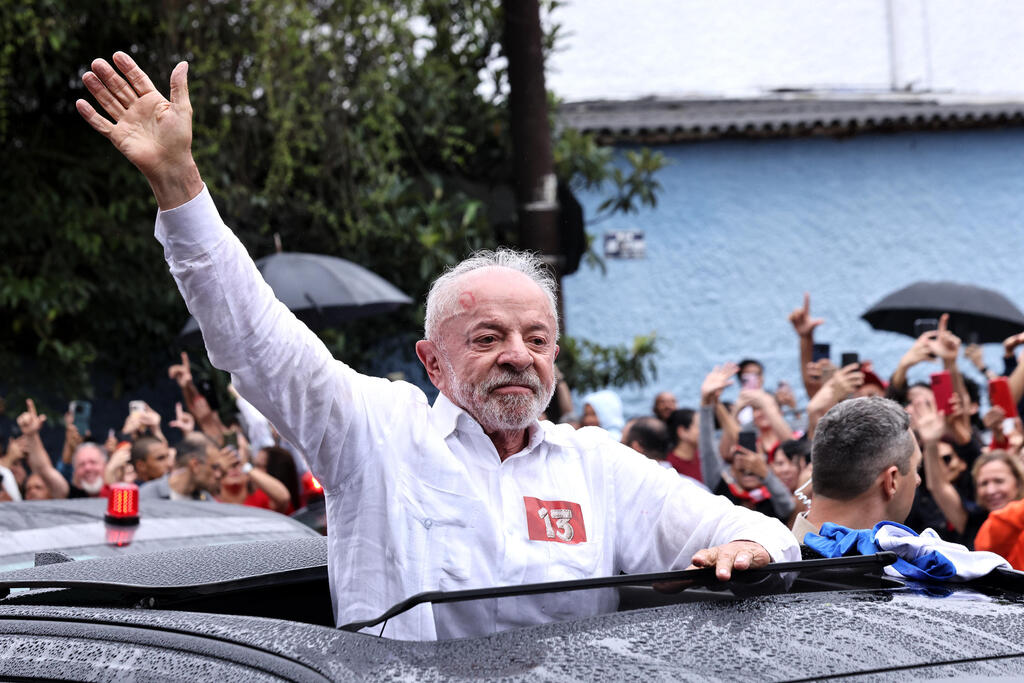
Lula waves to supporters after casting his ballot; rising living costs have eroded support for the president
(Photo: Rodrigo Paiva/Getty Images)
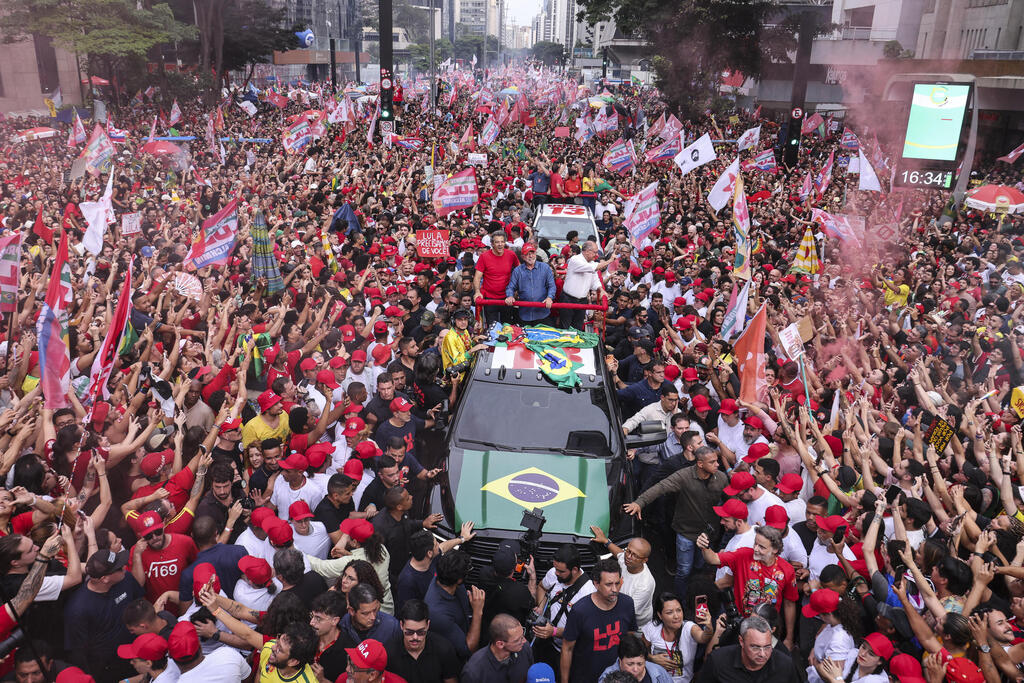
Lula rides through a crowd of tens of thousands of supporters in São Paulo on Saturday
(Photo: Alexandre Schneider/Getty Images)
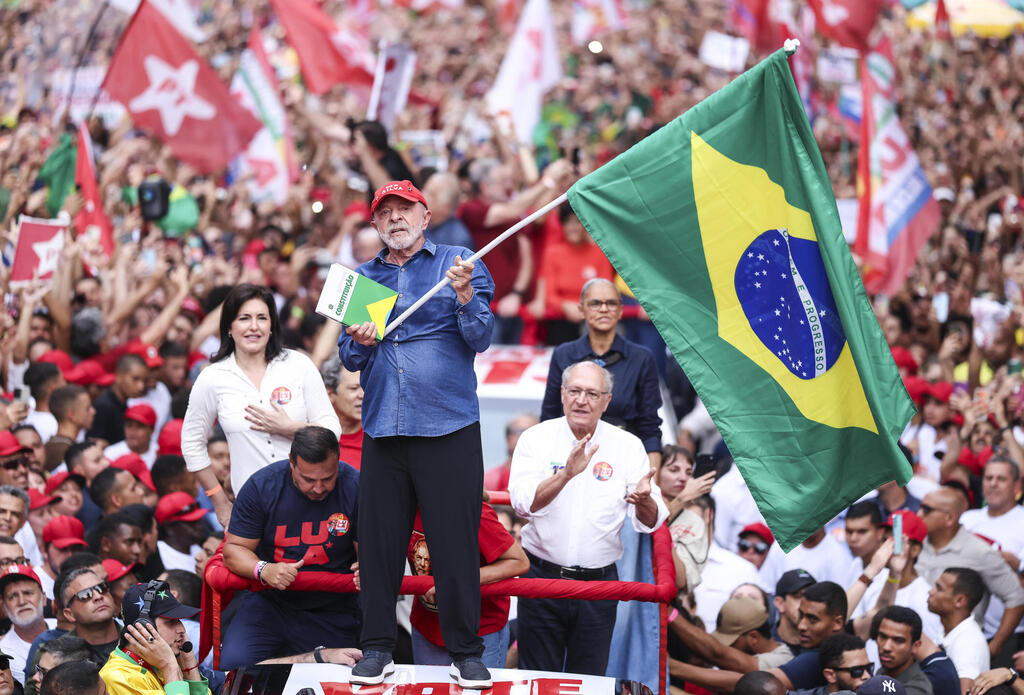
(Photo: Alexandre Schneider/Getty Images)
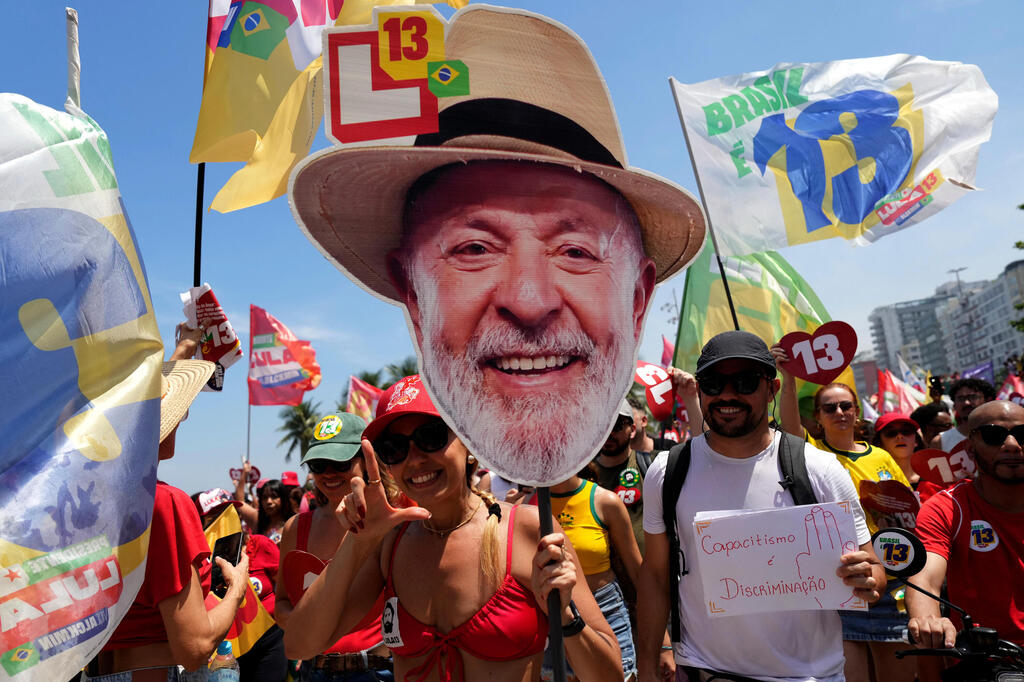
(Photo: AP Photo/Silvia Izquierdo)
Bolsonaro and Lula also differ sharply in their attitudes toward Israel. Flávio Bolsonaro, like his father Jair, is a staunch supporter of Israel, and their political movement is known in Brazil for its support for Israel and the Jewish people. Israeli flags are traditionally displayed at rallies held by both father and son. At his final campaign rally Saturday in Barra da Tijuca, in Rio de Janeiro state, Flávio himself was filmed waving an Israeli flag.
Earlier this year, the younger Bolsonaro made his fourth visit to Israel alongside his brother Eduardo. He toured Samaria in the northern West Bank, prayed at the Western Wall and pledged to move Brazil's embassy to Jerusalem. "We appreciate and love Israel," he said at the time. "We support Israel's right to defend itself in every way."
Estevam Hernandes, Bolsonaro's personal pastor and one of his closest associates, who has accompanied him throughout the campaign, told ynet's Itamar Eichner in an interview Sunday that if Bolsonaro wins, he could make a victory visit to Israel as early as next month.
"Flávio Bolsonaro is a man who loves Israel with all his heart. We agreed that we would celebrate his victory in Jerusalem. We will visit Israel in November and bring Brazil's future economy minister with us, and Flávio may join us as well. In any case, the plan is to bring Flávio to the Western Wall to celebrate the victory," Hernandes said.
Lula, by contrast, has become one of Israel's fiercest critics worldwide during his current term, particularly since the October 7 massacre and the war in Gaza. In February 2024, he accused Israel of committing genocide, comparing its actions to those of Hitler. Two months later, he incorrectly claimed that more than 12 million children had been killed in the Gaza war. That same year, he recalled Brazil's ambassador from Israel, and in 2025 refused to approve the appointment of a new Israeli ambassador to Brasília. In his address to the UN General Assembly this past September, although he condemned Hamas, he also accused Netanyahu's government of "the genocide of women and children in Gaza."
$12 million for a movie and a promise to pardon his father
Both candidates have faced allegations of corruption involving family members and political allies. Bolsonaro himself is currently embroiled in a sprawling investigation into corruption, money laundering and tax evasion. As part of the affair, he acknowledged seeking approximately $12 million from Daniel Vorcaro, a former banker, to finance a film about his father's life.
His father, Jair Bolsonaro, is still serving the 27-year prison sentence imposed after he was convicted of attempting a coup following his defeat to Lula in the 2022 election, although he is currently under house arrest for medical reasons. In the run-up to the vote, Lula repeatedly portrayed the younger Bolsonaro as a threat to democracy, while Bolsonaro pledged to pursue a pardon for his father if elected.
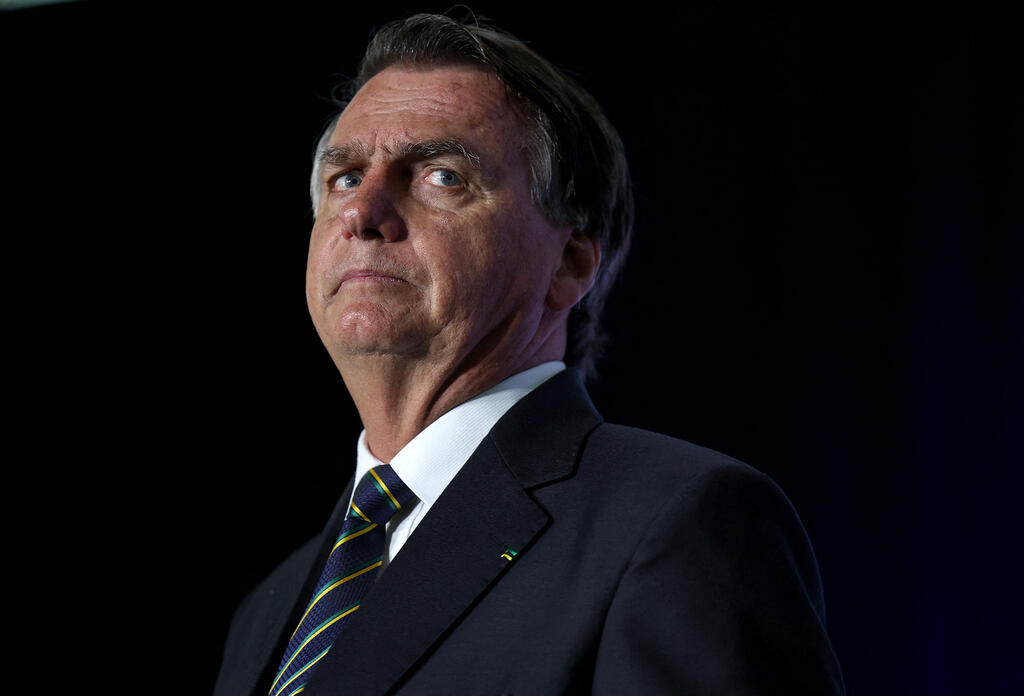
Former President Jair Bolsonaro, jailed for attempting a coup; his son has promised to pardon him
(Photo: AFP)
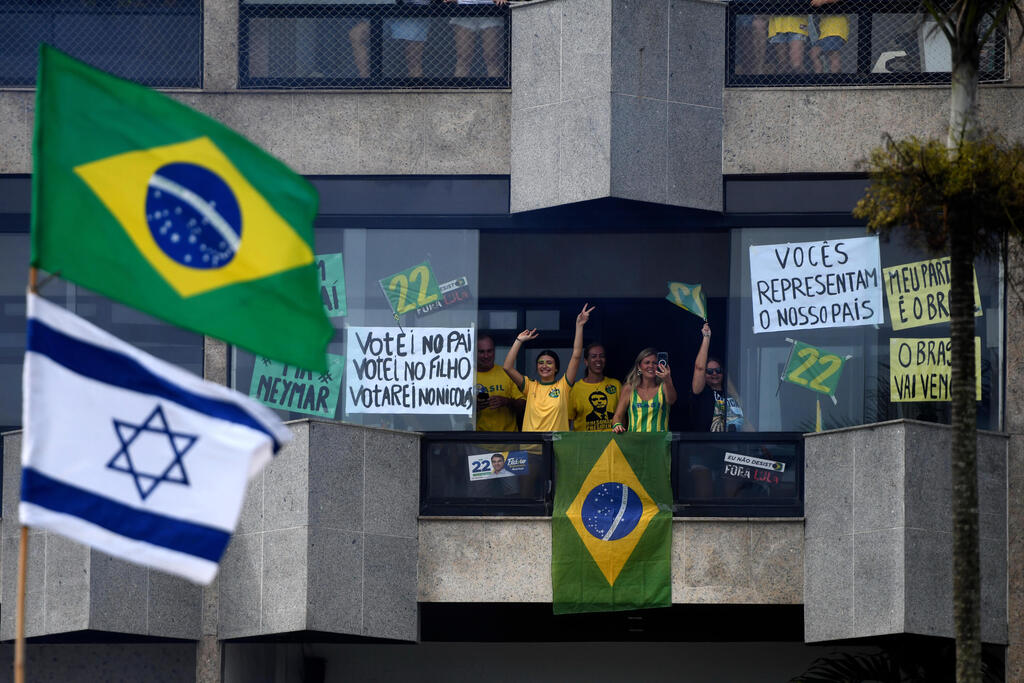
With Brazilian and Israeli flags: Bolsonaro supporters on a balcony over the weekend
(Photo: AP Photo/Lucas Landau)
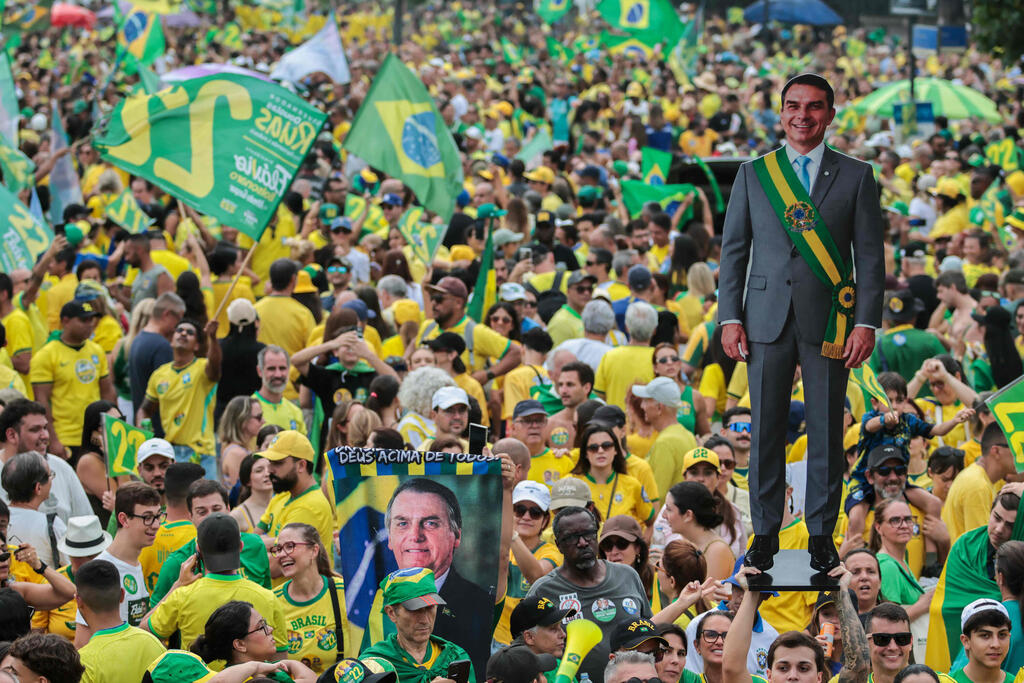
A poster featuring Flávio Bolsonaro at one of his final campaign rallies in Rio de Janeiro on Saturday
(Photo: DOUGLAS SHINEIDR / AFP)
Since his defeat in the first round, Lula has attempted to woo undecided voters with costly economic incentives. His government approved a debt-relief program for small businesses, among other measures, and promised free public transportation on weekends. But those efforts appeared to have fallen short. At a polling station in Rio de Janeiro, Elba Marques, a 75-year-old retiree, said her vote for Bolsonaro was a vote against Lula's Workers' Party rather than an endorsement of Bolsonaro himself.
"I can't stand hearing the same man say for 40 years that he's going to fix Brazil. It's the same promise over and over again," she said.
Bolsonaro, speaking after casting his ballot at a polling station in Rio de Janeiro earlier Sunday, said the time had come for change. "Brazil can’t take another four years the way things are ... Everyone’s life has got worse," he warned, as supporters nearby chanted, "Lula, thief, you belong in jail!"
Lula: It's either our flag or the US flag
Lula, meanwhile, once again sought to frame the election as a referendum on Brazil's independence, portraying his opponent as a proxy for U.S. President Donald Trump. Speaking to reporters after casting his ballot in his political stronghold of São Bernardo do Campo, near São Paulo, he accused Bolsonaro of wanting to "govern under the U.S. flag." Lula said Brazilians had to choose between someone who would defend their national flag and someone who would defend the American flag. Perhaps to reinforce that message, Lula also posed for photographs holding up the Brazilian flag inside the polling station.
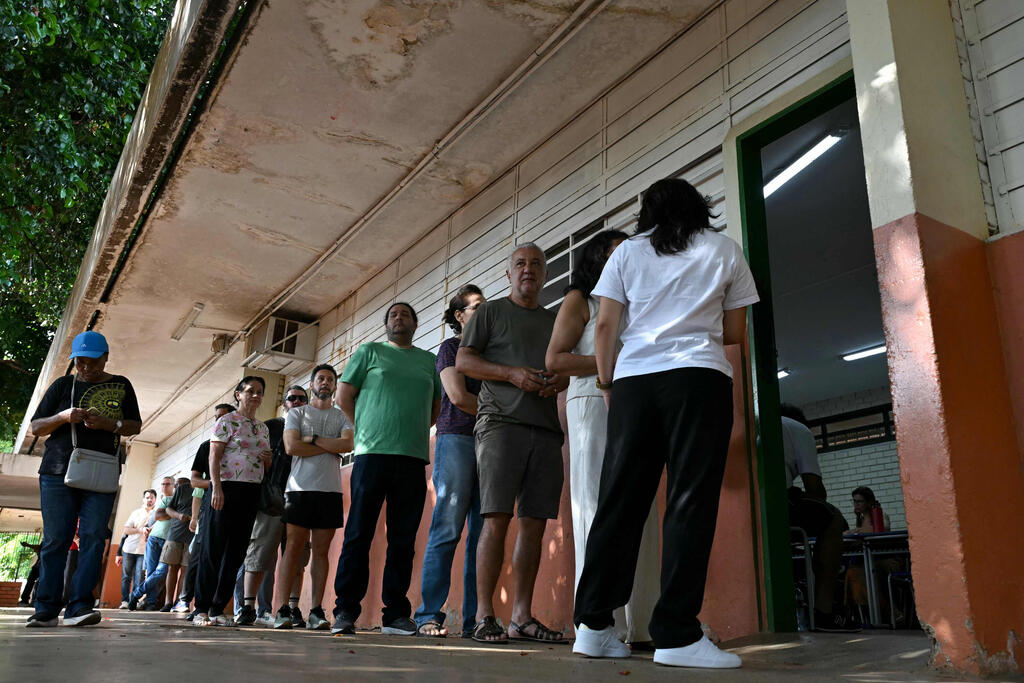
Voters line up at a polling station in Brasília, Brazil's capital
(Photo: Evaristo SA / AFP)
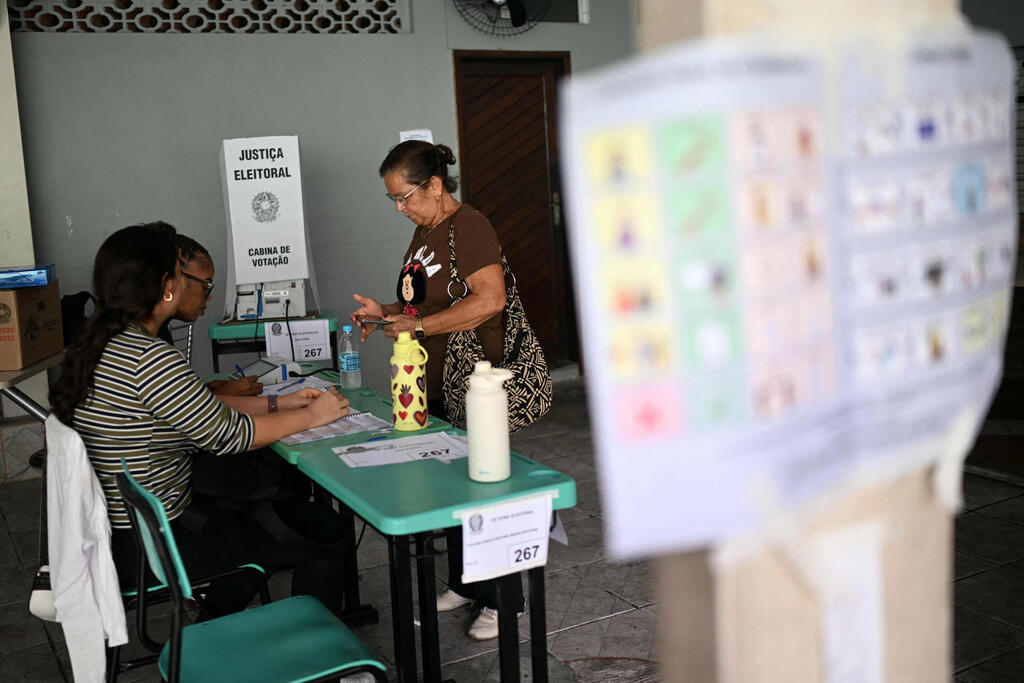
At a polling station in Rio de Janeiro
(Photo: MAURO PIMENTEL / AFP)
The remarks came against the backdrop of Lula's sharp criticism of Trump throughout the campaign and his warnings about attempted U.S. interference in Brazil's election. The Trump administration imposed steep tariffs on Brazilian exports, announced sanctions against the Supreme Court justice who oversaw the investigation that led to Jair Bolsonaro's conviction, and designated drug trafficking organizations as foreign terrorist organizations. Some experts suggested the latter move may have been intended to portray Lula as soft on crime.
Flávio Bolsonaro, for his part, has boasted of his close ties to White House officials and insisted that Brazil must negotiate better deals with the Trump administration, including in the rare-earth minerals sector. Brazil's reserves are estimated at up to 21 million metric tons, second only to China's. Politically, however, Bolsonaro denies receiving assistance from the U.S. administration.
First published: 02:38, 10.26.26