

President Donald Trump's proposed 250-foot (76-meter) triumphal arch in Washington cleared a major regulatory hurdle Thursday night, bringing construction of the towering monument closer to reality despite legal challenges and warnings about traffic congestion, airport safety and public security. The structure, envisioned as a landmark taller than Paris' Arc de Triomphe, is the latest project in Trump's sweeping effort to reshape the U.S. capital.
The National Capital Planning Commission voted to approve the proposal after hearing objections from approximately 100 opponents, including Democratic lawmakers. Representative Don Beyer, whose district includes northern Virginia, warned that the project would create lasting problems for the surrounding area.
Gallery
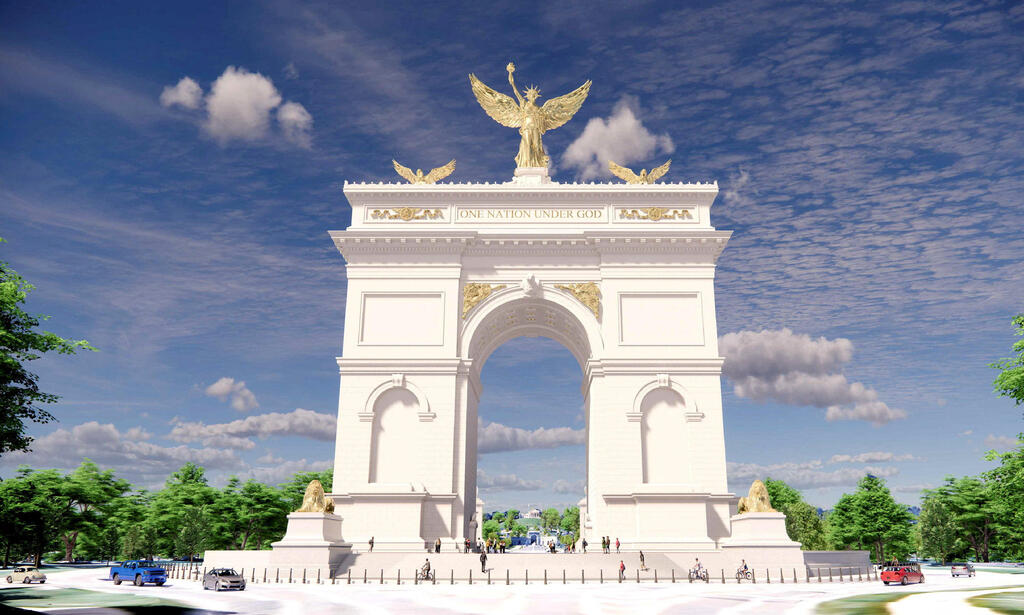
Rendering of a triumphal arch that Trump is proposing to build in Washington, D.C.
(Photo: U.S. Commission on Fine Arts/Handout via REUTERS)
"It will snarl traffic for years, impact the nearby airport, and present even more serious threats to public safety that this commission has refused to acknowledge and grapple with," Beyer said.
Despite the approval, construction is not guaranteed. A federal judge considering several legal challenges could still prevent work from beginning. According to the Justice Department, if the project receives final authorization, an initial construction phase lasting six to eight months, focused on excavation and foundation work, could begin as early as this week. Construction above ground would not begin before May 2027, and the entire project is expected to take between 33 and 39 months.
In a court filing, the federal government also indicated that the National Park Service could issue a permit or other authorization Thursday, potentially allowing construction to begin this week.
A monument taller than Paris' Arc de Triomphe
The proposed arch would stand on a highway roundabout near the entrance to Arlington National Cemetery, across the Potomac River from the Lincoln Memorial. At 250 feet tall, it would rise more than 80 feet above the Arc de Triomphe in Paris and approach the height of the U.S. Capitol, which stands at 288 feet (88 meters).
The monument's design includes an eternal flame and powerful floodlights intended to make the structure visible to approaching aircraft. A rendering shows the flame supported by a 60-foot (18-meter) golden, winged female figure standing atop the arch, flanked by golden flying eagles.
The location has become a particular point of contention because it lies near the final approach route for aircraft landing at Ronald Reagan Washington National Airport. Opponents have raised concerns about the potential impact of such a large structure on aviation and public safety.
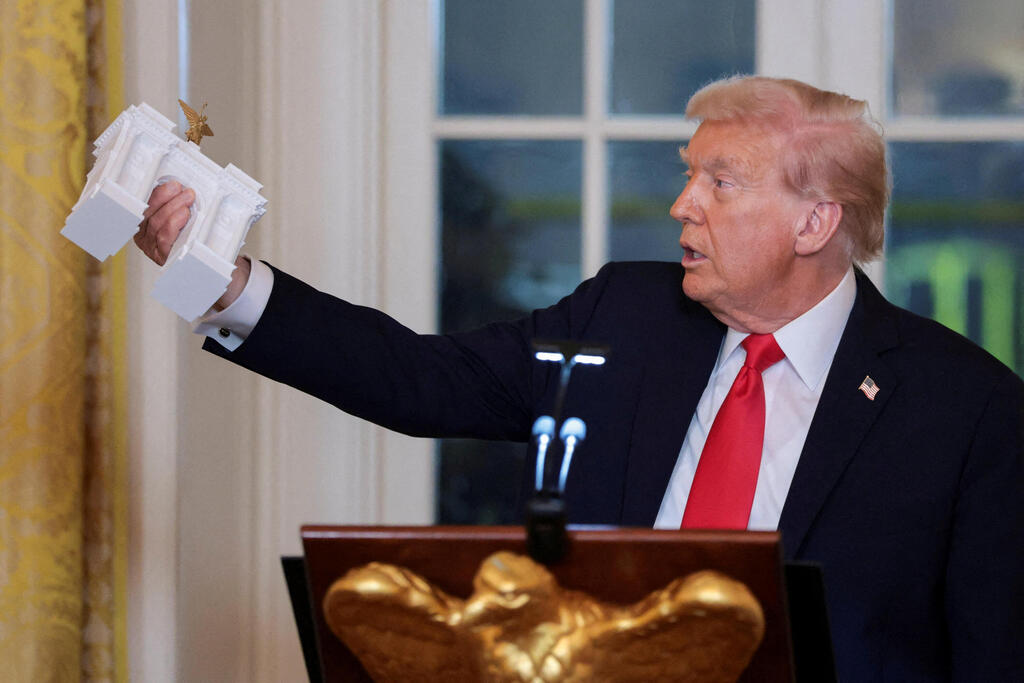
(Photo: REUTERS/Jonathan Ernst)
Trump, however, has emphasized both the monument's appearance and its proposed security functions. Speaking Monday at an event highlighting improvements to the Lincoln Memorial Reflecting Pool, he said the structure could also serve as a military asset, with space to accommodate drones and snipers.
"It's right smack in the middle of everything, so very important for our military. But from a beautification standpoint, it'll be the most beautiful arch in the world," Trump said.
Legal battle could still halt construction
The arch is one of several ambitious and costly construction projects Trump is pursuing in Washington despite opposition from local officials and historic preservation advocates. Other initiatives include rebuilding the Lincoln Memorial Reflecting Pool, constructing a massive White House ballroom and overhauling the Kennedy Center for the Performing Arts.
The monument has already become the subject of a significant legal dispute. On Saturday, the state of Virginia and the District of Columbia sued the National Park Service and the Department of the Interior in an effort to stop construction. Their lawsuit described the project as "legally indefensible," arguing that Congress had never authorized the arch.
The federal government disputes that interpretation, maintaining that Congress effectively approved the monument more than a century ago when it authorized construction of a bridge across the Potomac River.
The approval granted Thursday represents an important step toward realizing Trump's vision, but the project's immediate future remains in the hands of the courts. With foundation work potentially beginning within days, a judge could still determine whether the monument moves forward or construction is halted before it begins.