


The late afternoon sun cast a reddish light on the Moab mountain range on the Jordanian side of the valley. Behind us, on the Israeli side, the sharp silhouette of the Sartaba peak stood out against the fading light. Below, the Jordan River flowed weakly through a channel that had narrowed sharply after a dry summer and fall. The view from a lookout position last weekend at one of the IDF’s newly reoccupied old outposts in the Jordan Valley was a reminder of earlier times.
In the past, during and after the War of Attrition, the IDF maintained 46 such outposts along the valley, from Hamat Gader in the north to the Arava in the south. They were meant to detect and stop infiltrations by terrorists and smugglers crossing from Jordan into Israeli controlled territory. After the peace treaty with Jordan was signed in October 1994, the IDF gradually emptied these positions until they were fully abandoned.
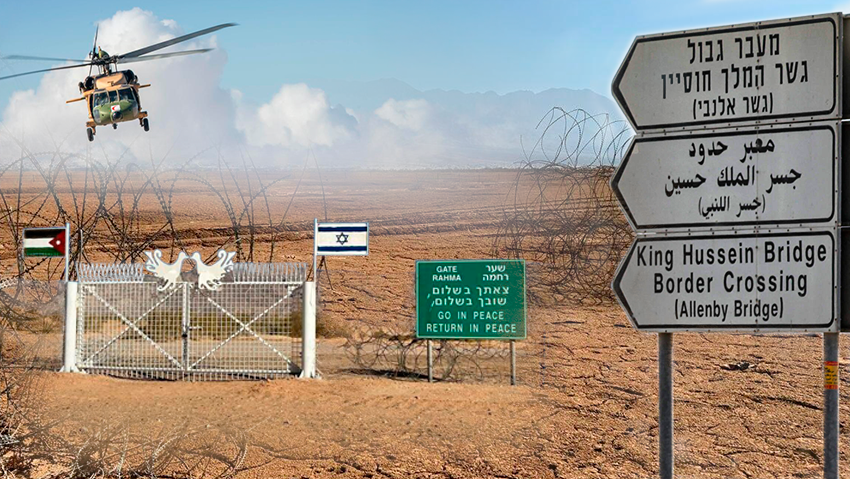
The assumption in the 1990s was that there was no longer a need for those outposts. The border was seen as a peace frontier in which both sides had a shared interest. The Jordanian monarchy had a clear incentive to keep the line between the Palestinians in the West Bank and Jordan itself tightly sealed. On the eastern side of the river, Jordanian forces did, and still do, what they can to prevent hostile elements, who also threaten the Hashemite regime, from approaching the river and the border.
For years, the drug and weapons smugglers who nevertheless succeeded in crossing were handled mostly by small units of the Jordan Valley Brigade and especially by Israeli police. Even the growing weapons smuggling in recent years, driven by Iran and expanding in scope and intensity, was viewed until 2024 mainly as a criminal problem.
That perception shifted sharply after Hamas’ October 7 terror attack. Soon after that day, then IDF chief of staff Lt. Gen. Herzi Halevi formed a “red team” to assess whether other parts of Israel’s borders could also face a surprise assault by the radical Shiite axis. The team concluded that the eastern border with Jordan, where defenses had been thin to the point of nearly nonexistent, had become a vulnerable flank requiring urgent reinforcement.
From that conceptual shift came a redesigned defense architecture for the Jordan frontier, with results already visible on the ground.
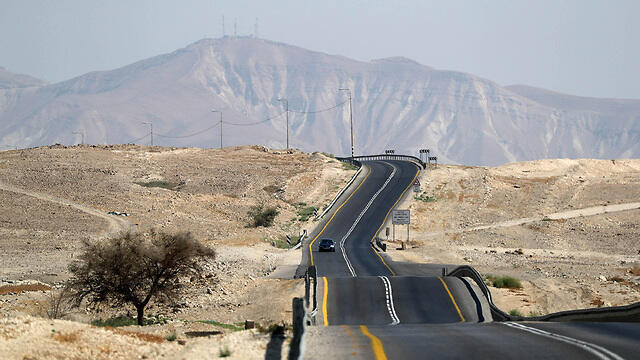
Jordan Rift Valley
(Photo: Reuters)
The outpost where I stood at dusk with a senior sector commander and the local outpost chief is now an active element of that new posture. Its location was chosen based on the topography of the Jordan Valley, built in three terraced steps on both sides of the river. At the bottom lies the river itself, thick with brush on both banks. It is a natural barrier on paper, but last weekend there was no real difficulty crossing it on foot. Past the riverbed the terrain rises steeply to pale marl hills on the second step, known in Arabic as the Ghor. Beyond those hills, eastward in Jordan and westward in Israeli controlled territory, stretch agricultural areas of the Jordan Valley, with the Samaria mountains to the west and the Moab mountains to the east.
The outposts the IDF has recently retaken are positioned on the bright Ghor hills, offering excellent observation of the waterline. From there, small arms fire can stop anyone attempting to cross. But the broken terrain provides good concealment for infiltrators, meaning defenders need dozens of outposts to cover likely routes.
The outpost itself felt like a scene from the War of Attrition. Fortifications made of river stones inside metal mesh, trenches linking positions, low corridors where you walk hunched over, and thick concrete roofs all looked as they once did. The commander described enormous amounts of trash that had to be cleared before the site could be used again. Now it is a manned defensive position with men and women fighters, equipped with surveillance and firepower. Nearby is a fenced living area, unlike the lightly fortified temporary camps along the Gaza border, where Hamas’ Nukhba terrorists broke into most positions with little difficulty on October 7.
Across from us on the Jordanian side, we could see a Jordanian guard post right on the waterline, with another post set back behind it. Jordan too has placed its positions at points where access to the river is relatively easy and therefore attractive to smugglers and terrorists.
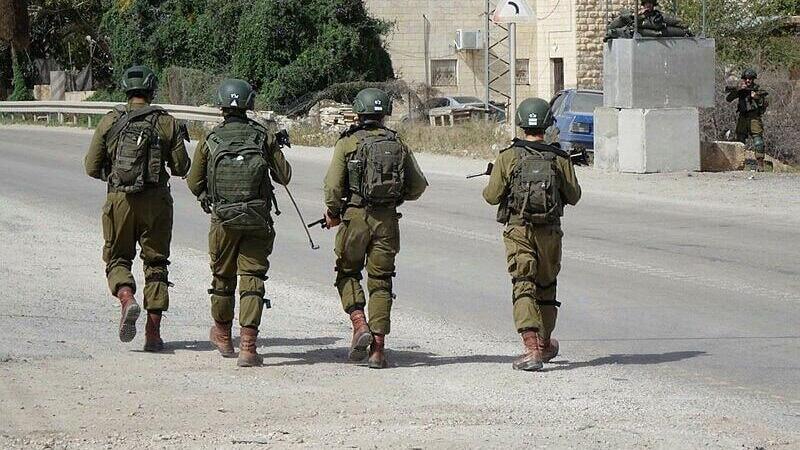
IDF troops
(Photo: Shaul Golan)
The northern sector of the eastern border is now under the responsibility of the 96th Division Gilead, a new formation operating under Central Command. Its mission is to protect the northern stretch of the frontier. Once its buildup is complete, multiple regional brigades will serve under it. In the past, most of this territory was held by a single brigade, the Jordan Valley Brigade. The southern sector of the Jordan border remains under the Edom Division, which operates within Southern Command.
At the core of Israel’s updated defense concept for the eastern border, the reference scenario rests on two strategic conclusions. The first is that Iran has not abandoned the plan laid out by Qassem Soleimani, commander of the Quds Force until his killing in 2020, to encircle Israel with a “double ring of fire,” meaning missiles and drones alongside infiltrating ground forces. Those forces would, in Iran’s vision, operate together at a chosen moment to destroy Israel by 2040.
The second conclusion is that Hamas’ October 2023 attack disrupted the Iranian plan and, indirectly, turned Jordan into a potential attack corridor and a central threat to Israel. “Yahya Sinwar exposed the Iranian ground plan too early,” a senior officer in the eastern sector said. “We were sure the invasion threat would mainly come from Hezbollah’s Radwan Force, but Sinwar made the larger plan clear. Maybe that is for the better.”
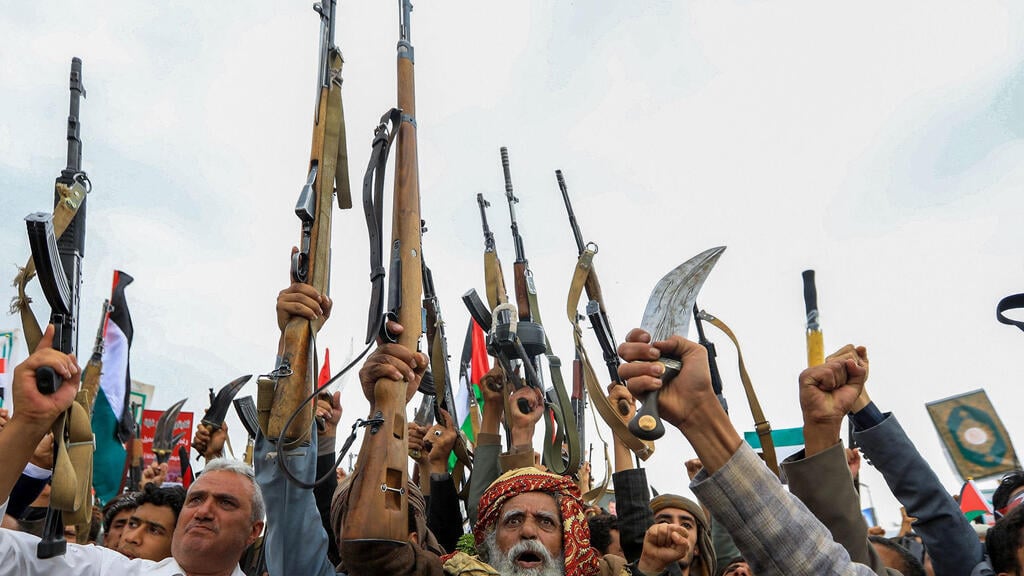
Houthis
(Photo: Mohammed Huwais/ AFP)
The threat scenario now focuses on Shiite militias from Iraq and the Houthis from Yemen as the actors most likely to attempt an attack through Jordan and southern Syria. One possibility Israeli planners cite is that armed groups tied to those militias could drive quickly in pickup trucks from Iraq to Jordan’s border, or to the Syrian Golan, within a matter of hours. They could surprise Jordanian security forces, push to the Jordan River crossings without stopping, and attempt a sudden assault into Israeli territory.
Such terrorists could try to enter south of the Sea of Galilee or into the central Jordan Valley, including through the Allenby Bridge and Damia Bridge areas, which provide routes toward Jerusalem. In that context, the Lebanese newspaper Al Akhbar, which is aligned with Hezbollah, has reported that the two militia forces share a joint war room in Baghdad and in Jordan, with around 8,000 Yemeni foreign workers present. Several hundred of them are believed to be affiliated with the Houthis.
Given this reference threat, the main and immediate purpose of the emerging eastern border defense system is to stop a surprise ground assault, mounted or on foot, that could come without warning through Jordanian territory. The concept was developed early in 2024, but Halevi ordered implementation delayed for one simple reason: the IDF force structure was too small. Combat units were lacking, and reservists mobilized at the time were needed for active ground fighting in multiple arenas, Gaza, Lebanon, Judea and Samaria, and Syria.
Halevi’s decision was to begin deploying the new eastern border plan in November 2025. In the meantime, a new idea was raised by Maj. Gen. (res.) Moti Baruch. Together with the head of the IDF Personnel Directorate, he identified a large pool of civilians who had been exempted from reserve duty starting at age 35 because the army had not found units matching their regular service training or skills, including veterans of Navy vessels. “These people cannot storm terrorist strongholds in Gaza,” a senior IDF officer said, “but they absolutely can hold a line and defend the area where they live.”
In 2024 it was decided to stand up a new division, the 96th Division Gilead, with two missions. One is to protect the northern stretch of the eastern border with Jordan. The second is to train five reserve brigades of older Israelis who had previously been exempt, calling them to volunteer for reserve service as regional defense fighters in their home areas. These units have been dubbed the “David Brigades.” They are designed for defensive roles. In an emergency or a surprise assault they would be mobilized from home to take up preplanned positions.
What surprised the IDF was the immediate response. When a call went out in the north, the valleys, the Jezreel Valley and Haifa area, almost 15,000 previously exempt Israelis volunteered to enlist, undergo refresher training and serve in reserves. Many said they came to ease the burden on their sons and friends who have been serving hundreds of reserve days a year.
The IDF expects that in the first quarter of 2026 the the 96th Division Gilead will fully staff all five David Brigades. Two battalions from those brigades are already serving in the Jordan Valley, and other battalions are carrying out defensive duties in Judea and Samaria.
In the future, the David Brigades are meant to be the main rapid response combat force under the 96th Division Gilead. To support that, reservists in these brigades are being issued light weapons to keep at home and bring with them when called up. The organizational model is known as “flash brigades,” intended to be highly mobile. They will not be equipped with heavy weapons or bulky logistics that would slow rapid movement to staging areas and then to the contact line.
IDF Chief of Staff Lt. Gen. Eyal Zamir advanced the timetable this year, ordering the 96th Division Gilead, even while still being formed, into operational duty defending the eastern border. That happened in June, days before Operation “Am KeLavi” against Iran began on June 13. In the General Staff there was concern Iran might respond to the strikes by activating Iraqi militias and possibly Houthi groups for an attack on Israel through Jordan. The new division, commanded by Brig. Gen. Oren Simcha and reinforced by Central Command units, moved quickly, improvised where necessary and met its mission.
These days, the division’s emphasis is on building a multilayered defense system in the Jordan Valley and the Arava. It includes a ground barrier similar to the “hourglass” obstacle along the Sinai border, with a security fence and anti vehicle measures. It also includes reoccupied outposts already staffed to provide observation and firepower, and intelligence and defense arrays deeper inside Israeli territory. Alongside that, the IDF continues training and preparing the David Brigade reservists.
On Monday the Defense Ministry began constructing the barrier in the Jordan Valley and the northern valleys. The first two segments are being built there because Iranian driven weapons smuggling is concentrated near the Sea of Galilee. Additional segments will follow. The overall project is estimated to cost about 5.5 billion shekels, and the barrier is planned to run some 500 kilometers, from south of the Golan Heights down to the Samar sands north of Eilat.