

A severe cold wave gripping northwestern Europe continued Wednesday to disrupt air travel and transportation networks, stranding millions of passengers, while also drawing crowds of residents and tourists eager to enjoy rare winter scenes in some of the continent’s most famous cities.
In Paris, heavy snowfall turned streets white at dawn as the storm system known as Gorty moved in from the Atlantic. The snow led to further flight cancellations, traffic jams and widespread disruptions to public transportation. City bus services were suspended, even as retailers prepared for the first day of post-holiday sales.
Severe cold wave hits Europe


Despite the disruption, many Parisians and visitors embraced the unusual conditions. Skiers were seen gliding through city streets and posing near landmarks including the Eiffel Tower, Notre Dame Cathedral, the Seine River and the Louvre Museum. Others slid down slopes in Montmartre and along the Champs de Mars using skis, sleds or improvised plastic bags.
“It’s extraordinary. It’s unbelievable,” said Pierre, a Paris resident taking in the scene. “It’s simply magnificent, and we’re enjoying it. We’ve met many tourists, and they look so happy.”
Elsewhere in Europe, the cold snap caused major travel disruptions. In the Netherlands, KLM canceled about 600 flights scheduled for Wednesday at Amsterdam’s Schiphol Airport, marking a sixth consecutive day of disruption at one of Europe’s busiest hubs. Schiphol reported at least 800 total flight cancellations for the day, and more than 1,000 stranded passengers spent the night at the airport. Airport staff set up hundreds of folding beds and provided breakfast as crews worked to clear runways and de-ice aircraft. KLM warned it was running low on de-icing fluid due to supply delays.
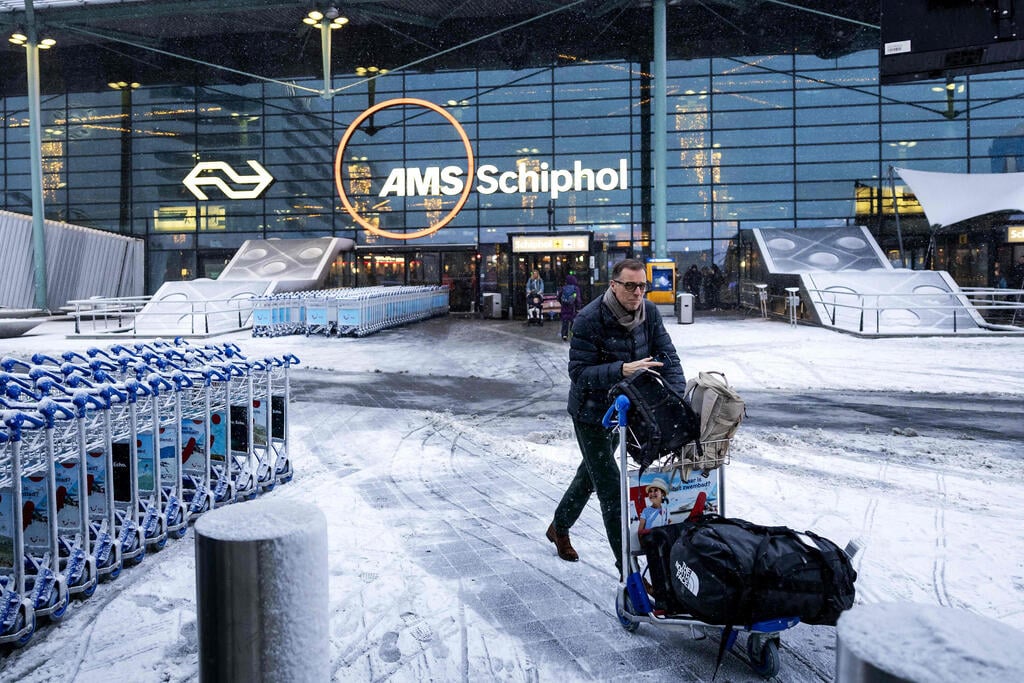
In France, aviation authorities ordered airlines to cut 40% of flights at Charles de Gaulle Airport and 25% at Orly Airport. Some cancellations and delays were also reported at Brussels’ international airport, and the Eurostar rail operator warned of major delays and cancellations.
Dutch authorities urged residents to work from home, while France banned truck traffic and school buses from roads in about a third of the country’s departments, mostly in the north. Carrefour, one of France’s largest supermarket chains, warned that the restrictions could disrupt deliveries, particularly of fresh products.
Farther east, temperatures in Germany fell to as low as minus 10 degrees Celsius (14 degrees Fahrenheit), though traffic disruptions were relatively limited. In Berlin, electricity was restored to thousands of households after four days without power, following a suspected sabotage attack on electrical infrastructure by far-left activists last week.
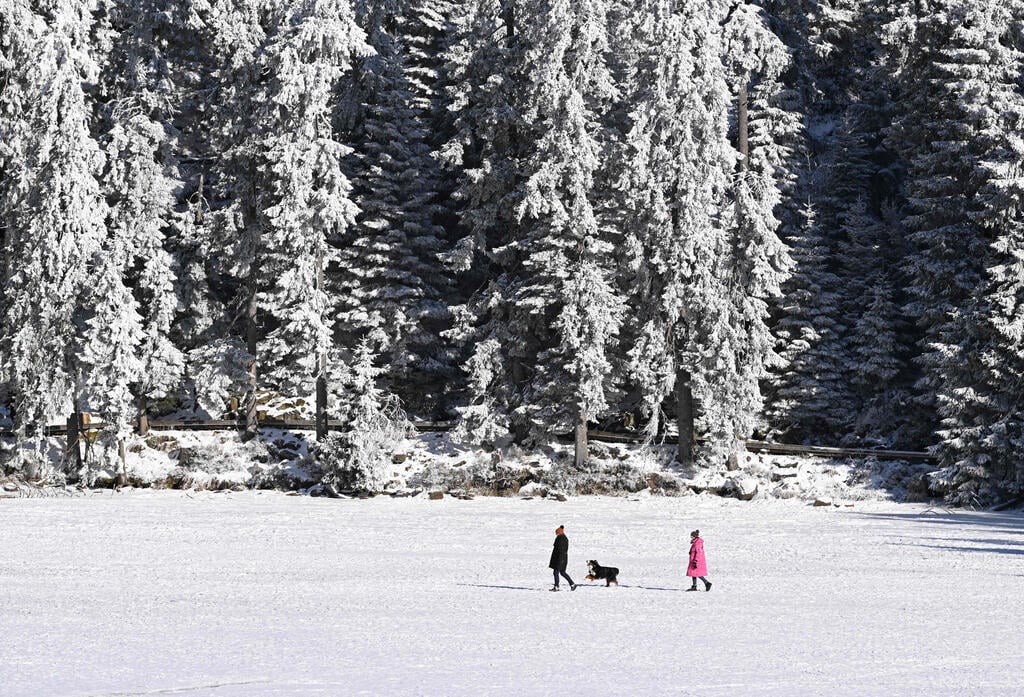
(Photo: THOMAS KIENZLE / AFP)
In Poland, schools were closed in many areas due to snow, with some switching to remote learning. Heavy snowfall in Hungary affected highways and caused delays to rail and bus services.
Winter conditions also disrupted countries more accustomed to harsh weather. In western Sweden, heavy snow led authorities in Gothenburg to suspend all tram services. In Finland, poor driving conditions and mechanical problems caused bus delays and cancellations around Helsinki.
Snow and heavy rain overnight caused further problems in the western Balkans. In northwestern Croatia, a train was stranded for more than 12 hours after fallen trees blocked the tracks. States of emergency were declared in parts of eastern Bosnia and western Serbia due to power and water outages.
An unusual cold wave also hit Spain, where rail service near Madrid was suspended and disruptions were reported on more than 40 roads nationwide.