

Iran said it will announce a new restricted zone in the Gulf in the coming days and approve new shipping routes through the Strait of Hormuz, one of the world’s most important energy corridors, as renewed U.S.-Iran attacks on shipping push oil prices higher and deepen security concerns across the Gulf.
Mohsen Rezaei, secretary of Iran’s Supreme National Security Council, said the restricted zone would begin where what Tehran describes as the U.S. blockade of Iran starts and extend into parts of the Gulf. Few details were provided, but Rezaei said any ship entering the zone would be added to a sanctions list.
Gallery
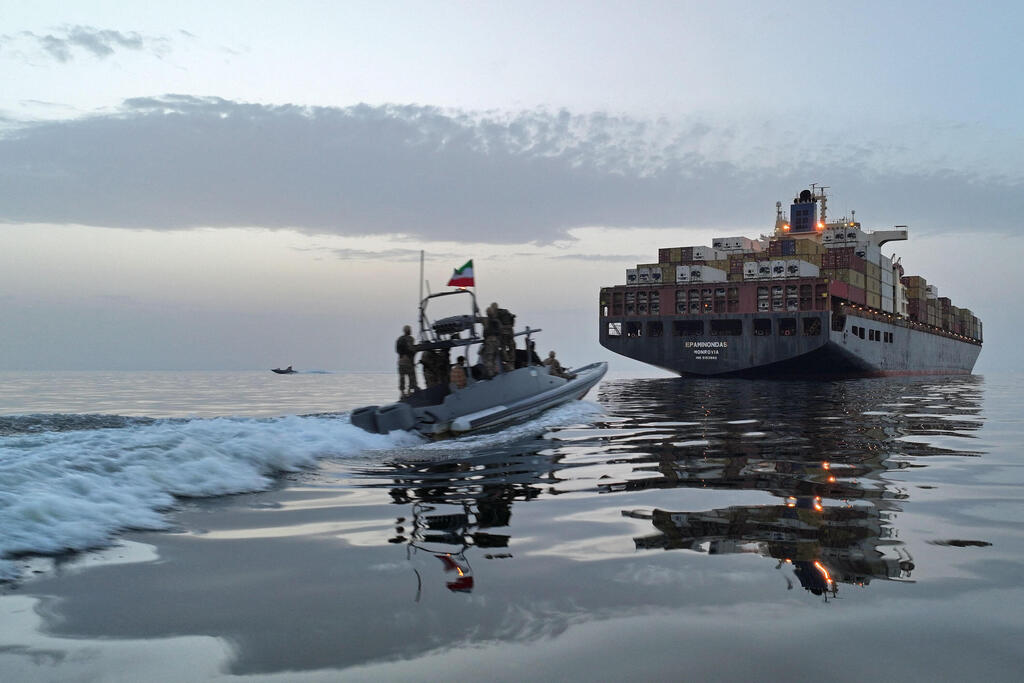
Iranian military boat approaches a vessel in the Strait of Hormuz
(Photo: Meysam MIRZADEH / TASNIM NEWS / AFP)
He also said Iran and Oman had agreed on maps for a new international shipping corridor through their waters and expected them to be signed in the coming days. “The maps of a new international corridor which lies in Iranian and Omani waters and in which Iran will have management have been agreed and should be signed in the coming days,” he told Iranian state television.
“We will only commit to the Strait of Hormuz being open when they, the Americans, stop the sabotage, threats and attacks on Iran,” Rezaei added.
Hormuz traffic falls as oil prices rise
Traffic through the Strait of Hormuz, the narrow waterway linking the Persian Gulf with global markets, has fallen sharply. An average of 10 commodity ships a day passed through the strait over the past 10 days, the lowest level since May, according to shipping data cited by Reuters. Before the conflict, about a fifth of global oil supplies passed through the waterway.
Brent crude rose another 0.8% Monday to above $97 a barrel after strong gains the previous week.
The latest escalation followed another exchange of attacks over the weekend. U.S. Central Command said American forces struck three Iranian oil tankers on Saturday, including one near Kharg Island, Iran’s main oil export hub, after Iran’s Islamic Revolutionary Guard Corps attacked U.S. warships in the region.
Six months after U.S.-Israeli strikes on Iran triggered the war, neither side has secured a decisive outcome. A preliminary ceasefire agreement reached in June has unraveled, diplomatic efforts have made little progress and, after a relative lull during much of August, reciprocal attacks have resumed.
Iran has meanwhile demonstrated that it retains the ability to threaten U.S. interests in neighboring countries and disrupt oil traffic through Hormuz. Washington has continued a blockade aimed at restricting Iranian oil exports and preventing Tehran from circumventing sanctions.
U.S. Central Command said that as of Sunday it had redirected 92 commercial vessels, disabled three and boarded two while enforcing the blockade. Iran, the third-largest producer in OPEC, exported about 90% of its crude through Kharg Island before the war, but those flows have been disrupted since the blockade began in mid-April.
Iranian Oil Minister Mohsen Paknejad said Kharg Island had been struck around 550 times in recent months but remained operational. U.S. Energy Secretary Chris Wright said oil was nevertheless continuing to move through Hormuz, telling CNN that transits were averaging more than 9 million barrels a day and that, together with pipelines bypassing the strait, flows were at roughly two-thirds or more of pre-conflict levels.
Gulf states question reliance on Washington
The strain is increasingly being felt across the Gulf, where senior officials are openly questioning whether longstanding reliance on the United States is sufficient to guarantee their security.
Qatar’s Foreign Ministry spokesperson Majed al-Ansari said at the Hili Forum in Abu Dhabi that the Iran war had demonstrated the need for Gulf Arab states to develop greater independent security capabilities.
“We need to realise in the Gulf that having international forces in the region, having a strategic alliance with the U.S. is very important but is not enough,” Ansari said. “Self-sufficiency when it comes to security is the only way forward.”
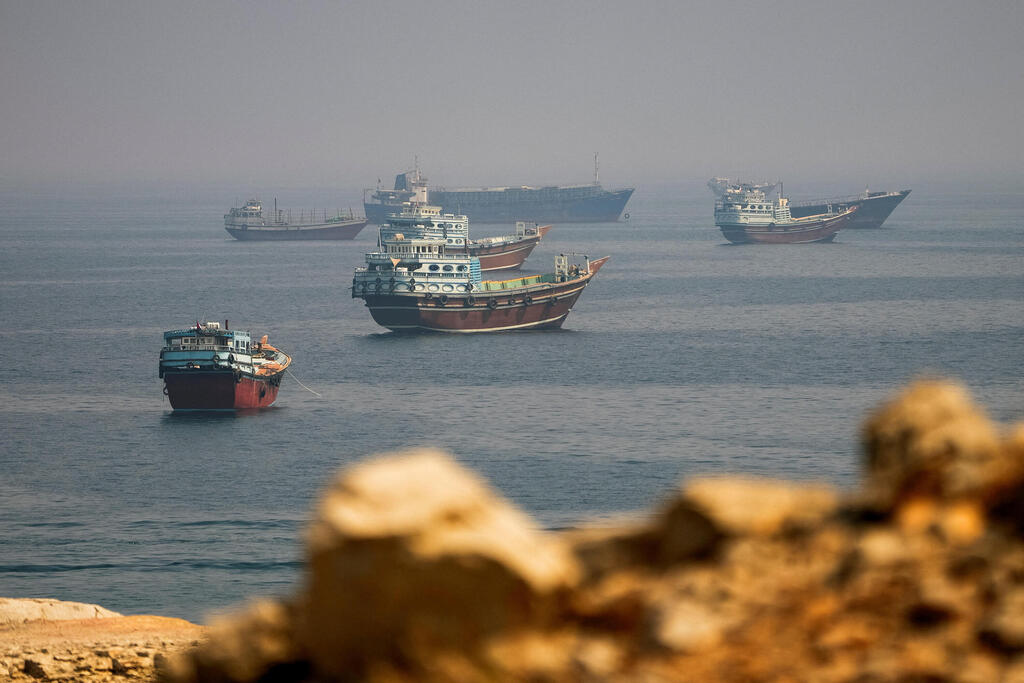
Strait of Hormuz
(Photo: REUTERS/Stringer)
UAE presidential adviser Anwar Gargash said dealing with Iran remained a central issue for the United Arab Emirates and other Gulf countries and warned that rebuilding trust with Tehran could take decades. He also said the UAE would not allow its energy exports to be held hostage and called for a clear path on Iran’s nuclear program.
Tehran said a Qatari delegation visited Iran on Sunday in an effort to reduce tensions.
Iran warns South Korea, threatens response at UN
Iran also widened its warnings to countries considering involvement in Gulf operations. Foreign Ministry spokesperson Esmail Baghaei said any South Korean military participation or presence in operations in the Gulf or Strait of Hormuz would be viewed as support for U.S. “aggression” and would have serious consequences.
The nuclear dispute is also intensifying. Baghaei said Iran would respond if the U.N. nuclear watchdog adopted a resolution against Tehran and accused European governments seeking such a measure of being “irrational,” arguing that the war had made Iranian nuclear facilities inaccessible.
Responding separately to U.S. Vice President JD Vance, Baghaei rejected describing the confrontation simply as a war and called it an “overt aggression.” U.N. human rights chief Volker Türk said he was alarmed by the renewed U.S.-Iran attacks and called for an immediate return to negotiations.
Economic pressure mounts inside Iran
Inside Iran, officials have also acknowledged the growing economic strain caused by sanctions and the restrictions on oil exports.
Parliament Speaker Mohammad Baqer Qalibaf said Washington should understand that “the rules of the game have changed” and warned that future attacks on Iranian interests would receive a “faster, heavier and more painful response.”
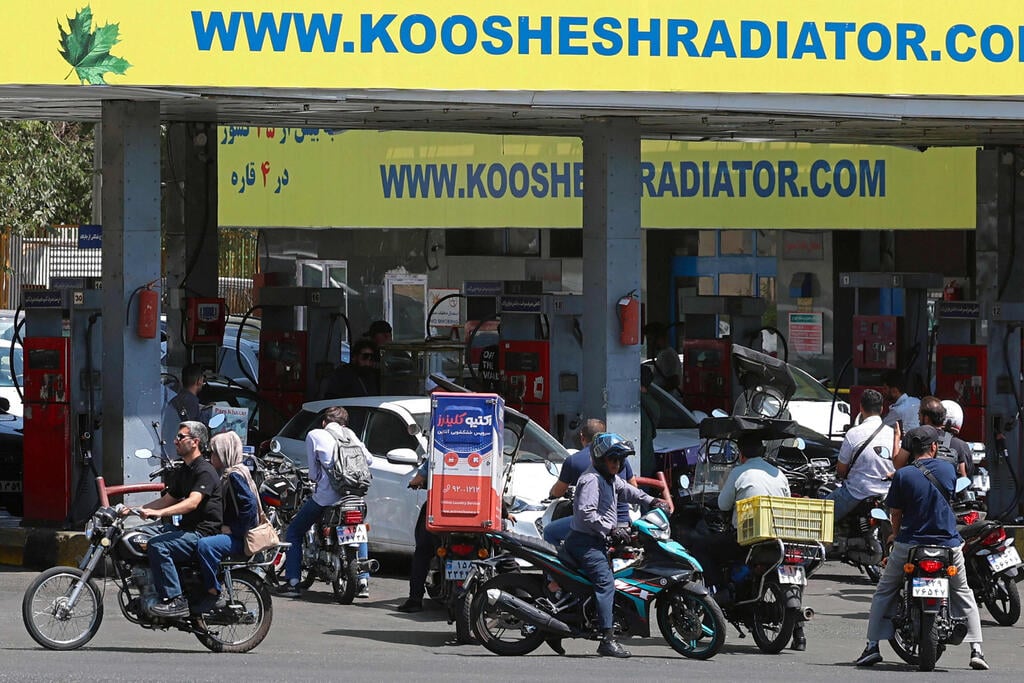
Lines at a gas station in Tehran
(Photo: AFP)
Qalibaf said Iran’s struggle was now economic as well as military, citing sharp currency fluctuations, inflation, unemployment and market management as major challenges.
Economy Minister Ali Madanizadeh said Tehran would answer U.S. economic pressure with domestic reforms rather than changing course. “The responsibility of reforming Iran’s economy is with its government and people, not with the U.S. Treasury,” he said.
Yemen front adds another layer
The regional confrontation is also extending into Yemen. Iran-backed Houthi rebels, who have carried out a deadly offensive in recent days, accused Saudi Arabia on Monday of striking several parts of the country.
The Houthi-affiliated Saba news agency said Saudi forces targeted Jawf in northern Yemen, al-Bayda and Marib in central Yemen and Taiz in the southwest with airstrikes and cruise missiles.
The accusation adds another front to a confrontation already affecting shipping, oil exports, Gulf security calculations and Iran’s nuclear dispute with the West.