

In a development that appears to diverge sharply from its public rhetoric, Axios has reported that the United States quietly extended a new nuclear proposal to Iran over the weekend—one that would, in effect, permit limited uranium enrichment on Iranian soil for civilian purposes.
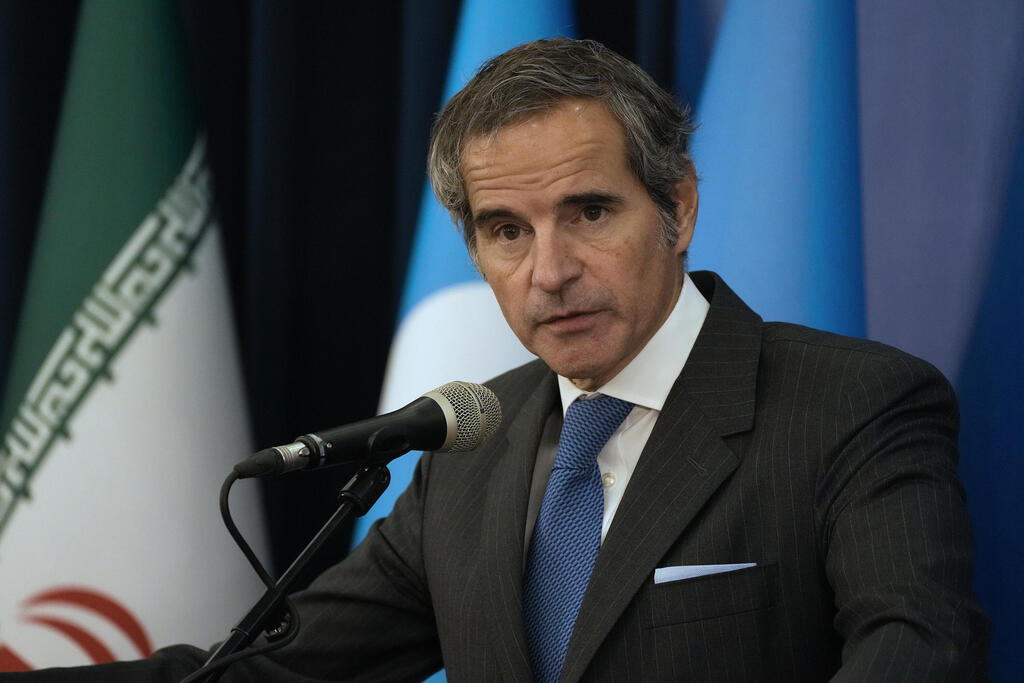
The proposal, presented on Saturday by White House envoy Steve Witkoff, seems to contradict earlier public assurances made by both himself and Secretary of State Marco Rubio, who had stated unequivocally that any future deal would prohibit Iran from enriching uranium altogether and require full dismantlement of its nuclear infrastructure. However, according to sources familiar with the matter—one of whom described the proposal point by point—the terms offered to Iran are considerably more flexible than previously led to believe.
The Islamic Republic, long known for its nuclear ambitions, has drawn a red line around its right to civilian enrichment, which the Trump administration has acknowledged as legitimate, and has consistently rejected any agreement that would impose a total ban on that activity. While U.S. officials have publicly maintained a hardline stance, the proposal now on the table appears to be designed to thread the needle between Iran’s demands and Western concerns.
The new proposal outlines several core components. Iran would be allowed to continue enriching uranium at low levels—no more than 3% concentration—strictly for civilian use and under international oversight. This level is consistent with what’s needed to fuel nuclear reactors, far below the enrichment threshold for weapons-grade material. The duration of this restriction would be decided in future negotiations.
The proposal also requires Iran to dismantle key infrastructure related to uranium conversion and processing, and to suspend research and development on more advanced centrifuges. Moreover, Iran’s underground enrichment facilities would be rendered temporarily inactive, while above-ground activity would be tightly limited and monitored according to International Atomic Energy Agency (IAEA) standards.
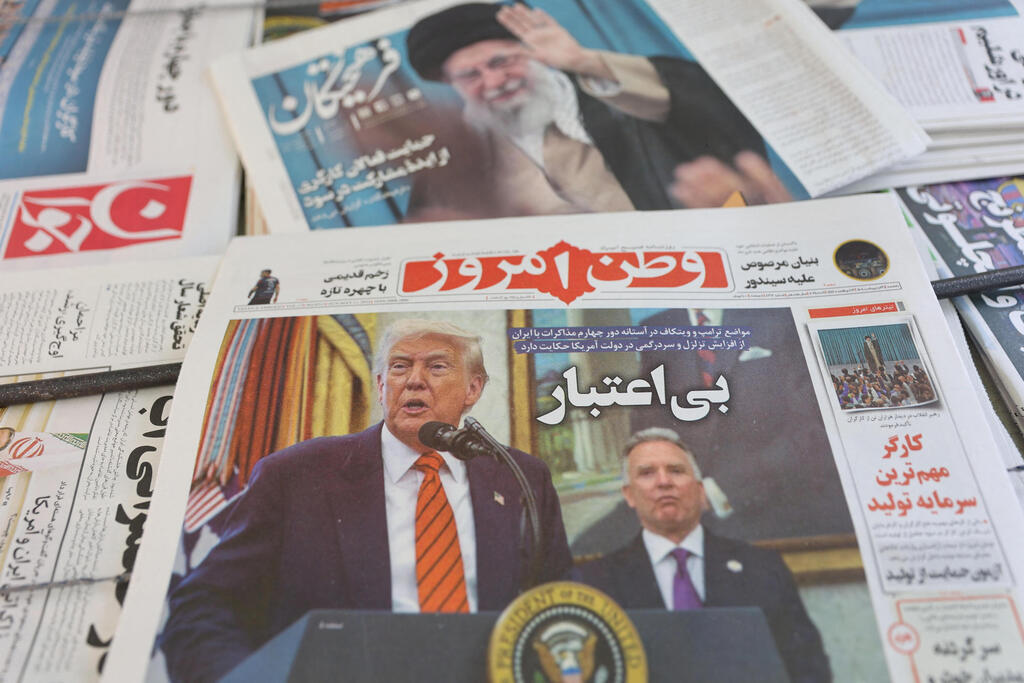
Trump and Witkoff on the cover of Iranian paper
(Photo: Reuters/Majid Asgaripour/WANA (West Asia News Agency) via REUTERS)
Another notable element is the establishment of a regional enrichment consortium that includes Iran, but caps its domestic enrichment capability at a civilian threshold. The deal would also mandate Iran’s immediate adoption of the IAEA’s Additional Protocol, enabling more intrusive and immediate inspections.
Sanctions relief—an issue central to Iranian negotiators—would not be granted upfront. Instead, it would be contingent on Iran proving its compliance to both the United States and the IAEA, a demand that Iran’s Foreign Ministry has criticized as vague and insufficient. Speaking on Monday, ministry spokesperson Esmaeil Baghaei said Tehran is still reviewing the proposal and pushed back on claims that it was already deemed acceptable by Iranian leadership.
This evolving framework has not gone unnoticed by Washington’s allies and domestic critics. Prime Minister Benjamin Netanyahu’s government, along with a sizable bloc of Republican senators, has been pressuring the White House to hold firm on a zero-enrichment policy and insist on the complete dismantlement of Iran’s nuclear capabilities.
Get the Ynetnews app on your smartphone: Google Play: https://bit.ly/4eJ37pE | Apple App Store: https://bit.ly/3ZL7iNv
Tensions are also simmering between the White House and Jerusalem. President Trump has reportedly warned Netanyahu not to take any unilateral steps that could jeopardize the fragile negotiations. Nonetheless, the Israeli premier has advocated for military action against Iranian nuclear sites and is said to be preparing for the possibility of launching a strike should diplomacy collapse—a scenario that has U.S. officials deeply concerned.
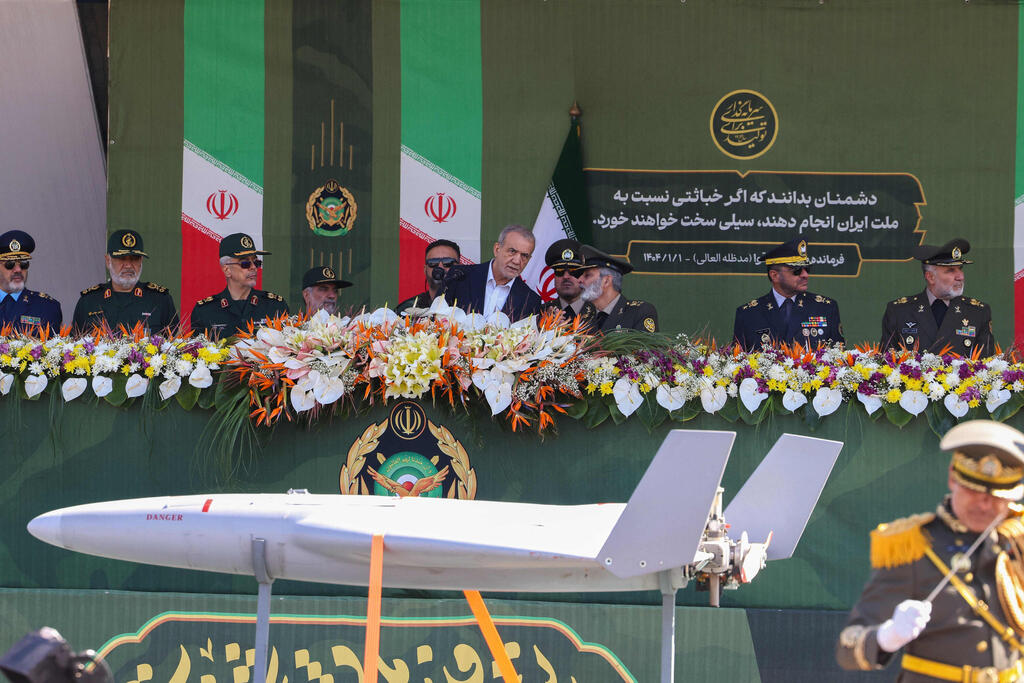
Iranian military parade with President Pezeshkian
(Photo: Atta KENARE / AFP)
The new proposal, while softened in tone and content compared to the original Trump-era demands, bears resemblance to the 2015 Iran nuclear agreement brokered under President Obama—a deal that Trump famously withdrew from in 2018.
As discussions continue behind closed doors, the next round of nuclear talks is expected to be scheduled in the coming days. Whether this latest offer will bridge the enduring gap between Washington and Tehran—or deepen existing divisions among U.S. allies—remains to be seen.