


Five IDF soldiers were wounded Wednesday in southern Lebanon when two Hezbollah drones detonated near Israeli forces, even as the United States and Iran move toward a formal signing of a memorandum of understanding expected to include a ceasefire in Lebanon.
One soldier was seriously wounded, two were moderately wounded and two others were lightly hurt, the military said.
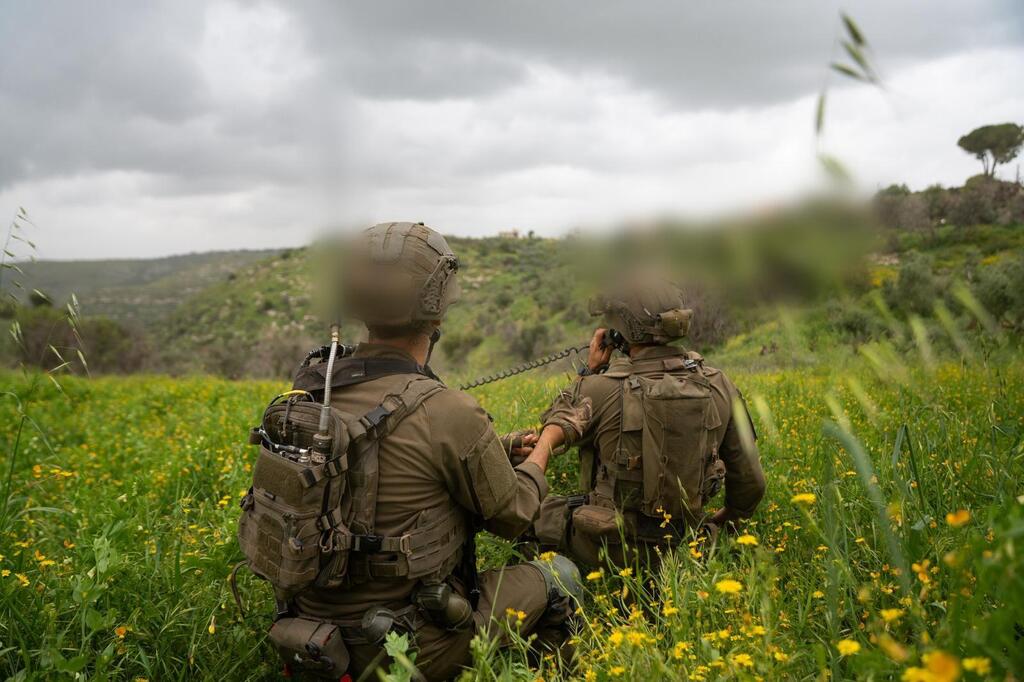
IDF forces operating in southern Lebanon
(Photo: IDF)
The first explosion occurred at about 6 a.m., when a drone detonated near a tank operated by troops from the Givati Brigade combat team in the area of Kfar Tebnit in southern Lebanon. Four soldiers were wounded by shrapnel and evacuated by helicopter to hospitals.
Minutes later, a second explosive-laden drone struck the evacuation vehicle, wounding another soldier.
The IDF said its forces responded with artillery fire at what it described as terrorist infrastructure in the area.
The attack came ahead of a planned signing ceremony Friday in Switzerland for an agreement between the United States and Iran, which has already reportedly been signed electronically. The agreement is expected to bring a ceasefire in Lebanon, though fighting has continued on the ground.
Speaking later at the G7 summit alongside Indian Prime Minister Narendra Modi, President Donald Trump said he wanted Israel to be able to defend itself in Lebanon, “but I do want them to use good judgment.”
“I expect Israel to show more gratitude,” Trump added.
Iran warned Tuesday night that if Israel continues striking southern Lebanon, it should expect “a harsh response” from Tehran’s military forces. The warning followed a series of Israeli strikes in southern Lebanon on Tuesday that reportedly killed four people.
Iran said Israel had violated the ceasefire in southern Lebanon 84 times over the past two days and accused it of continuing to kill Lebanese civilians after Trump announced the war was over.
The IDF said it was not familiar with Iran’s claim of 84 violations, but acknowledged several drone strikes against what it described as immediate threats to its forces.
Israeli troops from the 36th Division remain in the Beaufort sector and nearby ridge lines in southern Lebanon, where they are clearing underground and above-ground terrorist infrastructure. Military officials said the forces are continuing operational activity while avoiding a static posture.
The military said the activity does not amount to the seizure of new territory, but forces are not currently withdrawing from areas already captured. Troops are also opening routes for supplies and vehicle movement.
Even before the reported U.S.-Iran understandings, the IDF was in the final stages of its operation in Lebanon, with options ranging from expanding operations toward Nabatieh and nearby villages to thinning forces and returning toward the so-called yellow line.
A purported text of the U.S.-Iran memorandum was published Tuesday by Al Arabiya and other outlets, though the White House denied the reports. According to the leaked document, Iran, the United States and their allies in the current war would declare an immediate and permanent end to hostilities on all fronts, including Lebanon, and pledge not to threaten or use force against one another.
Trump, speaking earlier at the G7 summit alongside Egyptian President Abdel-Fattah el-Sisi, described the emerging agreement as “excellent.”
Trump said the agreement is “a great deal for a lot of reasons, but number one by far — 99.9% of it — is that they will never have a nuclear weapon.”
“It’s a very strong deal. Nobody knows what it is, but it’s very strong, and most people seem to be very happy,” he added.