

Nearly three months have passed since the war with Iran erupted, and the regime in Tehran has demonstrated both significant resilience and an ability to inflict major damage on the region and the global economy. That was the assessment of U.S. military officials who spoke with The New York Times after President Donald Trump announced he had postponed the strike planned for today, Tuesday. In Israel, officials are watching developments closely.
Israelis, who are being updated like the rest of the world mainly through the U.S. president’s social media posts, remain powerless in the face of the uncertainty, dependent on the decisions of another country’s leader. In truth, no one knows what will happen. Several U.S. officials warned in conversations with the Times that Trump’s latest statement could be a form of deception and that he may still carry out the planned strikes. Talks between the United States and Iran had also been expected in February, but war broke out instead.
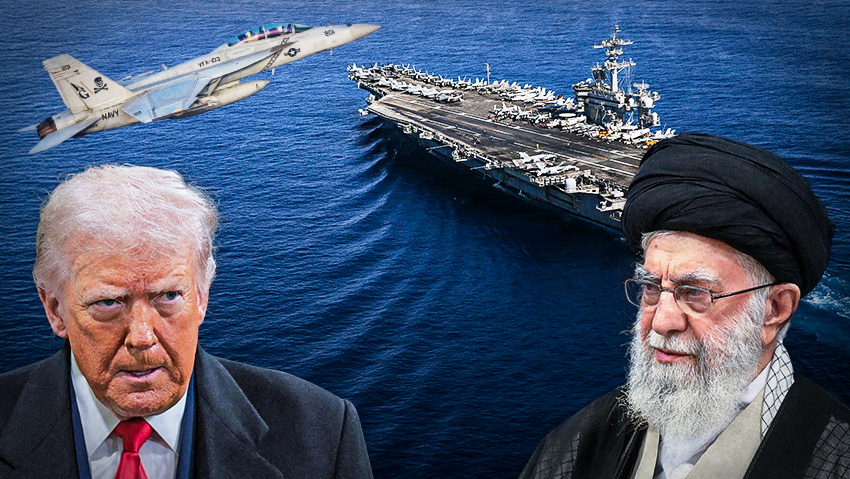
Since declaring a ceasefire on April 7, Trump has repeatedly backed away from the possibility of renewed strikes that could drag the United States into another unpopular and costly war. But despite the blockade U.S. forces have imposed in the Strait of Hormuz, Iran has shown no public signs of breaking or moving toward major concessions in negotiations.
A new NYT poll found that 64% of voters said Trump’s decision to go to war with Iran was wrong, and most voters expressed dissatisfaction with the economic cost of the conflict. In the six weeks since the exchanges of fire ended, Iran has reportedly used the time to excavate dozens of ballistic missile sites that had been bombed, relocate mobile launchers and, according to a U.S. military official who spoke with the Times, adapt its tactics for the possibility of renewed strikes.
(Video: X)


“Many of Iran’s ballistic missiles were positioned in deep underground caves and in other facilities carved into granite mountains that are difficult for U.S. strike aircraft to destroy,” the official said. As a result, “the United States often bombed the areas surrounding the sites, collapsing and burying them rather than destroying them. Iran has excavated a significant number of those sites.”
‘Iran studied US flight patterns’
According to the official, Iranian commanders, possibly with Russian assistance, studied the flight patterns of U.S. fighter jets and bombers. He warned that the downing of an F-15E last month and the strike that damaged an F-35 exposed how predictable U.S. flight tactics had become, allowing Iran to defend against them more effectively.
Perhaps most importantly, the military official said that although five weeks of intensive bombing eliminated Iranian leaders and commanders, the war left behind a tougher and more resilient adversary. He added that Iran has repositioned its remaining forces, which are convinced they can successfully resist the United States, whether by effectively blocking the Strait of Hormuz, attacking energy infrastructure in neighboring Gulf states or threatening U.S. aircraft.
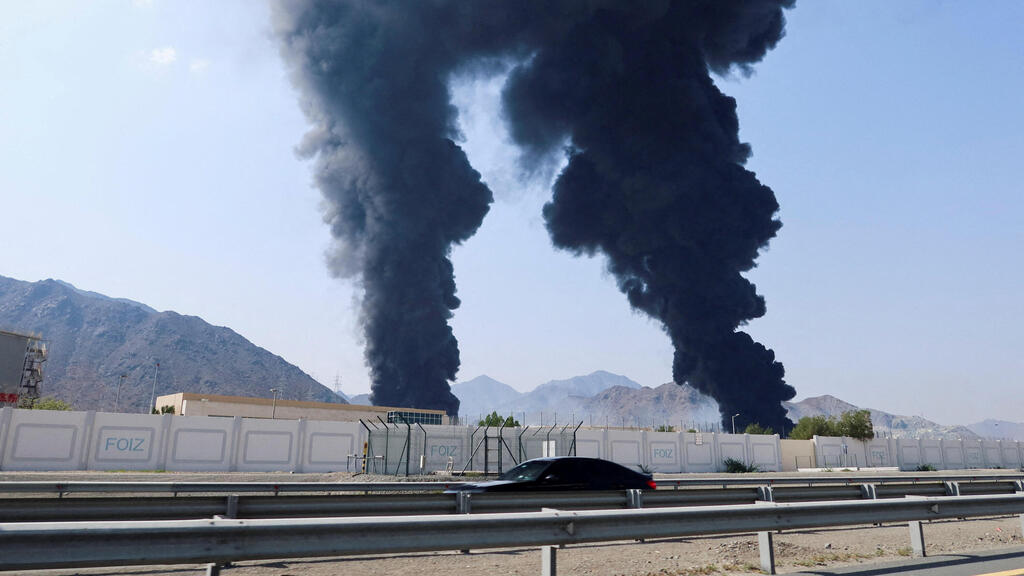
An Iranian strike in the United Arab Emirates during the war
(Photo: REUTERS/Staff)
Meanwhile, retired Maj. Gen. Yaakov Amidror, a former head of Israel’s National Security Council, told Ynet that “the Iranians cannot change the tools on the chessboard. They are prepared. America, unlike Iran, is not under pressure. The blockade the Americans imposed on Iran is causing extremely serious problems inside Iran. The Americans are feeling only the very edge of the tail end of this event.”
According to Amidror, if a military operation goes ahead it is expected to include strikes on nuclear and missile targets. “I don’t know whether it will go as far as obtaining enriched uranium, but they will strike whatever remains. After proper damage assessment, they know what still needs to be completed. They will probably hit something that severely damages the regime,” he added.
Iran’s possible response to renewed strikes
In another Times report, the newspaper extensively reviewed Iran’s possible responses to renewed fighting initiated by the United States. Hamidreza Azizi, an expert on Iranian security affairs at the German Institute for International and Security Affairs, told the Times that during the first round of fighting Iran prepared for a prolonged conflict lasting about three months and therefore limited its missile use in order to sustain a long war.
However, he said that if war breaks out again, Iranian leaders expect it to be “short but high intensity,” including coordinated heavy strikes on Iran’s energy infrastructure. As a result, he said, Iran may launch dozens or even hundreds of missiles a day in a new round of fighting, forcing a “recalculation” on the other side as well. Gulf states would have to prepare for intensified attacks, and if major infrastructure were targeted, the entire global economy would feel the effects.
In addition, Iran could also attempt to seize control of the Bab el-Mandeb Strait, the narrow waterway connecting the Red Sea to the Gulf of Aden through which roughly one-tenth of global trade passes. The waterway lies alongside territory controlled by the Iran-backed Houthis in Yemen.
Iran’s demands and threats
Meanwhile, Iran’s deputy foreign minister said the latest proposal conveyed to the United States includes lifting sanctions, releasing frozen assets and ending the blockade. According to him, Iran views the agreement as including an end to the war on all fronts — including Lebanon — and the withdrawal of U.S. forces from areas near Iran.
Ebrahim Rezaei, spokesman for the Iranian Parliament’s National Security and Foreign Policy Committee, added that “any aggression against Iran will be met with a stronger response. We are prepared for all scenarios. The Americans must submit to diplomacy and our conditions, or submit to the power of our missiles.”
He claimed that the Strait of Hormuz “will never return to what it once was, and no power will be able to open it without our consent.”