

Mohammad Saeed was 18 when he fled Afghanistan with his parents and younger siblings after the Taliban returned to power in 2021. Iran offered the family work, relative stability and the possibility of building a new life. Five years later, Iran’s economic collapse has driven them back. “The Iranian currency had fallen so sharply,” Saeed said, that his family’s savings, held in Iranian rials, had lost more than two-thirds of their value.
For decades, Iran’s larger and more industrialized economy drew Afghans escaping poverty, war and Taliban rule. Now that flow is reversing. At the Islam Qala crossing in western Afghanistan, a steady stream of migrants passes through document checks before emerging onto the road toward Herat, many carrying little more than they can hold. Returnees described months without steady work, wages eroded by inflation and savings devastated by the collapse of the rial.
Gallery
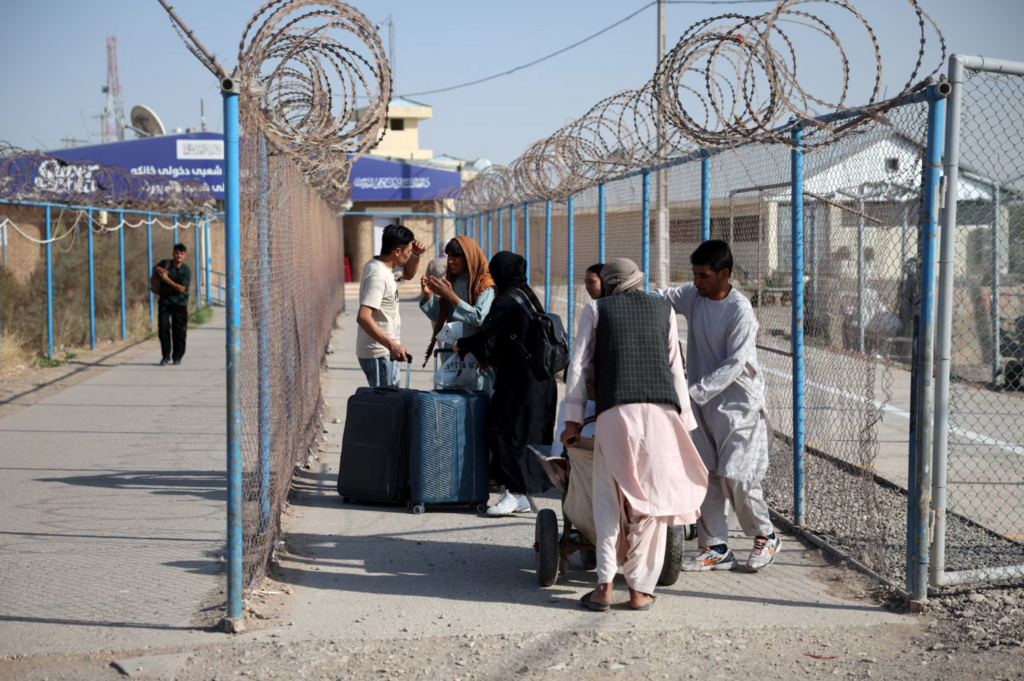
Afghan nationals carrying their belongings walk after crossing the border from Iran at the Islam Qala border crossing in Herat province, Afghanistan
(Photo: Reuters)
Iran’s crisis has deepened under tightening sanctions and a U.S. naval blockade that has sharply curtailed crude exports through the Strait of Hormuz. Consumer prices have risen by nearly 90% from a year earlier, according to Iran’s Statistical Centre, while food inflation has approached 130%. Sayed Jawed Qazi Khani, a 40-year-old Afghan migrant, said traders once made money reselling goods in Iranian bazaars, but collapsing purchasing power destroyed demand. “What remained was day labour,” he said, often for the same wages as a year earlier. International Organization for Migration surveys found that only 29% of recent Afghan returnees still had savings, while average income had fallen by nearly one-third from pre-crisis levels.
Returning to fewer freedoms
More than 2 million Afghans have left Iran over the past two years, according to UN refugee data. Many were deported or pressured to leave before the latest wartime exodus, but returnees and IOM data indicate that growing numbers of women and entire families are now leaving voluntarily as well.
For many mothers and daughters, that creates an especially harsh choice. Under Taliban rule, girls are barred from secondary school and university, while women face sweeping restrictions on employment and movement. Families who remained in Iran after 2021 to preserve those opportunities are now returning because they can no longer afford to stay.
Abdul Jabbar, 44, had lived in Iran for almost four decades and supported his family by working on building exteriors. They had a comfortable apartment in Kerman near an Iranian military base. “I used to say that even if Afghanistan was only two streets away, I would not go,” he said. But after the base was repeatedly hit by missiles and work disappeared, relatives urged him to return. He arrived with his wife, two daughters, grandson and mother, almost no savings and few possessions.
Two months later, Jabbar remains unemployed. His family lives in a one-room mud-brick house powered only by solar panels, with a donated carpet on the floor. His 15-year-old daughter, Setayesh, who wants to become a fashion designer, says she misses Iran. “If I could, I would go back,” she said. “For my education, my friends.”
At least 20 to 40 families including women and girls are voluntarily returning through Islam Qala each day, said Abdul Ghani Qazizadeh, a senior Taliban government official at the border. “The wages they earn are no longer enough to cover their basic living expenses,” he said. Some workers also complain that Iranian employers have withheld wages. “Everyone complains that their money has been left behind.”
Starting again from nothing
Saeed’s family had built a small cheese business after arriving in Iran in 2021. He and his mother, Rezwana Jami, produced cheese for pizzas and developed a loyal customer base. But as U.S.-Iran tensions escalated and inflation surged, even basic ingredients became hard to obtain. “I could no longer continue production,” Jami said.
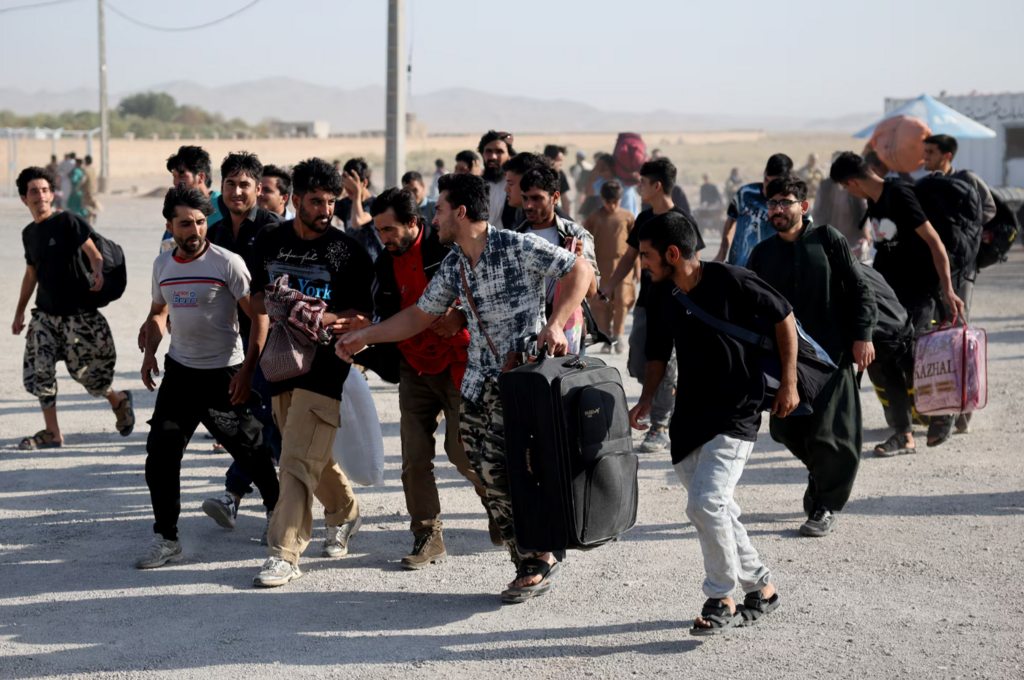
(Photo: Reuters)
The family returned to Afghanistan five months ago and spent what remained of their savings on kitchen equipment to restart the business from their new home. They believe there is a market for high-quality pizza cheese in Afghanistan and now work with girls who, in other countries, would still be in school.
For Jami’s 17-year-old daughter, the return has been especially painful. “She keeps telling me, ‘Mother, I studied for eight years, and now I’m just staying at home,’” Jami said. “There is nothing I can do except telling her, ‘Be patient. God is generous.’”
For families like Saeed’s, Iran once represented an escape from Afghanistan’s poverty and restrictions. The war has now reversed that calculation, leaving them to choose between an economy where they can no longer survive and a homeland where returning can mean giving up many of the freedoms they had hoped to preserve.