

Israeli officials say divisions within Iran’s leadership are widening as Supreme Leader Mojtaba Khamenei, still suffering from physical and psychological injuries, increasingly relies on some of the most hard-line figures in the Revolutionary Guard and Basij.
The assessment follows a New York Times report describing unusually bitter confrontations among senior Iranian officials over military actions that were apparently carried out without the knowledge of key figures in Tehran’s political and security establishment.
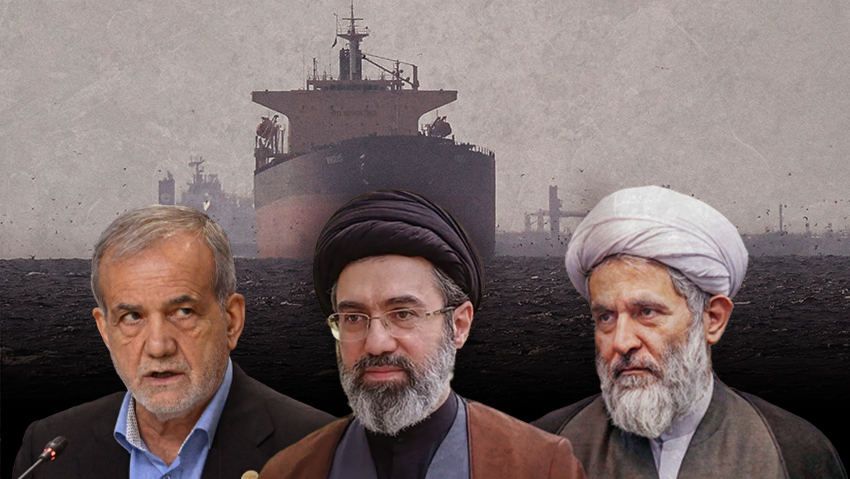
Israeli officials said Khamenei remains alive but has surrounded himself with commanders whose worldview is shaped by the Iran-Iraq War and who are pressing for an increasingly confrontational approach.
“Their thinking is still rooted in the Iran-Iraq War,” the officials said. “They are taking an extremely hard-line approach, and it will eventually lead them into disaster.”
The officials also pointed to Iran’s deteriorating economic situation as another source of pressure on the regime. They described an economy in severe decline, with soaring inflation, rising unemployment, a sharply weakened rial and virtually no oil exports.
“People are barely managing to survive, and the Iranian economy is in free fall,” they said. “How long can they keep going? It’s difficult to know. The regime will not collapse overnight. It will be a process, and we believe that process is already underway. There are many people inside Iran who oppose the direction the leadership is taking.”
Against that backdrop, the US Embassy in the United Arab Emirates issued a separate security warning urging Americans in the country to exercise particular caution around locations associated with Jewish and Israeli communities, including places of worship.
The embassy advised US citizens to remain alert, maintain heightened situational awareness and take appropriate personal security precautions during the holiday period. It also encouraged Americans to enroll in the State Department’s security notification program so they can receive alerts and be contacted more easily in an emergency.
Pezeshkian demanded answers
The tensions inside Tehran became particularly visible after Iranian forces opened fire on commercial vessels in July, following understandings reached with the United States.
According to the New York Times report, President Masoud Pezeshkian was stunned when he learned of the attacks and angrily called Gen. Ahmad Vahidi, the commander of the Revolutionary Guard, demanding an explanation.
Pezeshkian reportedly described the attacks as “reckless.” Vahidi, however, said he had neither authorized them nor been informed of them in advance. He also said Iran’s Supreme National Security Council had not been told beforehand.
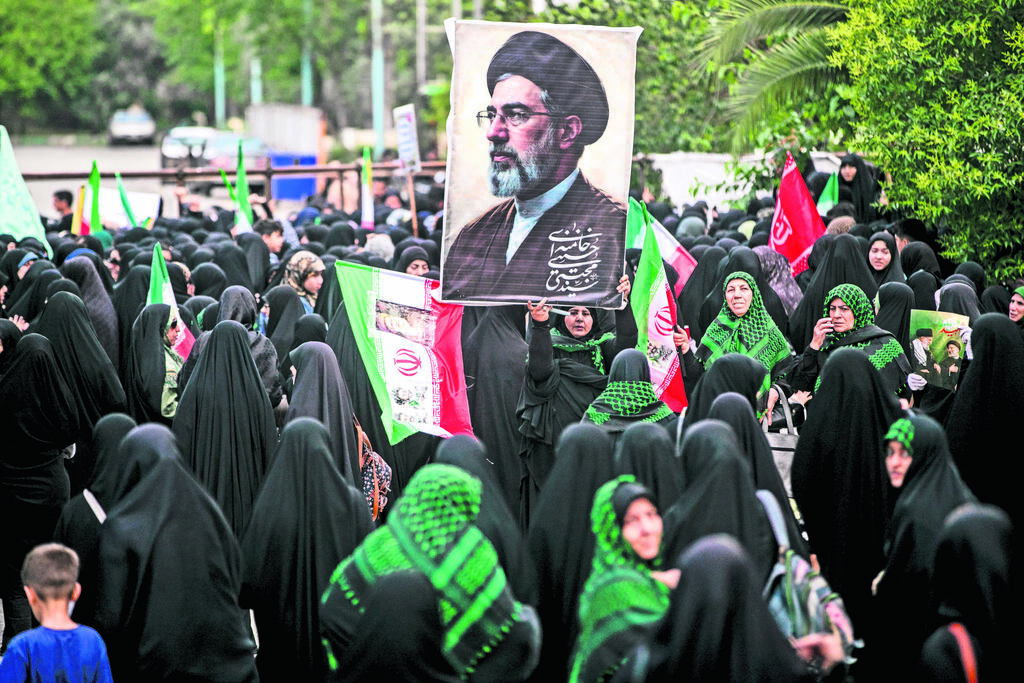
Pro-regime demonstraters in Tehran
(Photo: Majid Saeedi/Getty Images)
Iranian officials and a Revolutionary Guard member told the Times that what followed was one of the most intense political confrontations inside the country’s leadership in years. Senior officials shouted at one another, two high-ranking generals threatened to resign and accusations of betrayal were traded between rival camps.
Three Iranian sources said subsequent investigations by the government and security services concluded that the decision to attack three commercial vessels had been made by Hossein Taeb, an influential cleric and intelligence figure who had opposed the agreement with the United States from the outset.
According to those sources, Taeb told Khamenei that Iran had made a mistake by ending the war and agreeing to a deal.
Taeb was recently appointed to head the Basij, the paramilitary organization that plays a central role in suppressing domestic dissent. He previously spent more than two decades in senior Revolutionary Guard intelligence roles before Ali Khamenei removed him in 2022 following a series of security failures, including Israeli penetration of the organization and the disruption of an alleged Iranian attack plot in Turkey.
Taeb returned to prominence after Ali Khamenei’s death, and Iranian officials said he played a central role in the selection of Mojtaba Khamenei as his successor.
His return, together with the growing influence of other hard-line commanders around the new supreme leader, has become one of the clearest signs of the struggle over Iran’s direction. Israeli officials believe those divisions are no longer confined to disagreements over policy but increasingly reflect a broader contest over how the regime should respond to mounting pressure at home and abroad.