

The guest of honor at the premiere was Francesca Albanese, the UN special rapporteur for the Palestinian territories, who has faced repeated criticism over her comments on Israel and Hamas.
Gallery

Sonja Bohl-Dencker, whose daughter Carolin Bohl was murdered at age 22 at Kibbutz Nir Oz
(Photo: Lee Nechushtan)
Carolin Bohl, a 22-year-old German fashion student and model, was murdered by Hamas terrorists during the October 7 massacre in southern Israel. Her mother has spoken repeatedly over the past year about her daughter’s killing, about public displays of support for Hamas in Germany and about what she sees as the erasure of October 7 victims, including German citizens such as Carolin.
In an interview with the German newspaper Die Welt after the Berlin event, Bohl-Dencker described the atmosphere in the hall as hostile and filled with hatred toward Israel.

Carolin Bohl murdered on October 7
(Photo: Shahar Yahav)
“I have never been in a room where I felt so much hatred,” Bohl-Dencker said. “Everywhere keffiyehs, terrible slogans and sheer hatred against everything connected with Israel.”
Bohl-Dencker’s criticism of the event was restrained, but the atmosphere surrounding the premiere was volatile. Outside the cinema, demonstrators were heard making claims including “Israel murdered more than two million Palestinians in Gaza” and “there is no proof anyone was killed on October 7.” The tensions later spilled into the hall itself.
Caroline Preisler, a German politician whose grandfather was a Nazi soldier, was also in the audience. Since the October 7 massacre, Preisler has regularly attended rallies calling for the return of the hostages. She has also gone to pro-Palestinian demonstrations in Berlin carrying Israeli flags and posters reminding protesters that “rape of women is not resistance.” She has become one of the most reviled figures in Germany’s pro-Palestinian activist scene.
Inside the hall, dozens of people wearing keffiyehs surrounded Preisler, demanded that she be removed and shouted “Nazi, Nazi” at her. Anyone who asked a critical question was attacked verbally and called a “racist” or a “Nazi.”
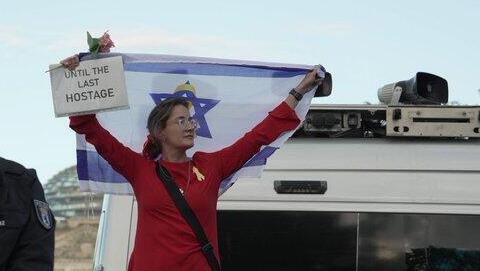
Caroline Preisler
Albanese sat on stage during the event. According to accounts from the premiere, she told the audience that dogs were being trained in Belgium and sent to Israel to rape Palestinians. The crowd cheered.
“I was shocked both by the things that were said and by the reaction to them,” Bohl-Dencker said after the premiere. “But above all, I was shocked by who these people were. They had no empathy for Carolin, for me or for the other victims on the Israeli side.”
Responding later to a social media post citing Bohl-Dencker’s remarks, Albanese wrote: “Change medication.”
The comment drew scrutiny in part because Albanese and members of her family have filed a lawsuit seeking to overturn U.S. sanctions imposed on her. In the filing, they said Albanese and her husband had been prescribed medication after suffering health issues they attributed to the sanctions. According to the filing, Albanese was treated for stomach ulcers, while her husband suffered from anxiety and insomnia.
Albanese has become one of the most prominent pro-Palestinian voices in Europe. Her UN title gives her an image of institutional authority, and she is viewed by many activists as a figure with influence and legitimacy. Critics, however, accuse her of using that status to spread inflammatory claims about Israel.
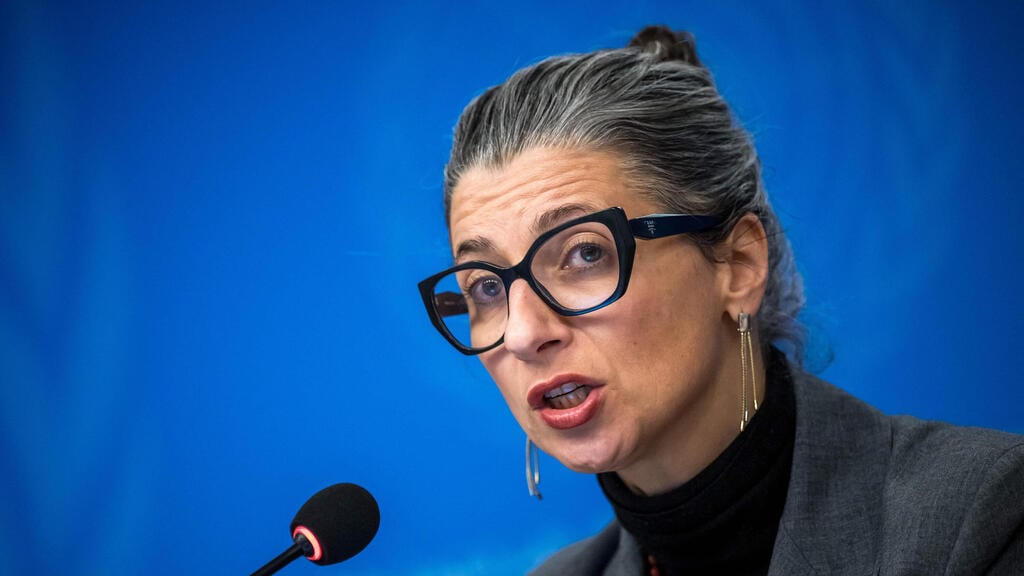
Francesca Albanese, the UN special rapporteur for the Palestinian territories
(Photo: Fabrice COFFRINI / AFP)
She has repeatedly generated controversy over statements regarding Hamas’ October 7 attack and Israel’s subsequent war against the terror group in Gaza. She has also faced criticism for declining to provide evidence rebutting allegations that pro-Hamas organizations helped sponsor her official travel to Australia and New Zealand in 2023.
Albanese has also drawn criticism from across the political spectrum in Italy, her home country, over comments widely interpreted as a threat of violence against media outlets that question her accusations that Israel is committing “genocide” in Gaza.
Bohl-Dencker has written extensively about the death of her only daughter, the effect of the loss on her life and her feeling that she has been abandoned. She has said she struggles to bear the loss and has spoken about the lack of empathy she feels toward victims on the Israeli side of the October 7 massacre.
Albanese’s response to her, Bohl-Dencker said, mattered less as a personal insult than as another example of the rhetoric the UN official spreads.
“I don’t care what she says about me,” Bohl-Dencker wrote. “She defames many people, and I am only one of them. I care about what she spreads. Claiming that dogs are trained to rape human beings is a sick lie.”