


The negotiations over the war in Iran do not appear to be moving forward. Iran and the United States are not making real progress, and it appears the U.S. blockade, alongside the closure of the Strait of Hormuz, may remain with us for a long time in what is being described as a state of “neither war nor peace.”
Iranian Foreign Minister Abbas Araghchi continues his tour of world capitals Monday, after returning Sunday to Islamabad, Pakistan’s capital, for a brief visit he described as “very good.”
Gallery
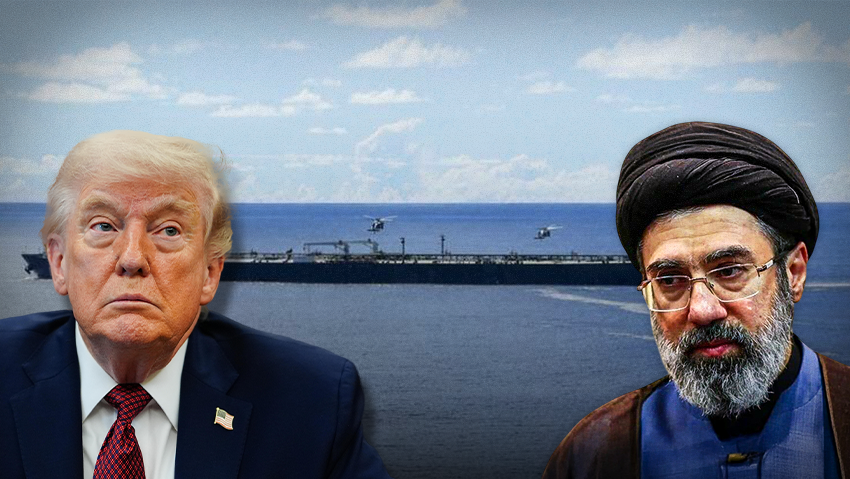
US President Donald Trump and Iran's Supreme Leader Mojtaba Khamenei
(Photo: Anna Moneymaker / AFP, CENTCOM)
Araghchi landed Monday in St. Petersburg, where he is expected to meet with, among others, Russian President Vladimir Putin. “The trip to Islamabad was a very good one, and good consultations were held, during which we examined under what conditions negotiations between Iran and the U.S. could continue,” Araghchi said. “Iran’s conditions are of great importance in the negotiations. We must guarantee the rights of the Iranian people after 40 days of resistance and the interests of the country.”
He described the talks in Russia as “consultations on regional and international issues,” adding that “coordination with Moscow is of special importance.”
US forces raided the M/T Majestic X in the Indian Ocean, which was transporting oil to Iran.
(Photo: CENTCOM)


According to a report by the U.S. website Axios, Iran on Sunday submitted a proposal to the United States aimed at bypassing the biggest point of dispute in the talks: the nuclear issue. According to the report, Tehran proposed a deal under which the Strait of Hormuz would be opened, the U.S. blockade lifted and nuclear talks would continue. It is unclear whether the proposal is acceptable to Washington, since in recent days President Donald Trump has sounded as though he is demanding, in any agreement with Iran, the handover of enriched uranium and a ban on enrichment for at least 20 years, though publicly he has said he expects a “permanent” agreement.
The “neither peace nor war” situation appears to worry Iran, since it cannot rebuild, and the naval blockade is weighing heavily on it economically. That pressure reached the point that Iranian President Masoud Pezeshkian appealed to the Iranian people Saturday: “Reduce electricity and energy consumption. The enemies are destroying our infrastructure and placing us under siege, and we need to control consumption.”
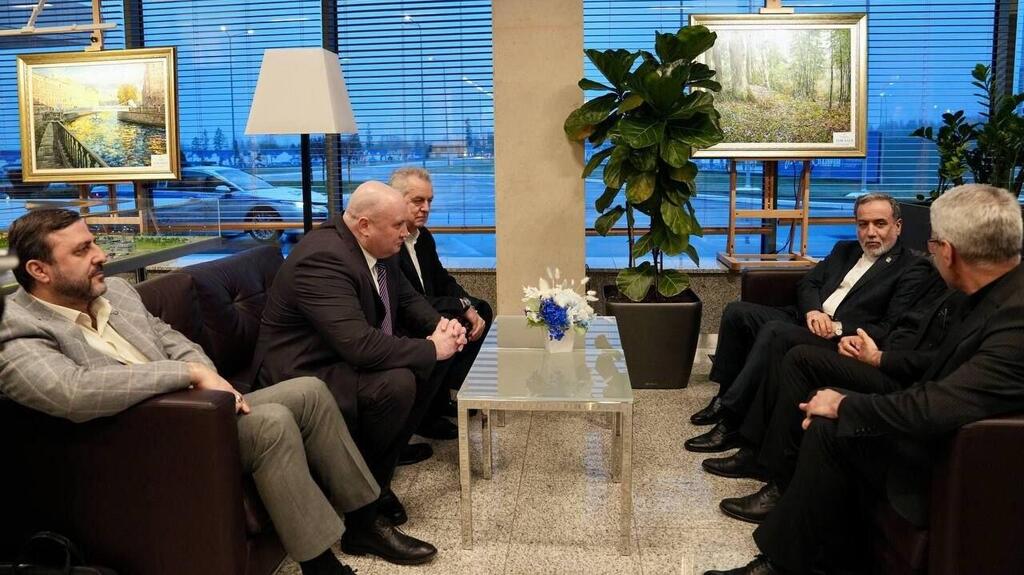
Iranian Foreign Minister Abbas Araqchi Visits Moscow
Another indication came from Iran’s most important economic newspaper, Donya-e Eqtesad, which published a grim forecast. Inflation, according to the newspaper, would jump by 49% even in the “most optimistic scenario” of reaching an agreement with the United States. A state of “neither war nor peace,” the paper said, could send inflation in the Islamic Republic soaring by nearly 70% in the coming months. A return to war would make things far worse, with hyperinflation of more than 120%.
The United States and the Iranian regime are now waging an economic and psychological war of attrition, according to ynet military and defense analyst Ron Ben-Yishai, seeking to force the other side to accept minimum demands in diplomatic negotiations that would lead to an end to the war. At this stage, it appears Trump intends to exhaust the damage he can inflict on the regime in Iran before turning — if at all — to renewed fire and strikes on Iran’s national infrastructure. This is a game for time that both the Iranians and the Americans intend to play over the next week or two.
Iran’s current rulers have no effective leverage over the United States, and indirectly over Israel, other than blocking the Strait of Hormuz. The Iranians hope the damage to the global economy, especially the energy price crisis they have created, will pressure Trump to halt the fighting. The Arab Gulf states that produce oil are also applying pressure in that direction, and the Iranians are betting that eventually the U.S. president, with gasoline prices also rising at home, will be forced to yield.
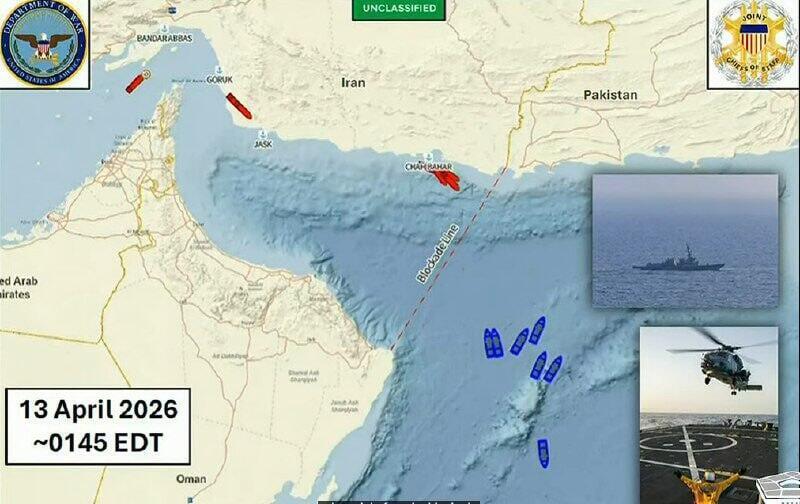
The blockade line presented by US Chief of Staff General Dan Caine
Trump, for his part, is trying through a diverse, systematic and comprehensive economic warfare campaign to functionally choke the regime in Iran, thereby threatening the survival of the Revolutionary Guards and the ayatollahs’ regime. Trump and his advisers chose economic warfare because they believe it can create the same threat to the Tehran regime’s survival that could be achieved by striking Iran’s national infrastructure, such as electricity, oil and gas production and bridges. Above all, economic warfare — of which the naval blockade is only one part — does not cause direct suffering to Iran’s civilian population.
The U.S. president does not want Iranian civilians, most of whom oppose the regime, to be physically and economically harmed by bombing national infrastructure in major cities. He does not want Iranians to develop hatred toward Americans and, as a result, rally around the regime. Trump, like Netanyahu and parts of Israel’s security establishment, still hopes to topple the regime through mass protests that would erupt after the war. And as long as bombs are falling near them, the masses will not take to the streets.