

Satellite images published Friday by The Associated Press reveal how Iran is working to conceal activity at nuclear sites targeted by the United States and Israel during the 12-day war, amid the possibility that President Donald Trump could order another strike against the Islamic Republic.
The images, captured by Planet Labs PBC, show roofs erected over damaged structures at the Natanz and Isfahan nuclear facilities. Experts say the moves may be aimed at salvaging remaining materials and components. According to an expert who spoke with AP, Tehran may also be seeking to hide the fact that it is conducting damage assessments.
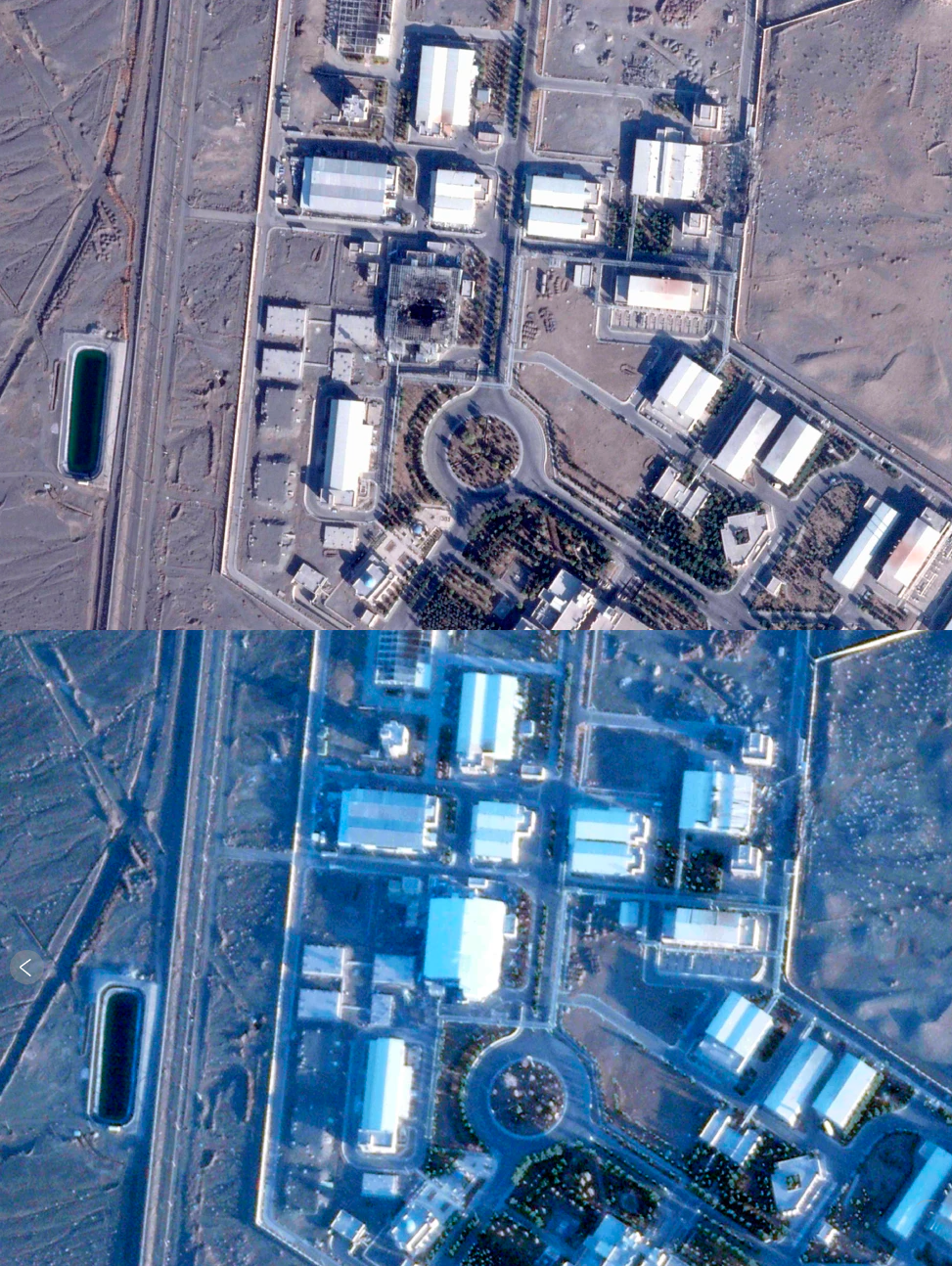
At present, the International Atomic Energy Agency can monitor Iranian nuclear sites only via satellite imagery, as Tehran is denying inspectors access to the facilities. The newly constructed roofs at Natanz and Isfahan are therefore hampering the IAEA’s monitoring efforts. Iran has refrained from publicly addressing its activities at the attacked sites and continues to insist it has the right to pursue a nuclear program. Experts who analyzed the damaged sites stress that the new roofs do not necessarily indicate the start of reconstruction. Instead, they appear to be part of Iran’s effort to determine whether key assets, such as limited stockpiles of highly enriched uranium, survived the strikes, said Andrea Stricker, an Iran researcher at the Foundation for Defense of Democracies, a Washington-based think tank sanctioned by Tehran. “They want to reach any recoverable assets without Israel or the United States seeing what actually survived,” Stricker said.
The main above-ground structure at Natanz, known as the Pilot Fuel Enrichment Plant, was hit in the opening strike of Israel’s Operation ‘With a Lion’s Might’ on June 13. IAEA Director General Rafael Grossi said at the time that the facility was rendered functionally destroyed, with severe damage to the underground halls housing enrichment centrifuges. During the US military’s Operation ‘Midnight Hammer’ on June 22, B-2 bombers dropped GBU-57 bunker-buster bombs, striking the underground facilities and likely destroying what remained inside. Satellite images show that Iran began constructing a roof over the damaged Natanz facility in early December and completed the work by the end of the month, as unprecedented protests erupted across the country.
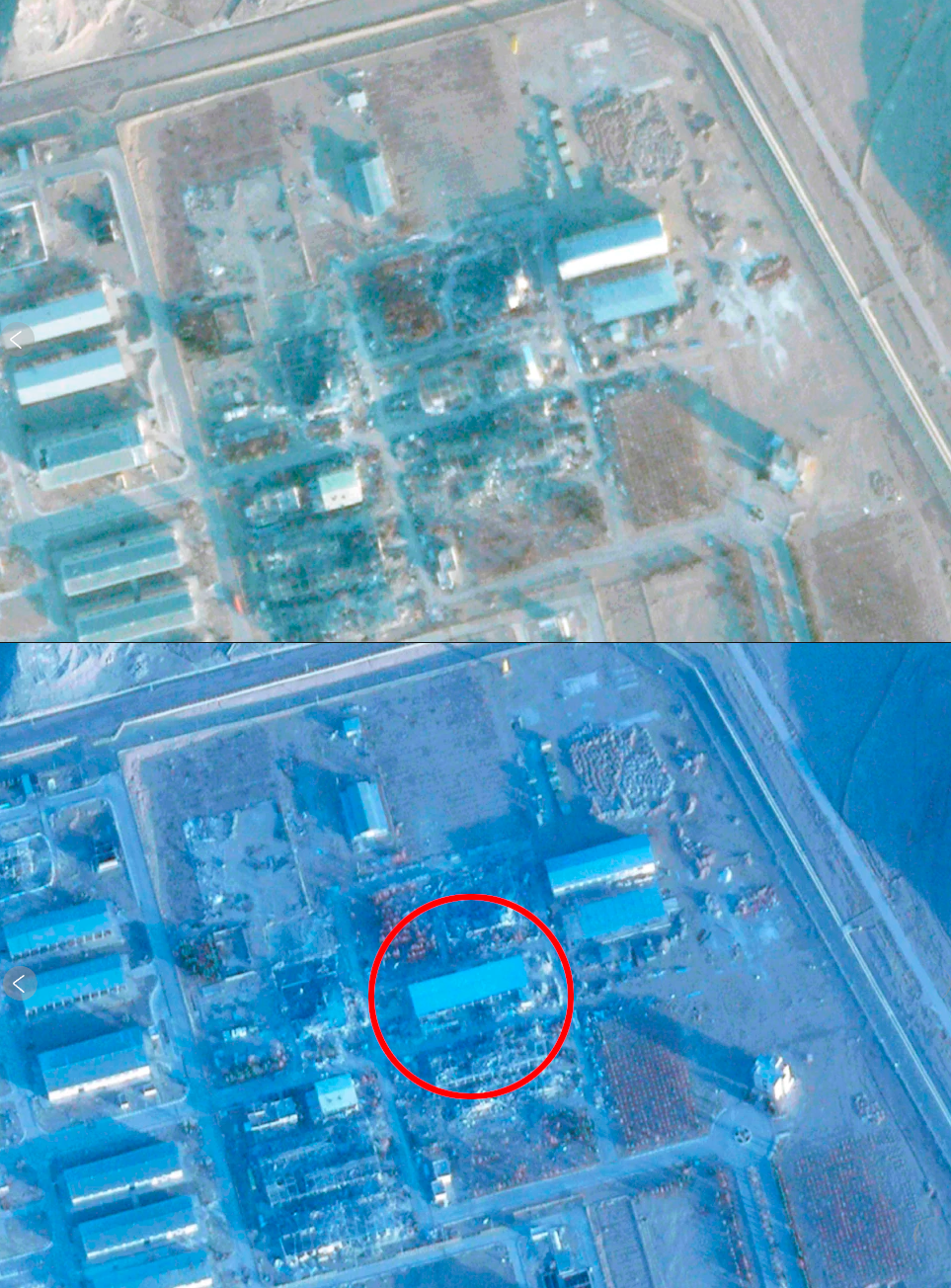
Isfahan. The new roof, circled in the lower image
(Photo: Planet Labs PBC via AP)
Iran has made no official comment, and the images indicate that Natanz’s electrical system remains offline. Iran also appears to be continuing excavation work that began in 2023 at a so-called secret site at Mount Kuh-e Kolang Gaz La, known in English as Pickaxe Mountain. The site lies several hundred meters from Natanz, and satellite imagery shows growing piles of excavated earth. Experts assess that a new underground nuclear facility is being built there.
While the fortified Fordo facility, also struck during Operation ‘Midnight Hammer,’ is believed to lie 60 to 90 meters underground, analysts who previously reviewed satellite imagery from Pickaxe Mountain said it may be dug even deeper, possibly exceeding 100 meters. Such depth would provide stronger protection than Fordo.
Trump’s statement following the US strike on Iran, last June
(Footage: The White House )


In Isfahan, Iran has also constructed a roof over a structure near the northeastern corner of the site, completing the work in early January after protests broke out. The building’s exact function is not publicly known, though the Israeli military said last year that strikes there targeted facilities linked to centrifuge production. At the same time, images show that two tunnels leading into a mountain near the Isfahan site have been filled with earth, apparently to protect against future strikes, a step Iran had taken even before last June’s war. A third tunnel appears to have been cleared, with new walls built at its entrance, likely for security purposes.
Sarah Burkhard, a senior researcher at the Institute for Science and International Security, which has tracked Iran’s nuclear sites for years, said the roofs at Natanz and Isfahan are part of an operation intended to “extract any remaining assets or remnants without us knowing exactly what is being removed.” Sean O’Connor, an expert at open-source intelligence firm Janes, agreed that the goal is likely “to conceal activity, not to repair or rebuild for future use.”
Trump says only Iran knows if there is a deadline
Meanwhile, Tehran continues to escalate its rhetoric against the United States and Israel as Washington prepares for a possible strike. Trump said Friday that Iran wants a deal. “I can say this, they do want to make a deal, and I hope it happens,” Trump told reporters at the White House.
Trump: “Iran wants a deal"
“If there’s no deal, we’ll see what happens.” Asked whether Iran faces a deadline, Trump replied, “Only they know for sure. I’ve delivered the message.” Trump again said that “a large armada is sailing toward Iran,” adding, “Even bigger than what we had near Venezuela. Ships have to sail somewhere, so they might as well do it near Iran.” He also claimed he had stopped the execution of 837 people. “Everything was ready, and I told Iran that if they went through with it, they would pay a price like no one has ever paid before. They canceled it, and I appreciated that,” he said.
Iran’s parliament spokesman for national security and foreign policy, Ebrahim Rezaei, said Friday that even a limited US strike would not be met with a limited response. “Any act of aggression against our people, our country or our interests will be met with the highest level of response, without limitation, even if the attack itself is limited,” Rezaei said, adding that Iran would target all US interests, including Israel.
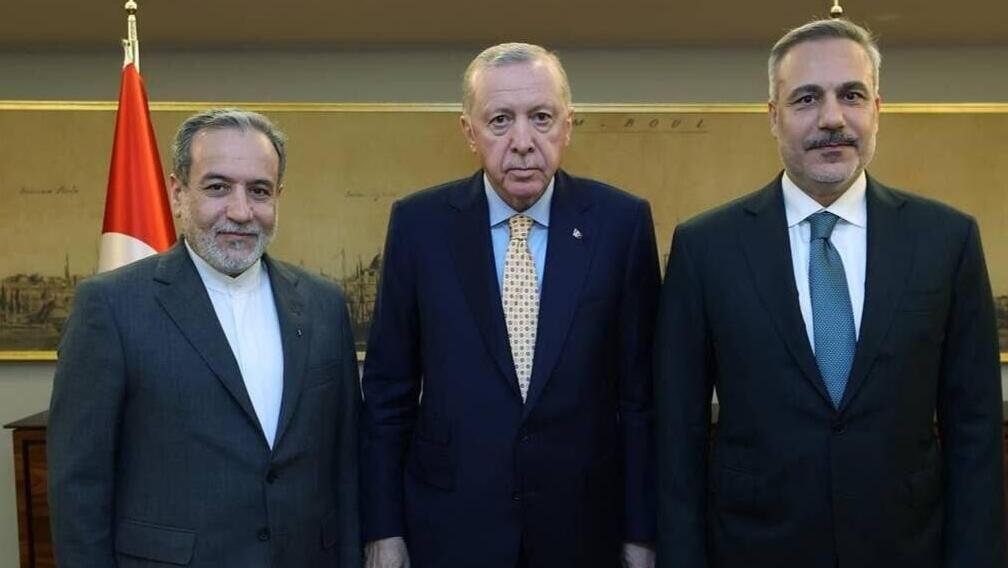
Fidan, Erdogan and Araghchi during a meeting held today
Turkey has been actively mediating between Washington and Tehran in an effort to prevent escalation. Turkish Foreign Minister Hakan Fidan, who said earlier Friday that Ankara would restore trade ties with Israel only after the war in Gaza ends, claimed that Israel is pressuring the United States to strike Iran. Turkey wields significant influence in Washington, given the close relationship between Trump and Turkish President Recep Tayyip Erdogan. Speaking at a joint news conference in Istanbul with Iranian Foreign Minister Abbas Araghchi, Fidan called on all sides to return to negotiations and pursue diplomatic solutions. Araghchi, who also met with Erdogan, stressed the need to reduce tensions and expressed Iran’s readiness for talks, while simultaneously lashing out at Israel.
“The Zionist threat hangs over all countries in the region with American backing,” he said. “Any foolish act by Israel will lead to a war that engulfs the entire region. We emphasize the need to reduce tensions. We do not accept and will not accept dictates from any side.” He added that while “history has proven America’s lack of credibility,” Iran remains open to negotiations. “We are prepared to enter nuclear talks while respecting Iran’s red lines,” Araghchi said, calling for Israeli officials to be prosecuted over what he described as genocide in Gaza.