


Prime Minister Benjamin Netanyahu’s timeline on the morning of October 7, as published Sunday by the Prime Minister’s Office, raises many questions about his conduct that day.
Netanyahu received his first call from his military secretary, Maj. Gen. Avi Gil, at 6:29 a.m. During the call, the prime minister was informed for the first time that an attack was underway from the Gaza Strip. The first call was neither documented nor recorded because it took place on WhatsApp. The second call, at 6:40 a.m., was made over the secure red phone and was recorded. Netanyahu was at his villa in Caesarea at the time. The call lasted four minutes, until 6:44.
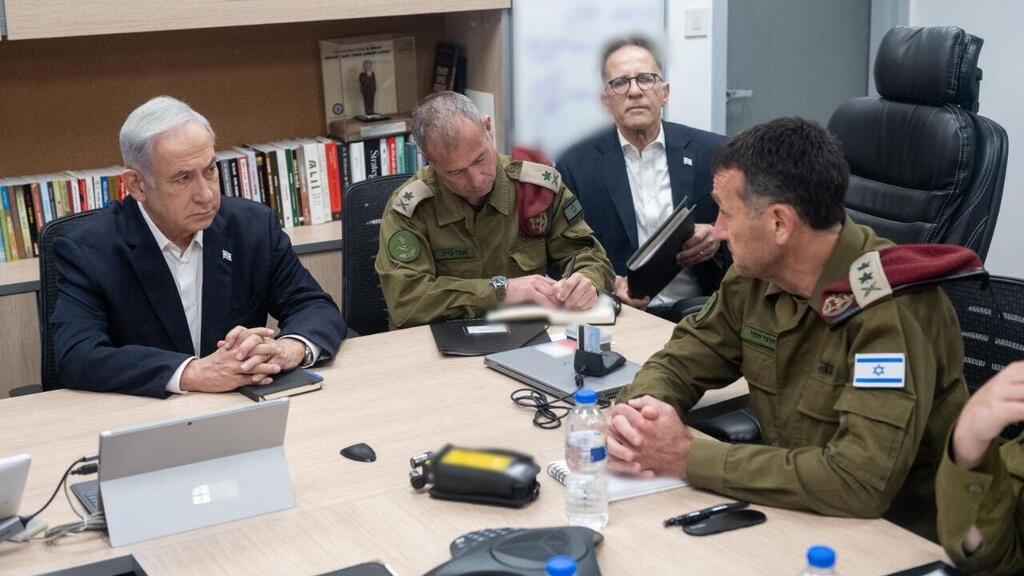
The military secretary updated Netanyahu: “Right now they are carrying out situation assessments, trying to understand what is happening. They have scrambled Yamam (counter terrorism unit) to Netiv HaAsara. The Gaza Division is now transitioning to emergency footing. There is no doubt that we are in a different kind of event
.”Netanyahu asked: “All right, can we take down their leadership [kill Hamas leaders]?”
Gil replied: “Prime Minister, we are in a broad operation. Give me 15 minutes, I’ll also check whether we have ground infiltrations. We are at war.”
Netanyahu: “We have no indication at all, I don’t see anything in the intelligence.”
Gil: “We have nothing. I told you, a few small things began. But later we will have to ask the questions about how they surprised us.”
Netanyahu: “The first thing we need to see is the scale of the attack and whether we need to call up reserves, and we need to convene at the General Staff headquarters as quickly as possible. Could this also be intended for kidnappings?”
Gil: “That’s what we think.”
Netanyahu: “We need to see whether it is possible to take down their leadership immediately, if there is something available — take it down. From Sinwar on down.”
Former senior officials familiar with the matter say the tactical instructions the prime minister gave at that moment had no real significance.
“So Netanyahu says to take down the leadership. So what? What does that mean? Taking out leaders is something you do in an operation, but they are telling him we are at war. So what does taking down leadership have to do with it now? Netanyahu said to call up reserves. By that point, they had already begun calling up reserves,” according to a former senior official.
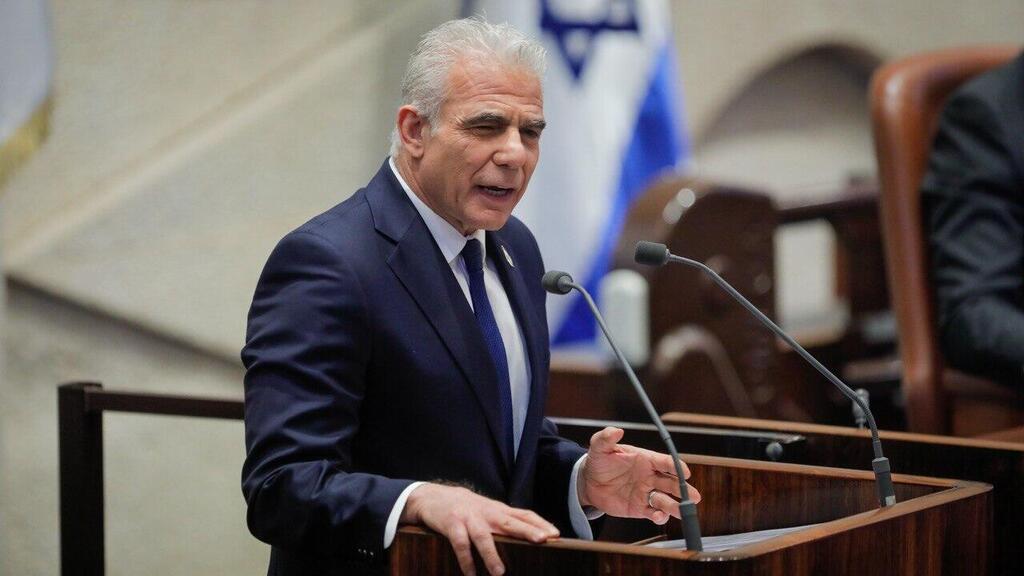
Lapid: 'Until 4:30 in the afternoon, Netanyahu barely functioned and did not initiate a single move'
(Photo: Shilo sShalom)
The call ended at 6:44 a.m.. What did Netanyahu do then? Why did he not leave immediately with his convoy for the Kirya military headquarters in Tel Aviv?
His office claims he left for the Kirya only at 7:30, after “preparing the prime minister’s convoy.” But there is no real reason it should take 45 minutes to organize a convoy. Former Prime Minister Yair Lapid has testified that the convoy can be on the road within three minutes and requires no special preparation.
Contrary to the Prime Minister’s Office statement, Caesarea residents documented the convoy leaving later than the office said. In any event, while traveling to the Kirya, Netanyahu spoke by phone with then-Defense Minister Yoav Gallant, who told him there was no clear picture of the situation.
Arrival at the Kirya defense headquarters
According to Shin Bet records, the prime minister arrived at the Kirya at 8:22 a.m. — nearly two hours after the attack in the south began.
Netanyahu’s office said that at 8:40 a.m. the defense minister convened then-IDF Chief of Staff Herzi Halevi and former Shin Bet chief Ronen Bar to formulate a situation picture ahead of the discussion with the prime minister. The office did not mention that detail by chance: It was intended to explain why Netanyahu himself did not convene a situation assessment — because Gallant had already held one.
Between 8:30 a.m. and 9:30 a.m., after requesting them, the prime minister received intelligence updates and ongoing reports from the field from the military secretariat team. At 9:47 a.m., his military secretary received for the first time the situation-assessment document prepared by the Shin Bet chief at 5:15 a.m. that morning.
At 9:55 a.m., Netanyahu held a situation assessment in the Kirya command bunker attended by the defense minister, chief of staff, Mossad director, Shin Bet chief, national security adviser and head of the IDF Operations Directorate. The prime minister instructed that the border line be hermetically sealed to prevent hostages from being taken into Gaza and additional terrorists from entering; rejected the IDF’s recommendation for a partial reserve call-up and ordered a full mobilization; and ordered a wartime directive and preparations for the northern front.
At the end of the meeting, Netanyahu held a smaller security consultation with Gallant and Halevi.
The timeline shows that it took the prime minister three and a half hours before he spoke with the chief of staff, the Shin Bet chief, the Mossad director and the national security adviser. And yet Netanyahu repeatedly says that if he had been awakened in time, everything would have looked different.
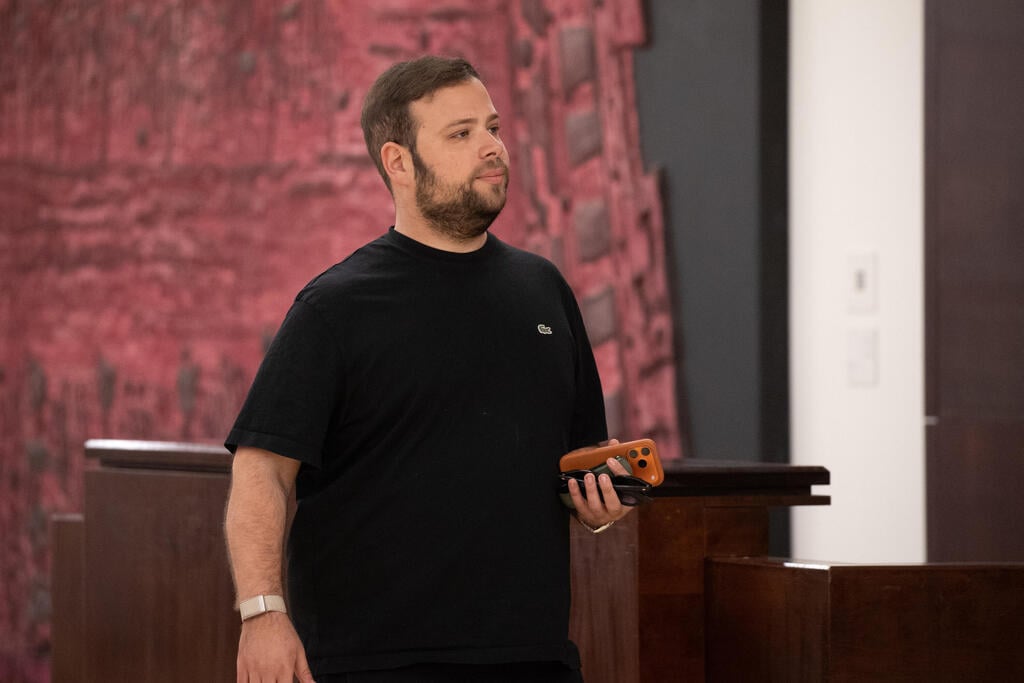
טופז לוק
(צילום: אלכס קולומויסקי)
A former senior security official said: “Netanyahu could have reached the Kirya much earlier. He could have convened a situation assessment before 10 in the morning. The question is what he actually did.”
According to the official timeline published by his office, Netanyahu held a phone call at 10:30 a.m. with then-Dutch Prime Minister Mark Rutte, now NATO secretary-general. Many have since wondered why that call took place so early. The office does not shed much light on it, but officials familiar with the matter say Rutte was the one who initiated the call.
At 11 a.m., the prime minister recorded a video in the courtyard of the Kirya in which he declared war.
‘He did not initiate a single move’: The briefing with Lapid
At 12:30 p.m., Netanyahu held a meeting in his Tel Aviv office with the finance minister, foreign minister, national security minister, housing minister and strategic affairs minister. Nearly three hours later, at 3:15 p.m., he spoke by phone with French President Emmanuel Macron, and at 4:15 p.m. he spoke with then-U.S. President Joe Biden.
Shortly afterward, at 4:30 p.m., Netanyahu held an update meeting with opposition leader Yair Lapid at the Prime Minister’s Office in Tel Aviv.
Lapid himself later testified about the conversation: “All of Netanyahu’s mouthpieces have been hysterically repeating in recent days the nonsense that ‘they didn’t wake him up.’ Unlike them, I am one of the few people who met Netanyahu on October 7. I sat with him at 4:30 in the afternoon, I know everything that was happening there, so I can ask: And when they did wake him up? What did he do?”
“So here is the reason Netanyahu is doing everything to sabotage a state commission of inquiry, and here is the reason we will establish one in the first month of the next government,” Lapid said. “Because the testimony is unequivocal: Until 4:30 in the afternoon, Netanyahu barely functioned and did not initiate a single move. Everything is documented, everything is in the protocols he is desperate to hide. The army proposed actions and he approved them without argument. Nothing came from him. No proposal, no move. He did not speak with the communities, did not move a single brigade, did not issue a single order, did not manage a single operation, did not once suggest going south, did not order the evacuation of a single community.”
According to Lapid, “Netanyahu said that if they had woken him up, he would have ‘activated the Air Force, activated the entire IDF.’ Really? And when they did wake you up? What did you activate? What did you do other than say ‘yes, yes’ every time the commanders you now smear proposed actions? What did you do other than speak with the prime minister of the Netherlands — yes, he found time for that that day — and tell me you were unwilling to remove Ben-Gvir from the government and form a national unity government?
“The prime minister’s surroundings are recorded, the people who were with him that day — including me — saw and heard everything. I invite all of Channel 14 and all the other mouthpieces to answer the question: Other than approving the instructions given by the heads of the security organizations to their people, who fought with courage and heroism, tell me one operational move Netanyahu initiated on October 7 after they woke him up. One!”
A former senior security official added: “It is convenient for Netanyahu and his people to focus the story on criticism that can be interpreted this way or that — whether he arrived at 8 or 8:20. We need to address the entire black, miserable year that came before, and all the 10 years before that, since Protective Edge — the disregard for the warnings, the conception.”
The post from Netanyahu’s circle — and the response: ‘How do you know?’
Meanwhile, Topaz Luk, an adviser to the prime minister, posted a message Sunday morning that reignited the debate over Netanyahu’s conduct on October 7.
Luk wrote: “They can tell stories until tomorrow. I was among the first to arrive at the Kirya on that cursed day, October 7. The only person who functioned and the only person who managed events was Prime Minister Benjamin Netanyahu. The chief of staff and the Shin Bet chief and the entire rest of the senior security leadership were in an unprecedented state of shock.”
Former senior security officials were stunned by the post.
A senior official who was at the Kirya that morning said: “People would do well not to comment if they did not see things firsthand with their own eyes. Topaz claims he saw Netanyahu and says he functioned wonderfully. First of all, Topaz was not in the closed discussions, so how does he know?
“I doubt he even saw the chief of staff and the Shin Bet chief, who may have passed him on the way to the bathroom. How do you know how they functioned? Who are you, anyway? This is unparalleled insolence. Topaz was not in a single closed forum or a single situation assessment. He was not in the closed forums. He does not have clearance. Maybe he saw Bibi in their own interactions, but he definitely did not see Herzi and Ronen. So who are you, anyway?”
Netanyahu’s office responds — and publishes a detailed timeline
In its response, Netanyahu’s office also published a more detailed timeline of the prime minister’s actions on October 7:
“The prime minister closely and continuously monitored the management of events from their outset. At 6:29 a.m., the military secretary updated the prime minister about the opening of the attack. In the second conversation, at 6:44 a.m., with the military secretary, the prime minister asked whether there was an ability to eliminate the Hamas leadership ‘from Sinwar on down,’ whether the attack was intended for kidnappings and whether reserves needed to be called up. The prime minister wondered why nothing had appeared in the intelligence and ordered an immediate departure for the Kirya. At 7:30 a.m., after the prime minister’s convoy was organized, the prime minister left for the Kirya.
“On the way, at around 8 a.m., the prime minister spoke with the defense minister, who said he did not have a clear picture of the situation. At 8:22 a.m., the prime minister arrived at the Kirya and received ongoing updates from the military secretariat, which was in continuous contact with the General Staff and the Shin Bet. At 9:03 a.m., he went down to the bunker, where he instructed that a situation assessment with the security leadership be held at 9:30 a.m. That assessment was delayed because of a preliminary situation assessment being held at the time by the defense minister with the chief of staff. Throughout these hours, the prime minister received continuous updates from the military secretariat.
“At the 9:55 a.m. situation assessment with the defense minister, chief of staff and heads of the security agencies, the prime minister was not presented with a clear situation picture by the professional officials. Despite this, the prime minister instructed that the border line be hermetically sealed to prevent the continued invasion and the return of terrorists to the Strip with hostages. The prime minister ordered a full reserve mobilization, contrary to the IDF’s intention to call up 100,000 people. In light of concern that the northern arena might join the fighting, and alongside the effort to stabilize the south, the West Bank and Israel’s Arab population, the prime minister instructed that a wartime directive be issued, that Iron Dome be fully deployed and that preparations be made for the north.
“At 11:35 a.m., the prime minister issued a statement in which he announced: ‘Citizens of Israel, we are at war.’ At 1:45 p.m., the prime minister instructed the Cabinet to destroy the forces that had infiltrated Israeli territory; ordered the preparation of plans — including the seizure of territory in the Strip — to serve as leverage regarding the kidnappings, to eliminate Hamas’ leadership and strike infrastructure, buildings, outposts and launch sites; and also instructed that focus be maintained on the West Bank and Hezbollah. The prime minister acted with sharpness and clarity and led a dramatic turnaround that reversed the situation and decided the campaign.”