


Could the war with Iran — and the fact that Iran has already fired missiles at Turkey twice — encourage reconciliation between Jerusalem and Ankara or even promote cooperation against what appears to be a shared adversary? Experts on Turkey are largely pessimistic, though some argue that Israel should not miss the opportunity and should reach out to Turkey precisely at this moment.
Despite the harsh political rhetoric, Turkey and Israel share strategic interests, particularly regarding Iran and developments across the region. Israeli officials who favor rapprochement believe Israel should already be considering steps to repair relations with Turkey. One such official said it is a clear Israeli interest, adding that Turkish representatives had explored the possibility of reconciliation with Israel but were turned away.
Gallery
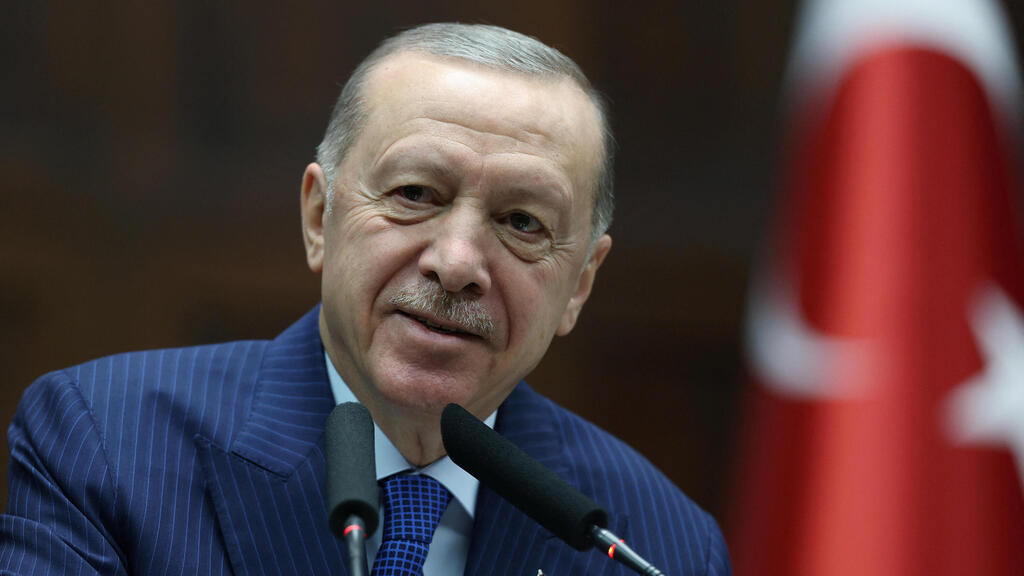
Turkish President Recep Tayyip Erdogan
(Photo: Mustafa Kamaci/Turkish Presidential Press Office/Handout via REUTERS)
Erdogan: ‘Antisemitism is a crime against humanity’
The official advocating warmer ties pointed to a positive remark made by Turkish President Recep Tayyip Erdogan — among his many critical statements — during an interfaith iftar dinner held this week in Ankara. In his speech, Erdogan condemned antisemitism and Islamophobia, calling both “crimes against humanity.”
Erdogan said Islamophobia has risen sharply in recent years around the world and warned that “the growing wave of Islamophobia openly threatens both our people and the culture of coexistence.”
The Turkish president stressed that his country does not tolerate extremist or terrorist organizations. He specifically mentioned the Islamic State group, describing it as “dark forces that bomb mosques, churches and synagogues without distinction and show no respect even for places of worship.”
He added that antisemitism can never be justified under any circumstances, saying that just as Islamophobia is a crime against humanity, antisemitism is also a form of evil that cannot be considered legitimate.
Erdogan also accuses Israel of spreading terror
Yet few in Israel believe these remarks signal a real opportunity for reconciliation with Turkey. Israeli officials who are pessimistic about improving ties argue that the fundamental problem lies with Ankara, insisting that Israel was not responsible for the deterioration of relations.
A senior diplomatic official familiar with Israeli-Turkish relations said it is currently “far too early even to begin thinking about a dialogue toward reconciliation.”
Experts on Turkey note that aside from Erdogan’s statement condemning antisemitism, there have been no positive signals from the Turkish arena toward Israel. They add that Erdogan has long drawn a distinction between Israel and Judaism, and that his comments should not be interpreted as a sign of interest in closer ties with Israel.
In addition, Erdogan continues to attack Israel regularly. Just Wednesday evening, during another iftar dinner — this time with senior members of his ruling Justice and Development Party in Ankara — Erdogan sharply criticized Israel over the war with Iran, accusing it of “harassing and spreading terror throughout the region.”
According to Erdogan, “the shocks that are drowning our region in blood and tears have intensified further following the attacks against our neighbor Iran.” He accused Israel of believing it can ensure its security by “spreading terror across the region.”
Erdogan also claimed that Israel is violating the ceasefire in Gaza, increasing attacks there and, in his words, launching “an attempt to occupy” Lebanon.
He went on to personally criticize Israeli Prime Minister Benjamin Netanyahu, saying even Israeli citizens who spend nights in shelters are now saying that “the greatest disaster to happen to them since the Holocaust is Netanyahu.”
The Turkish president also warned that the regional conflict could have global economic consequences, saying the world is experiencing its most uncertain economic days since the war between Russia and Ukraine.
Erdogan emphasized that Turkey supports a diplomatic solution to the crisis. “Turkey always stands on the side of peace, not war,” he said, adding that Ankara is working to achieve a ceasefire and a return to negotiations before the regional confrontation escalates further.
At other times, Erdogan has referred to Israel’s government as the “Zionist gang.” He used the phrase in the context of the Kurdish peace process, warning that Turkey must not fall into the traps or plots of the “Zionist gang,” apparently hinting at what he described as Israeli attempts to influence the Kurdish issue.
Dr. Hay Eytan Cohen Yanarocak, a Turkey expert at the Moshe Dayan Center for Middle Eastern and African Studies at Tel Aviv University, said he sees no real opening for reconciliation.
“I wish I were wrong,” he said. “I strongly support improving relations, but when I see Erdogan referring to Israel as the ‘Zionist gang,’ unfortunately, I cannot be impressed by a single statement condemning antisemitism.”
At the same time, Erdogan has not criticized Iran, even though it fired two ballistic missiles toward Turkey.
Iran seen as a 'headache,' not an enemy
On the surface, Israel and Turkey appear to face the same adversary. Turkey has absorbed two Iranian missile strikes. The first missile surprised Turkish officials; after the second, they realized it was indeed aimed at them. Ankara issued warnings to Tehran but took no further action.
Despite the attacks, Turkey has maintained a largely pro-Iranian stance. Analysis of Turkish media coverage shows broad support for the regime in Tehran and criticism of Israel and the United States for attacking Iran.
In Turkey, Iran is not viewed as an enemy — at most, it is described as a “headache.”
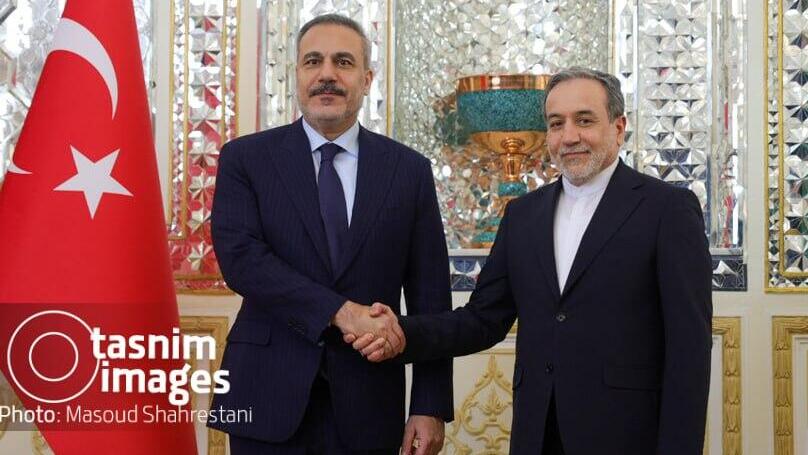
Iranian and Turkish foreign ministers Abbas Araghchi and Hakan Fidan, archive
From Ankara’s perspective, the missiles it absorbed must be weighed against the risk of the Iranian regime collapsing. Turkish leaders appear to conclude that the survival of the regime in Tehran is more important than responding to the missile launches, especially since the missiles caused no real damage. They were intercepted — with NATO assistance — and debris fell in open areas.
As long as Turkey does not suffer significant casualties, property damage or a strike on a major symbol of state authority, the situation is treated largely as business as usual.
Why Turkey identifies with Iran
Turkey’s alignment with Iran stems from several factors. Turkish leaders do not want to see a new pro-Israel regime emerge in Tehran. From Ankara’s perspective, Israel already has a strategy to encircle Turkey through alliances with Cyprus and Greece. Turkish officials fear that if the Iranian regime collapses, Israel could effectively surround Turkey from the east as well.
Such a scenario alarms Ankara.
As long as Israel is heavily engaged in confrontation with Iran, it must concentrate its resources on that front. If the Iranian regime were to fall, Israel might redirect resources to other arenas — possibly including Turkey, the eastern Mediterranean and Syria.
From the Turkish perspective, the existence of the ayatollahs’ regime helps keep Israel preoccupied.
Another concern is the Kurdish issue. If the regime in Tehran collapses, Kurdish political rights inside Iran could expand, potentially fueling demands for autonomy or independence. Turkey fears any development that could strengthen Kurdish nationalism.
There is also concern about a new wave of refugees. The fall of the Iranian regime could prompt its supporters to flee the country, as supporters of the Shah once fled to Turkey decades ago. Ankara does not want to face another refugee influx.
Turkey also does not want Iran to acquire nuclear weapons. Turkish officials clearly oppose a nuclear Iran and are concerned about that scenario. Yet even while opposing a nuclear Iran, Ankara would still prefer to remain aligned with the current Iranian regime.
Turkey’s stance toward Iran has deep historical roots. The two countries have not fought a conventional war since 1639. Turkish leaders see no reason to risk that long-standing relationship because of decisions made by Netanyahu and U.S. President Donald Trump.
Turkish foreign minister seen as hostile to Israel
Another indication that reconciliation is unlikely lies in the identity of Turkey’s foreign minister, Hakan Fidan, who is widely viewed in Israel as deeply hostile to the country and unlikely to promote rapprochement.
In 2021, the Turkish opposition website Nordic Monitor published an investigation claiming to reveal secret documents attributed to the Quds Force of Iran’s Islamic Revolutionary Guard Corps. According to the report, the documents included a personal profile of Fidan — formerly Turkey’s intelligence chief — describing him as strongly anti-American and anti-Israeli and sympathetic to the Iranian revolution.
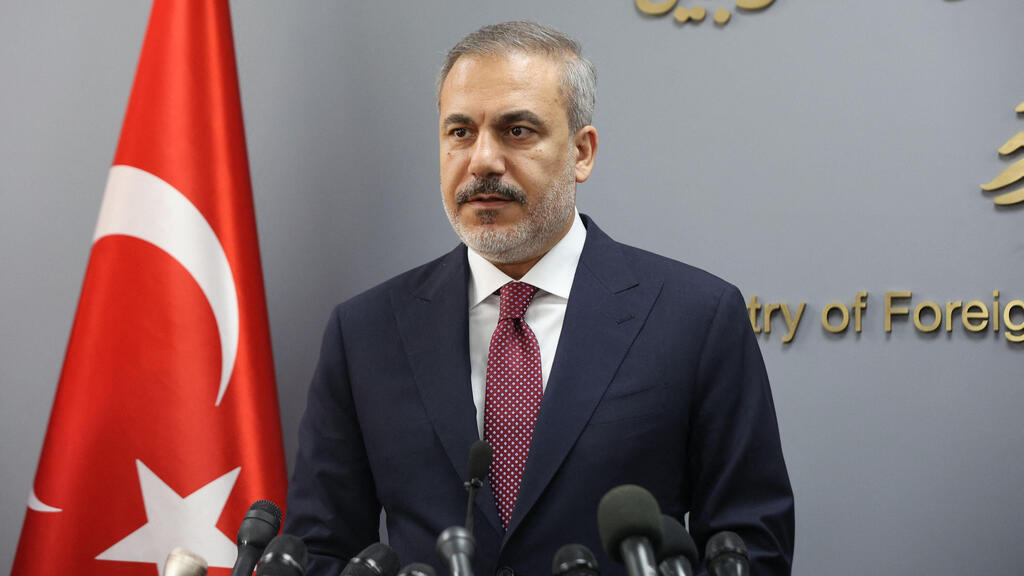
Turkish Foreign Minister Hakan Fidan
(Photo: ANWAR AMRO / AFP)
The investigation, written by journalist Abdullah Bozkurt, said the documents were discovered during a Turkish investigation launched in 2010 into Quds Force cells operating in the country. Among the materials was a digital drive containing dozens of files, including a detailed biography of Fidan reportedly prepared in 2009 and sent to an Iranian contact in Turkey.
The document allegedly stated that Fidan “wants to wipe the United States and Israel off the face of the earth,” that he “loves the Iranian revolution,” and that he views it as a movement led by Shiite Muslims with a universal outlook.
According to the report, the document was prepared by Hüseyin Avni Yazıcıoğlu, a Turkish citizen previously convicted of illegal activities on behalf of Iran. His wife reportedly handed the drive to police in 2011. A police officer testified in court in 2018 that the Quds Force had sought to compile profiles of Turkish figures who could assist its activities in the country.
The investigation was reportedly halted in January 2014 by then–Prime Minister Erdogan before final indictments were filed.
The report also noted that before the failed coup attempt in July 2016, Turkey’s police were widely believed to be influenced by the Gulen movement. Investigators associated with that movement accused Fidan of being secretly Shiite and pursuing a pro-Iranian agenda — claims discussed in a book about his alleged ties to Iran.
Turkish authorities have consistently rejected those accusations, describing them as part of a political campaign aimed at undermining the country’s leadership.
Over the years, additional allegations have circulated in Turkish political and media circles about supposed ties between Fidan and Iranian figures, though none have been proven. Claims that he is secretly Shiite have also been dismissed by the Erdogan government.
Still, Israeli officials have long been suspicious of Fidan’s perceived sympathy for Iran. Senior intelligence officials in Israel have previously said they feared he might pass information to the Iranians and warned that Israel should be extremely cautious in dealing with him.
Today, as Turkey’s foreign minister, Fidan is leading Ankara’s diplomatic campaign against Israel.