

Local elections across the United States are placing Jewish voters in an increasingly uncomfortable political bind.
In Washington, Oklahoma and Los Angeles, several races are unfolding under the heavy influence of President Donald Trump, forcing Jewish communities to navigate between progressive “Mamdani-style” candidates hostile to Israel and right-wing figures with hardline religious worldviews.
Nithya Raman says Israel is ‘not treating people fairly’


The clearest picture emerged Tuesday night in Washington, D.C., where early results in the Democratic mayoral primary showed a significant lead for progressive City Council member Janice Lewis George. Because Washington is one of the most heavily Democratic cities in the United States, the winner of the Democratic primary is widely expected to win the general election.
Lewis George, 38, already dubbed by some as “Washington’s Mamdani,” was leading with about 53% of the vote. Her main rival, moderate Democrat Kenyan McDuffie, trailed with 37%.
Gallery
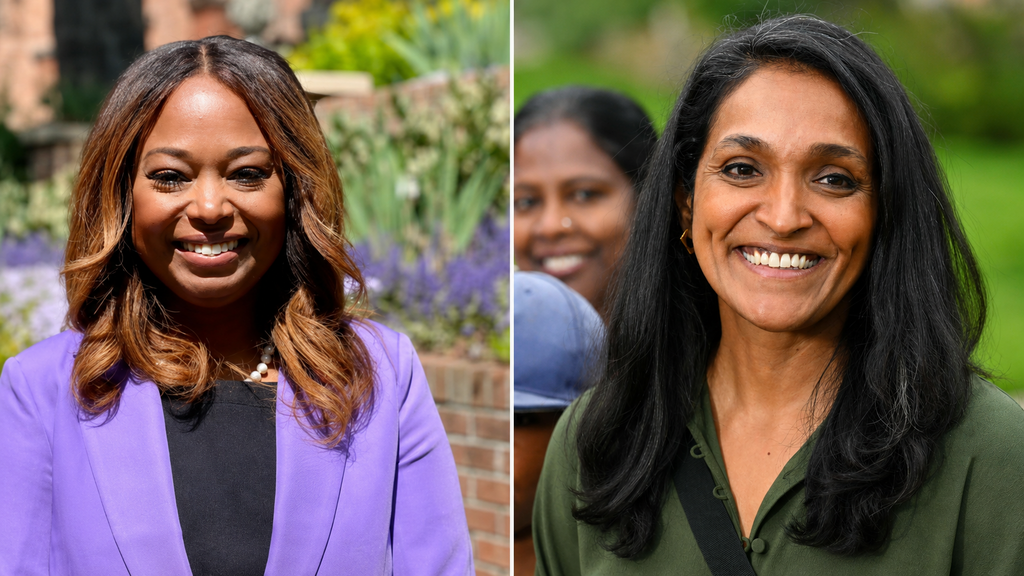
Lewis George and Nithya Raman
(Photo: Office of Ward 4 Councilmember, Patrick T. Fallon / AFP)
Official counting is expected to continue for several days due to the introduction of a new ranked-choice voting system and a large number of mail-in ballots. Still, Lewis George has already delivered a fiery speech to supporters, declaring that “what once seemed like a distant dream is now becoming history unfolding before our eyes.”
The local races have also taken place in the shadow of direct threats from Trump. About a week before polls opened, the president said he strongly opposed the candidacy of a socialist in the capital and warned that his administration could strip Washington of its autonomy and place it under direct federal control.
In Washington, that threat carries unique weight. The capital is not a state, its residents do not have full representation in Congress, and its local government already operates under much tighter federal oversight than cities such as New York, Los Angeles or Chicago. Trump’s warning therefore struck at one of D.C. residents’ most sensitive political nerves.
Lewis George refused to retreat in the face of those threats. She said the president’s suggestion that he could revoke local self-government based on his personal view of candidates amounted to a direct attack on democracy.
In a combative speech Tuesday night, she said D.C. residents want a mayor “who will stand up to Trump,” who understands that the city will not remove immigration enforcement from its streets by fearing him, and who will not fight for autonomy and statehood by obeying in advance.
Lewis George’s expected victory has deepened concern among some members of Washington’s Jewish community. In an internal questionnaire for the Democratic Socialists of America, the same movement that helped carry Mamdani to victory, Lewis George said she would avoid participating in events aimed at promoting Zionism and would refuse official ties with the Israeli government or Zionist lobbying groups.
Local Jewish leaders described the organization’s demands as an “antisemitic manifesto” aimed at imposing a social price of exclusion on Jews.
Lewis George tried to hold closed-door reassurance meetings with area rabbis, but avoided answering direct questions, asking her to clarify her position on Zionism. Soon afterward, it emerged that Makia Green, the political director of Lewis George’s campaign and its highest-paid staffer, had shared posts after the October 7 massacre in which Israel was described as an “imaginary country” and “bitch, so evil.” Green also publicly expressed support for BDS and shared content defending the Houthi rebels attacking Israel.
In Oklahoma, the Jewish community is also struggling with the results of Tuesday night’s Republican primary in the state’s 1st Congressional District, a deeply red district that includes Tulsa, Oklahoma’s second-largest city.
State Rep. Mark Tedford and conservative pastor Jackson Lahmeyer advanced to a runoff and will face each other at the end of August in a race to replace retiring Rep. Kevin Hern.
Lahmeyer, 34, founder of the “Pastors for Trump” movement, received the president’s official endorsement. Trump called him a “true MAGA warrior” who has accompanied the movement from its beginning.
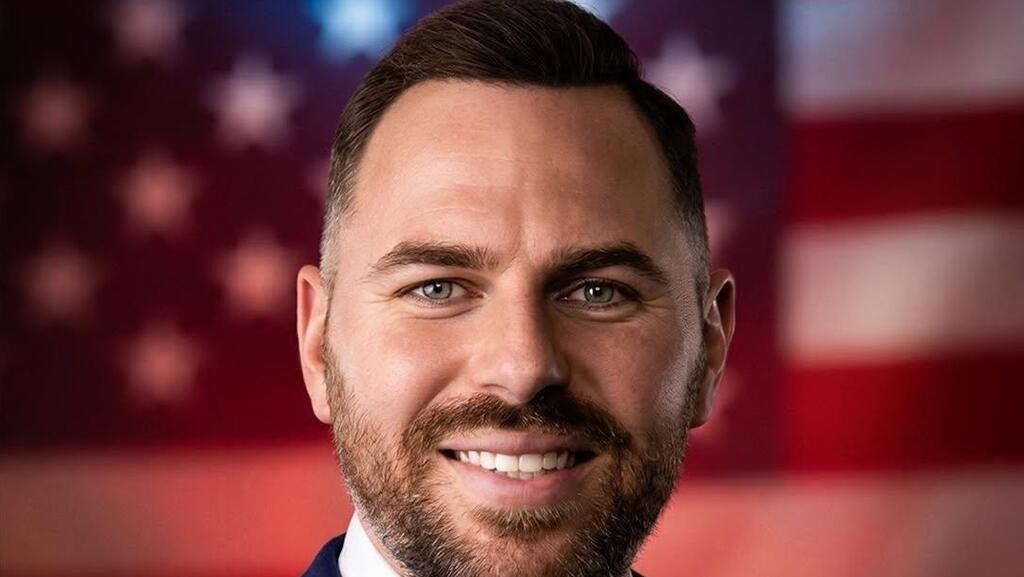
Jackson Lahmeyer
(Photo: Jackson Lahmeyer for Congress)
Lahmeyer is popular among evangelical circles and party leaders such as Mike Johnson, but he is controversial among local Jewish voters because of his hardline theological sermons.
Despite Trump’s backing, Lahmeyer finished second, six points behind Tedford, who is viewed as the more traditional and experienced candidate. His campaign was also hurt by recent reports that he sent “intimate” text messages to a former campaign fundraiser, calling her “cute” and raising the possibility of inviting her to his hotel room.
In response, Lahmeyer acknowledged sending the messages but said they had been “taken out of context,” adding that he took responsibility for crossing a boundary. After additional allegations surfaced that he had cheated on his wife, Lahmeyer issued a statement saying the matter had already been handled privately between him and his wife, Kendra, through counseling, prayer and spiritual advisers.
On the West Coast, the Los Angeles mayoral race has reached a dramatic turning point with progressive City Council member Nithya Raman, 44, officially advancing to the runoff. Raman, an Indian-American urban planner and graduate of Harvard and MIT, will face incumbent Mayor Karen Bass in November.
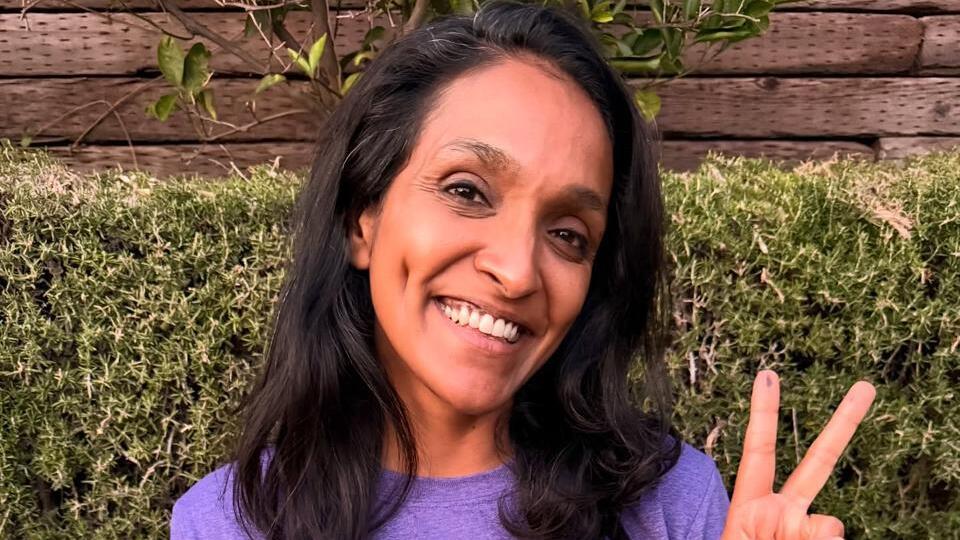
Nithya Raman
(Photo: Nithya for the City)
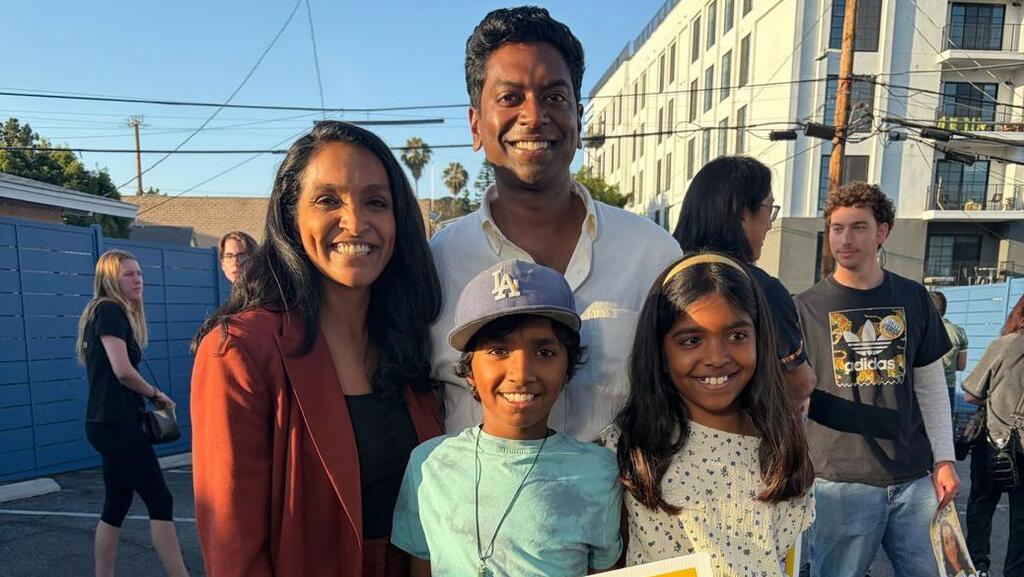
Nithya Raman with her family
(Photo: Nithya for the City)
Raman’s foreign policy positions, especially her comments since the start of the war in Gaza, have made her a target of relentless criticism from members of the Jewish community in Los Angeles, one of the largest outside Israel.
Although Raman has previously said she believes Israel has a right to exist and does not support BDS, she gave a sharper answer in an interview with anti-Zionist streamer Hasan Piker. Asked whether she agreed with human rights organizations that accuse Israel of committing genocide, Raman replied: “I do, yes, I said that.”
When asked whether her position had changed since a 2020 Democrats for Israel Los Angeles questionnaire, in which she said she did not support boycott, divestment and sanctions and supported Israel’s right to exist, Raman said she still believes Israel has a right to exist. But she added that she wants to see countries operate “without apartheid, with equality in their borders,” comparing her criticism of Israel to her criticism of Hindu nationalism in India.
Asked directly whether she believes Israel is an apartheid state, Raman replied: “I think that it is, yeah.” She added that Israel is “not treating people fairly” and is “treating people unequally.”
Those remarks, along with her statement that she would no longer seek the endorsement of Democrats for Israel Los Angeles, the liberal Zionist Jewish group that had supported her in the past, created a rupture between Raman and the city’s Jewish mainstream.
After a long and volatile vote count, Raman managed to overtake pro-Israel Republican reality TV star Spencer Pratt, whose home in Pacific Palisades was completely destroyed in last year’s devastating wildfires.
Raman entered the race only hours before the filing deadline, relying on a broad base of young voters frustrated by the deep housing crisis and the perceived failures of the old Democratic establishment.
Many Israelis and Jews in Los Angeles describe a sense of being trapped, facing a choice between candidates in “different shades of gray” rather than a clear black-and-white decision.
On one side, incumbent Mayor Karen Bass has lost significant support within the community over what many see as failed city management, her absence during the severe wildfires and her delayed response to violent incidents and pro-Palestinian protests on campuses and outside synagogues.
On the other side, Raman’s candidacy has created real fear of radical forces gaining power.
“She is our Mamdani,” one Jewish resident of Beverly Hills said. “Voters in the city now have the pleasure of choosing between complete incompetence from Mayor Bass and political radicalism from her challenger Raman. Good luck to us.”