


“The children here are living in trauma. My son doesn’t want to be outside alone because he’s afraid there will be a siren,” said Yekarat Elboim, a mother of two living with her family in the northern moshav of Zar’it, describing with pain and frustration the constant threat posed by FPV drones.
One such drone seriously wounded Col. Meir Biderman, commander of the 401st Armored Brigade, on Wednesday.
Hezbollah drone's fiber-optic cables hanging over the houses of Moshav Zar’it
(Video: Use under Section 27A of the Copyright Law)


The Elboim family moved to the Upper Galilee only last summer. Since then, daily life has become a constant balancing act between routine family matters and fear of Hezbollah drones. On Wednesday morning, ahead of the holiday, Elboim said she was forced to leave home to shop despite her fears. “I was very afraid, but there was no choice,” she said.
Since the launch of Operation Roaring Lion, FPV drones have become a tangible threat to northern residents, who now drive with their eyes fixed on the sky, fearing the moment they could be struck by a Hezbollah attack without any warning.
In Zar’it, residents walk the paths of the veteran farming community while strands of fiber-optic cable — remnants of downed drones — hang from utility poles, lie across rooftops and scatter near school bus stops where children are meant to live normal lives. But residents say life here is anything but normal.
“We saw the fiber-optic cable at the entrance to the house, but I don’t really know the details of the incident or when the drone passed over us,” Elboim told ynet after a neighbor explained what the wires outside her home were. She said the thought of one-way attack (OWA) drones, against which there is no warning system, is unbearable. “It’s really infuriating that people are just accepting this, as if it’s okay,” she added.
Elboim also described the severe impact on the education system and on parents’ sense of security about sending their children to school in the confrontation zone.
Gallery
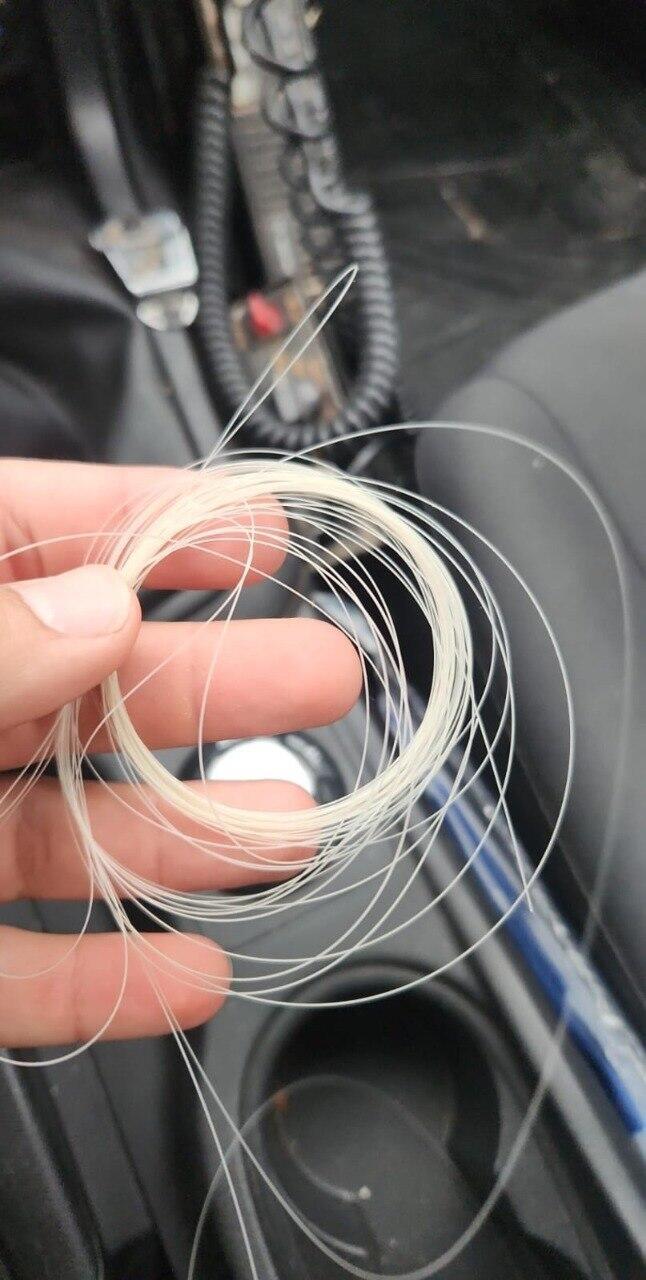
A fiber-optic cable from a Hezbollah drone in Moshav Zar’it
(Photo: Use under Section 27A of the Copyright Law)
“Fiber-optic cables were found near the children’s school bus stop and in other places too. What an amazing routine. Maybe there are hardly any sirens here, but there are FPV drones and nonstop sounds of explosions from IDF strikes across the border all the time,” she said.
On Wednesday morning, two drone infiltration alerts in the Kiryat Shmona area sent thousands of students running in panic to shelters. Many others were forced to lie under desks because the warning time was too short to reach protected spaces.
“There are children who haven’t returned to school since Purim,” Elboim said. “Children are sitting at home because their parents refuse to send them back due to the security incidents and their fears.”
When the Elboim family decided to move from central Israel to the north, security concerns were part of the discussion, but official assurances calmed them.
“People laughed at me and said I was just paranoid, because Hezbollah had been pushed back and there was no more danger, and we were coming to help rebuild and grow the area. But who could have imagined we would end up in the reality of a long and uncertain war,” she said.
Even now, half of Zar’it residents live in homes without standard protected rooms, and the Defense Ministry has so far failed to complete the fortification measures promised to residents.
“Most of the new families who came here after Operation Northern Arrows don’t have safe rooms in their homes because nobody imagined we would need them so quickly and that the state would delay construction for so long,” Elboim said, referring to Israel's 2024 ground incursion into Lebanon.
“By a miracle, we have a safe room, but my sister-in-law and her family were out of their home for two months because they live in an old house without one. It’s a failure in itself that residents here still don’t have protected rooms.”
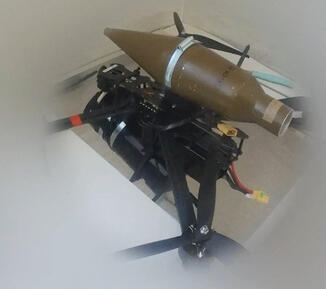
A Hezbollah FPV drone
Despite the situation, Elboim stressed that her family has no intention of leaving and does not regret moving to the Upper Galilee.
“It’s clear to us that we are staying. Leaving isn’t even a thought,” she said. “But the fact that we came here to live and be part of the community doesn’t mean we are willing to accept this life and this routine of distress that all of us here are living through. I feel like we are living in a reality disconnected from the rest of the country, and it’s absurd. Then they extend the ceasefire by another 45 days. What are they talking about? Is there a ceasefire here?”
“In recent days, Zar’it residents wake up every morning to these fiber-optic cables, and this is a dangerous reality,” Ben Moha warned.
On Wednesday morning, he appealed to Settlement Affairs Minister Orit Stroock, who oversees government investment in rehabilitating the region.
“Make our voices heard in the right places. This is not normal, and we are not willing to get used to this reality,” he wrote.
Ben Moha said Stroock is attentive to the situation, but he expects to see significant and rapid change “before there is a disaster here while the moshav is full of residents and the kindergarten and daycare are full of children.”

Yekarat and Roy Elboim, residents of Zar'it
(Photo: Courtesy)
“We are not willing to wake up in the morning and see the fiber-optic cables of Hezbollah FPV drones that passed over our homes,” he added.
Anger over the term “ceasefire,” commonly heard in central Israel, is also being voiced by northern regional leaders.
Asaf Langelben, head of the Upper Galilee Regional Council, said the gap between government declarations and the reality on the ground requires a military solution at its root.
“We live this reality every day, every night,” he said. “There is no ceasefire in the north. Unfortunately, the threat from Lebanon is still hanging over the heads of northern residents. The sirens on Wednesday morning were a warning siren to the government that said there is a ‘ceasefire’ — there is no ceasefire here. The government must do everything so this war ends with one clear victory: eliminating the threat and restoring security to the northern communities.”