


Israeli forces destroyed Hezbollah’s underground “drone fortress” in southern Lebanon after uncovering a major arsenal at a site that Air Force intelligence had assessed nearly two years earlier as inactive and empty of weapons, ynet and Yedioth Ahronoth have learned.
The complex, located beneath the town of Majdal Zoun near the Israeli border, was blown up Sunday in a massive IDF demolition. The underground site was built with Iranian assistance and had been considered by some military officials one of the most important strategic assets Hezbollah had constructed near the border.
Hezbollah ‘drone fortress’ near Israel border sat untouched for 18 months before IDF raid
(Video: IDF)


According to sources familiar with the matter, officials in the IDF’s 36th Division recommended during Operation Northern Arrows, almost two years ago, that the military act against the compound. They believed it was a key Iranian-built asset for Hezbollah and may have been used during the war to launch drones toward Israel.
But IDF sources said Air Force intelligence assessed at the time that the compound was not active and contained no weapons. Because of that assessment, the 36th Division was not ordered to capture the site near the end of the operation, even though its forces were close to the area.
The decision to send troops into the compound was made only recently, as 36th Division forces advanced toward Majdal Zoun. When combat engineers from Yahalom, the IDF’s elite tunnel and explosives unit, entered the complex, they found a far different picture from the earlier assessment.
Troops uncovered a large underground tunnel network that included a main tunnel, command rooms, weapons depots, dozens of Iranian-made drones and large quantities of ammunition. Military officials said the findings showed the compound had been a strategic Hezbollah base for storing and operating drones, not an empty or inactive site.
Intelligence officials who later arrived at the scene described the material found there as highly valuable. Some of the drones and weapons were transferred to Israel for examination after it became clear they had originated in Iran.
Defense officials believe studying the equipment could provide important information about Iranian drone technology, Hezbollah’s methods of operation and the operational link between Tehran and the Lebanese terror group.
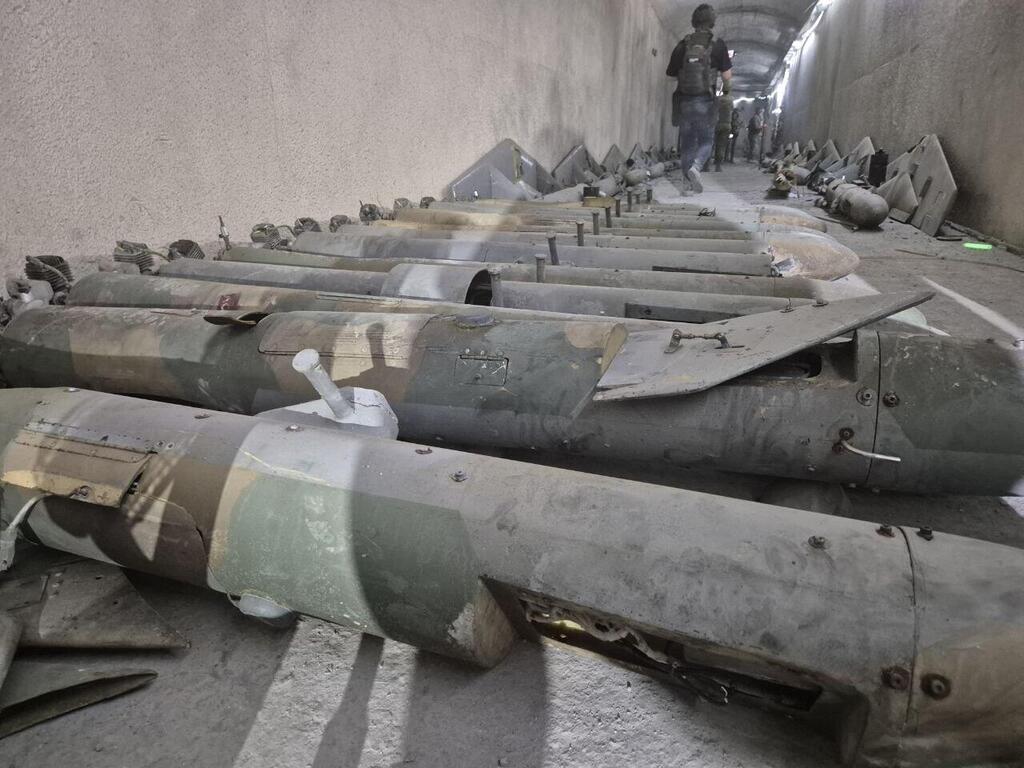
(Photo: Elisha Ben Kimon)
The compound was destroyed Sunday during Operation Final Word. The large explosion demolished the tunnel network beneath Majdal Zoun and was heard clearly in communities across northern Israel.
The underground route stretched more than 200 meters and reached a depth of more than 25 meters. Its wide tunnels, about 3 meters high and 6 to 7 meters across, allowed vehicles to move inside and served as a base for storing and launching drones with ranges of hundreds of kilometers.
Inside the complex, troops found 12 rooms prepared for extended stays, hundreds of weapons, including explosive devices and anti-tank missiles, and four horizontal launch shafts aimed directly toward Israeli territory.
The IDF said more than 20 Hezbollah terrorists were killed during the operation, including about 10 members of Radwan Force, Hezbollah’s elite unit.
The discovery has raised questions inside the defense establishment about why the compound was not targeted earlier, despite warnings from division-level officials and its location close to the border. The gap between the early intelligence assessment and what troops eventually found underground is now likely to become one of the main lessons examined from the operation.