


The intensified operations are seen as part of a broader strategy to exert military pressure on Hamas amid ongoing ceasefire negotiations.
Israeli airstrike in Jabaliya, northern Gaza


Palestinian reports described a “belt of fire” of Israeli strikes across the enclave’s northern regions, including in Jabaliya, where 11 people were reported killed and more than 30 wounded in what local media called one of the deadliest attacks in the past 24 hours.
The Hamas-affiliated Shehab news agency claimed the strike hit a residential building, with civilians among the casualties, including women and children.
The escalation comes as Israeli officials continue to discuss military and diplomatic options. Political sources speaking to Ynet on Sunday ahead of a Security Cabinet meeting in southern Israel said talks on a deal were “ongoing at all times” and expressed hope for progress soon, though they acknowledged there was “no breakthrough at this time.” Among the scenarios being considered is an intensified ground operation to increase pressure on Hamas.
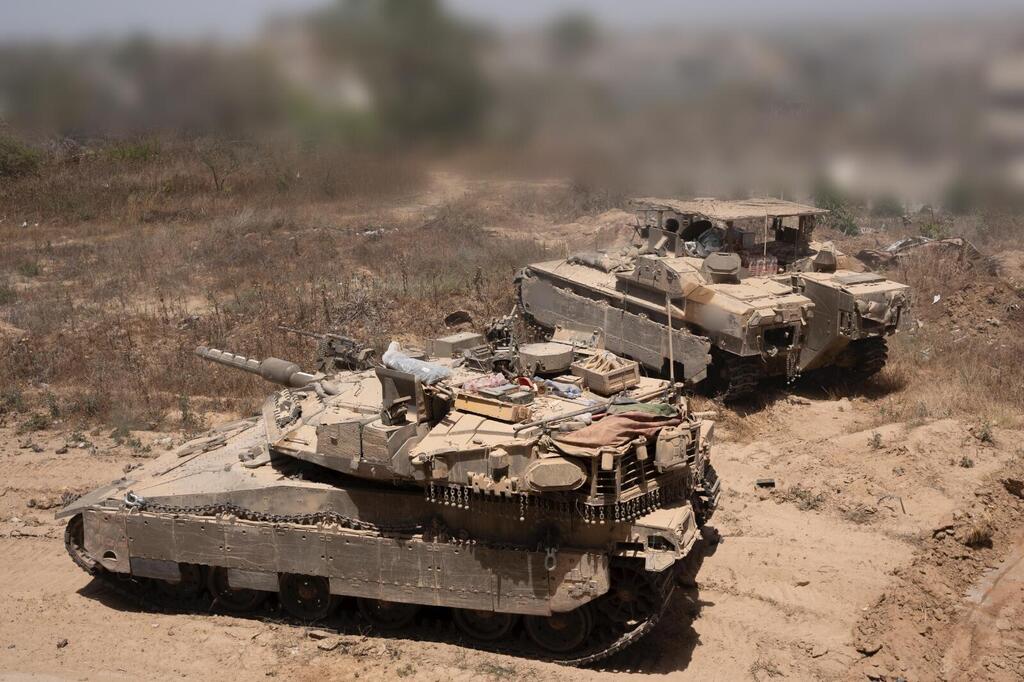
The fighting has taken a toll on Israeli forces, with 20 soldiers killed in Gaza so far this month. The most recent casualty was Sgt. Yisrael Natan Rosenfeld, killed by an explosive device in Jabaliya.
Israeli officials believe recent military success in Iran—where Israeli and U.S. strikes reportedly damaged key nuclear infrastructure—has affected Hamas’ posture. “This victory hasn’t gone unnoticed by Hamas,” one official said. “We hope all of these developments lead to a deal, just as previous blows to Hezbollah led to prisoner exchanges.”
Get the Ynetnews app on your smartphone: Google Play: https://bit.ly/4eJ37pE | Apple App Store: https://bit.ly/3ZL7iNv
Meanwhile, the United States continues to press for a ceasefire. On Sunday, President Donald Trump posted a message on his Truth Social platform calling for a deal to return the remaining hostages held by Hamas: “MAKE THE DEAL IN GAZA, GET THE HOSTAGES BACK!!!” Last week, Trump said he believed a ceasefire could be reached within the coming “week.”

Trump: 'MAKE THE DEAL IN GAZA, GET THE HOSTAGES BACK!!!'
Sources close to Hamas told Ynet that Egyptian mediators are currently working to draft a new ceasefire proposal, which could be implemented within two weeks. “There’s flexibility from all sides,” one source said. “It’s a one-time opportunity to reach a meaningful agreement, although nothing is finalized yet.” They added that the Israel-Iran war had influenced Hamas’ negotiating position, leading to greater openness to compromise.
Meanwhile, residents of the Sha’ar HaNegev region in southern Israel were warned to expect louder and more frequent explosions in the coming days. The local council said the army’s expanded activity in northern Gaza would result in “loud booms, heavy explosions and artillery noise at levels higher than in recent weeks.”
As discussions over a possible visit by Prime Minister Benjamin Netanyahu to Washington continue, Israeli officials said no date has been set and that a visit could still take place soon—if an invitation is extended.