

President Isaac Herzog used his visit to Sydney this week to draw a direct line between the Bondi Beach terror attack, Hamas’ October 7 attack, and a sharp global rise in antisemitism now reshaping Jewish life from Australia to the United States.
Speaking at a communal gathering with Sydney’s Jewish community, Herzog said the attack that killed 15 people at Bondi Beach in December was part of the same ideological hatred that fueled the deadliest massacre of Jews since the Holocaust.
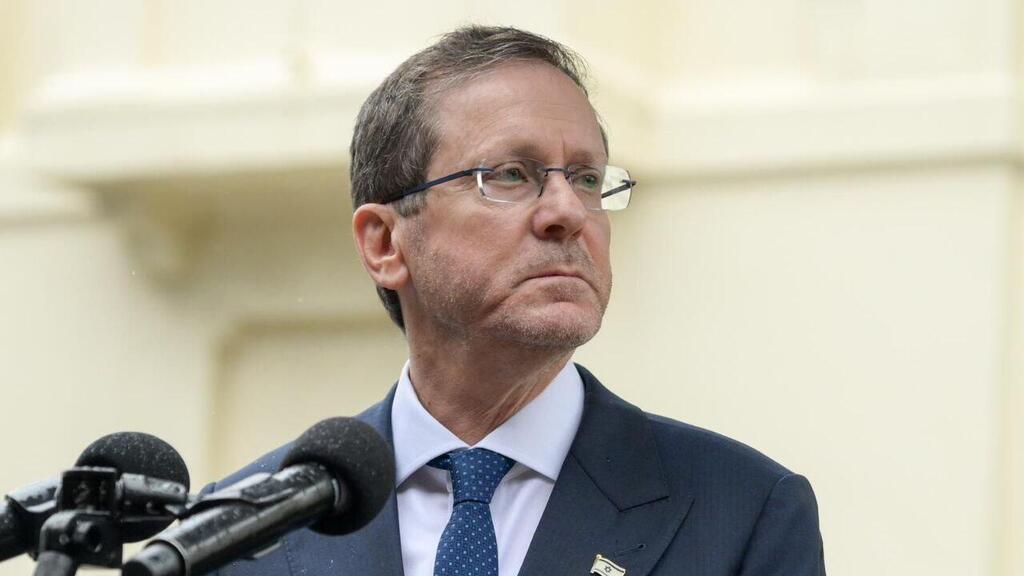
“No one will deter us,” Herzog declared. “We are here to say to you: Am Yisrael Chai.”
Hours after landing in Australia, Herzog and his wife, Michal, went straight to Bondi Beach, where they placed two stones brought from Jerusalem at the memorial site. Standing in silence, he said, they reflected on the victims, Jewish and non-Jewish alike, whose lives were taken by what he described as cruelty, hatred and extremism.
President Herzog speaking at a communal gathering with Sydney’s Jewish community
(Video: Yair Kraus, Maayan Toaf/ GPO)


“Fifteen innocent lives,” Herzog said. “Dozens more wounded. The physical and emotional scars from December 14 will forever be part of our two nations.”
Addressing bereaved families from Australia alongside bereaved families from Israel, Herzog said the visit was not symbolic but essential.
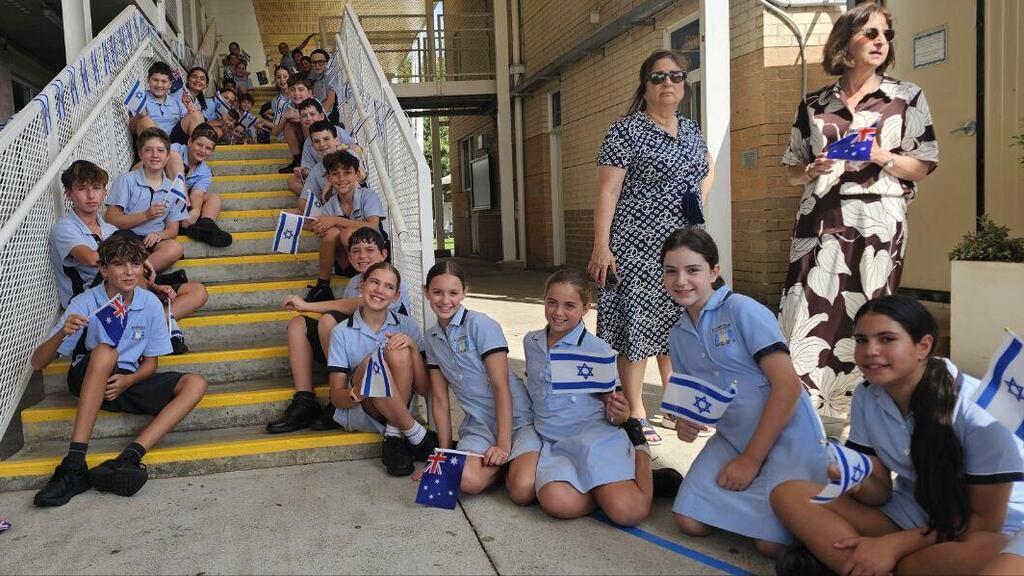
(Photo: Maayan Toaf/GPO)
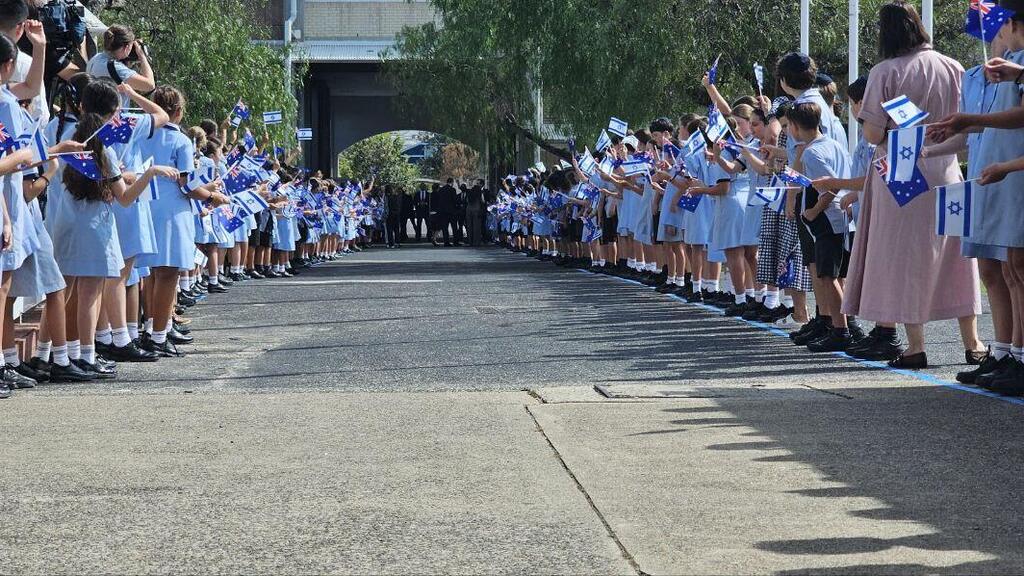
(Photo: Maayan Toaf/GPO)
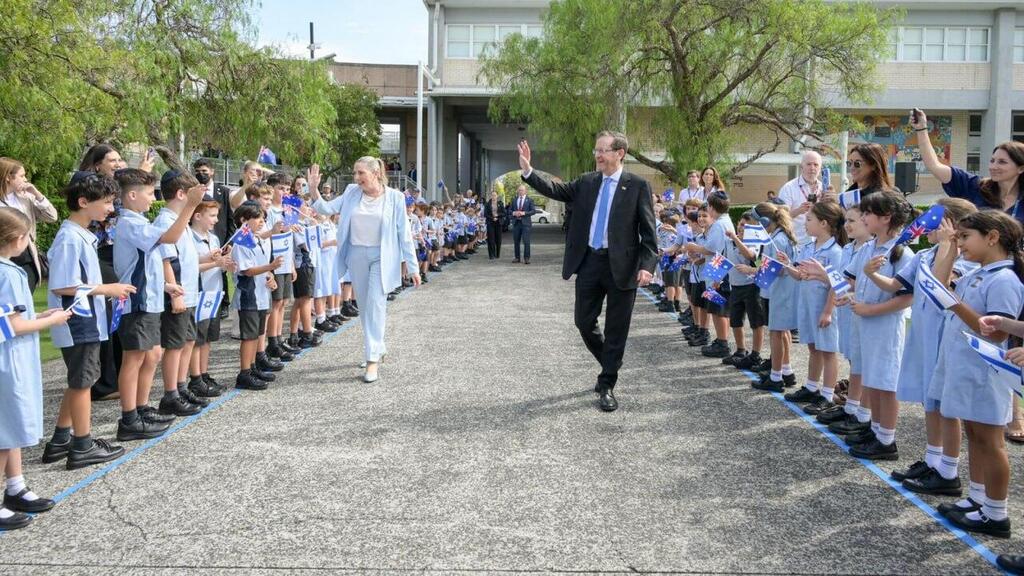
(Photo: Maayan Toaf/ GPO)
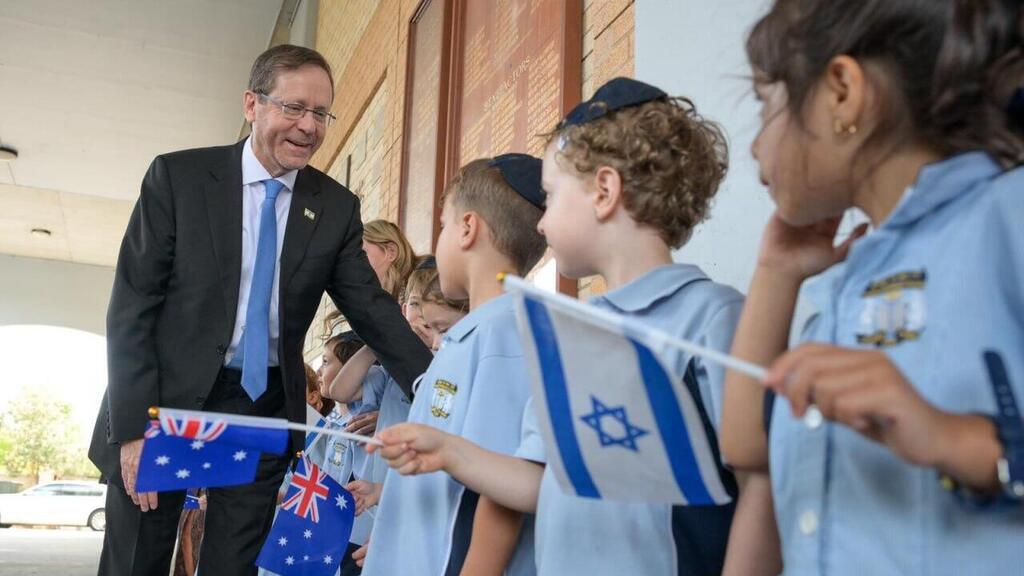
(Photo: Maayan Toaf/ GPO)
“We did not come only to say we are with you,” he said. “We came to show you that we are with you.”
Herzog recalled receiving the first reports of the shooting while in Jerusalem, initially hearing that the attack took place at Sydney’s iconic beach, then learning it targeted members of the Jewish community gathered for Hanukkah.
“By the time we lit the first candle in Jerusalem,” he said, “darkness claimed the lives of 15 innocent people in Sydney.”
The president said the attack compounded an already traumatic period for Jewish communities worldwide following Hamas’ October 7 attack, when terrorists killed nearly 2,000 people in Israel and abducted 251 hostages.
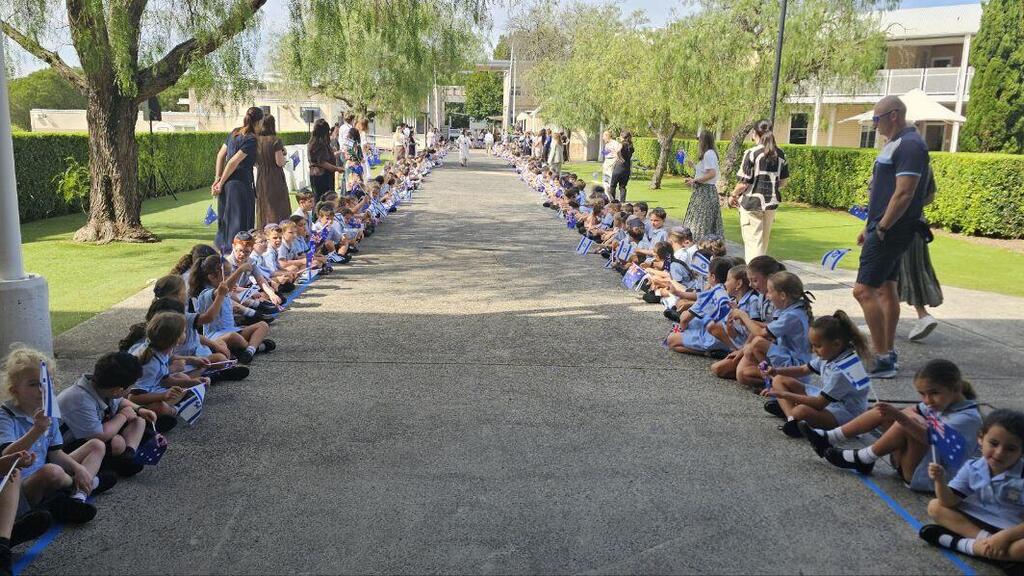
(Photo: Yair Kraus)
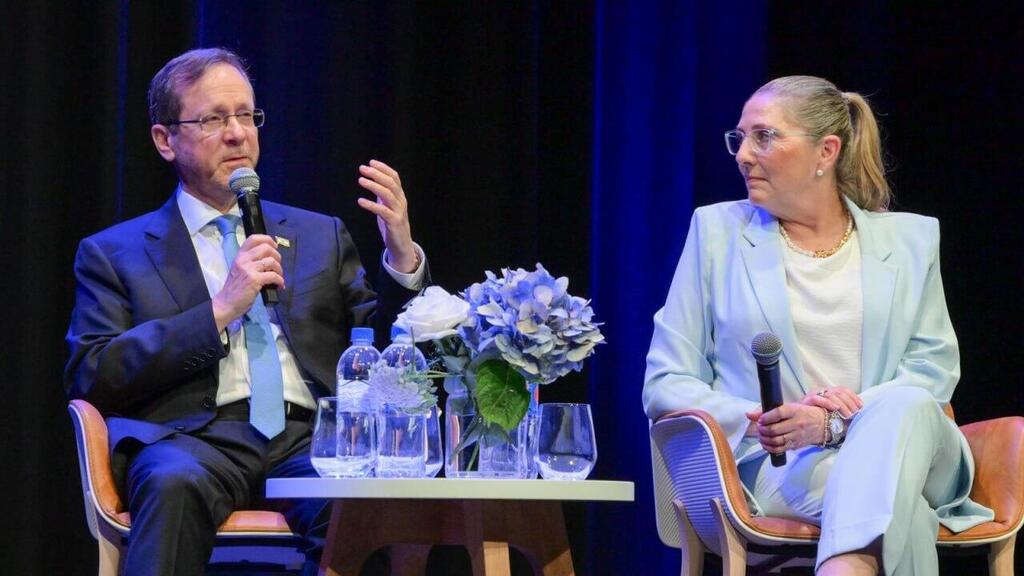
(Photo: Maayan Toaf/ GPO)
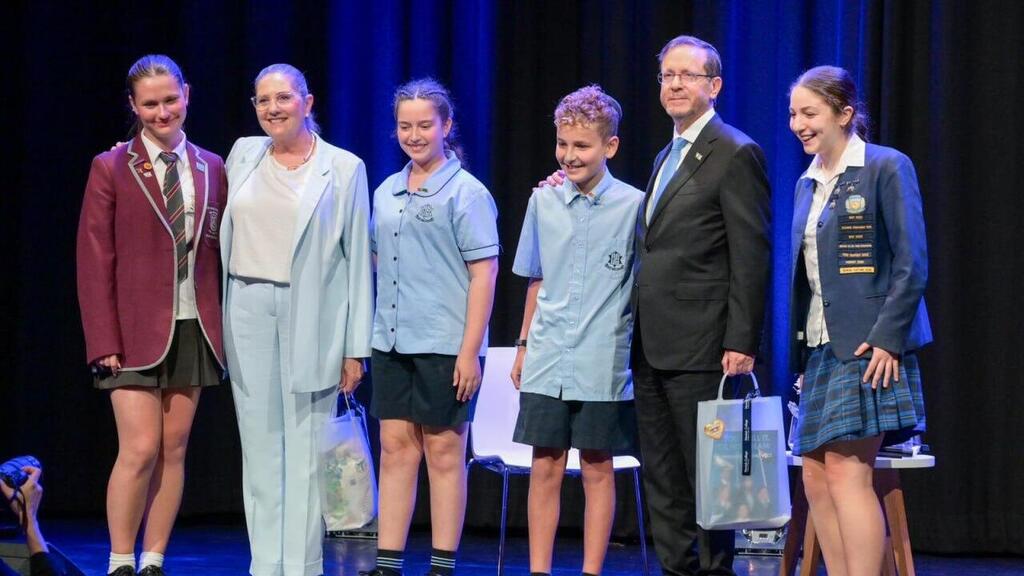
(Photo: Maayan Toaf/ GPO)
“Every Israeli knows someone who was killed, abducted, wounded or abused,” Herzog said. “Entire families were wiped out. Israel was broken-hearted.”
He noted that two weeks ago Israel received its final hostage home, Ran Gvili, after 843 days, marking the beginning of a long process of national mourning.
“Only now are we beginning to process this terrible trauma,” Herzog said.
Herzog warned that the aftermath of October 7 emboldened antisemitism far beyond the Middle East, including in countries long regarded as safe and pluralistic.
“The hatred that triggered the shooting at Bondi is the same age-old plague endured by our parents and grandparents,” he said. “But October 7 gave it new license.”
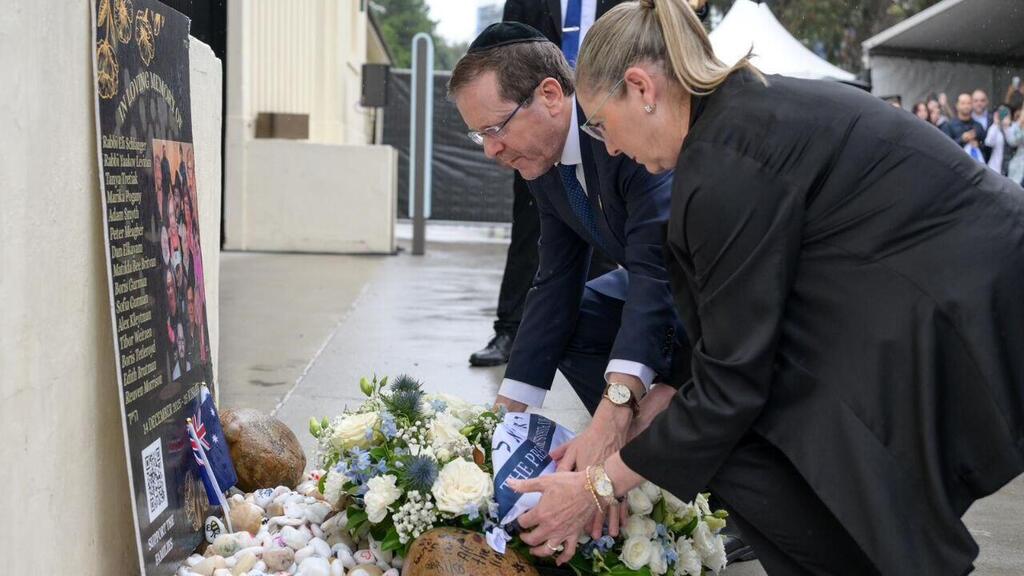
Herzog visits memorial site for Bondi Beach terror attack victims
(Photo: Maayan Toaf/ GPO)
He cited antisemitic chants near the Sydney Opera House, attacks on synagogues in Melbourne, growing hostility on university campuses and what he called a “shrieking silence” from parts of society as warning signs that preceded the Bondi attack.
“This is what it means to globalize the intifada,” Herzog said.
New data from the American Jewish Committee illustrate the scale of the trend Herzog described.
According to AJC’s State of Antisemitism in America 2025 report, nearly three-fourths of American Jews experienced antisemitism online in the past year, either by seeing or hearing antisemitic content or by being personally targeted. Seventy-one percent reported encountering antisemitism on social media in the last 12 months, up from 67 percent in 2024.
The sharpest increases were recorded on major platforms. Fifty-four percent reported antisemitic content on Facebook, a seven-point increase from the previous year. Reports involving YouTube rose 11 points to 38 percent, while Instagram climbed to 40 percent and TikTok to 23 percent.
Twenty-one percent of those who experienced online antisemitism said they felt physically threatened as a result.
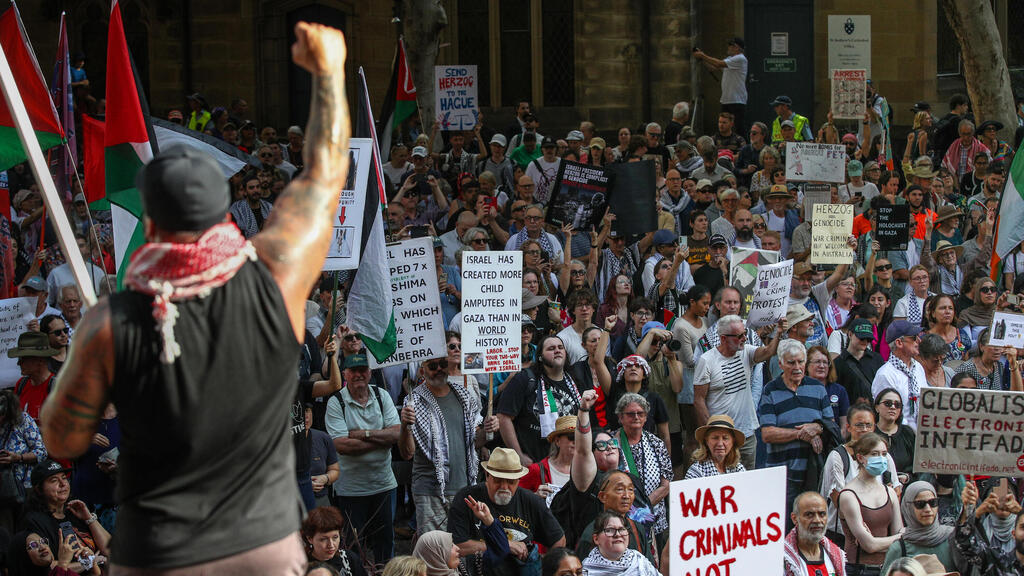
Anti-Israeli protest in Sydney during Herzog's visit
(Photo: Lisa Maree Williams/Getty Images)
The impact has spilled into daily life. Fifty-five percent of American Jews said they changed their behavior in the past year out of fear of antisemitism, including avoiding visible Jewish symbols, limiting online expression and steering clear of certain places or events.
For those personally targeted, the effect was even more pronounced, with 80 percent reporting behavioral changes.
Seventeen percent of American Jews said they have considered leaving the United States because of antisemitism in the past five years, nearly triple the level recorded in a similar survey conducted before October 7.
AJC data also point to growing concern on college campuses. Forty-two percent of American Jewish college students reported experiencing antisemitism during their studies, while 80 percent of parents of Jewish high school students said reports of antisemitism influence where their children choose to attend college.
Herzog said these patterns reflect a broader erosion of democratic norms.
“Antisemitism is never an isolated problem,” he said, citing Nobel laureate Elie Wiesel’s warning that silence and indifference are among the gravest moral failures.
AJC findings reinforce that assessment. In 2025, 77 percent of American Jews and 64 percent of U.S. adults said they trust democracy less than they did five years ago. Ninety percent of U.S. adults said antisemitism affects society as a whole, not only the Jewish community.
Herzog called on governments to respond with moral clarity and decisive action, including protecting Jewish institutions and confronting extremist incitement.
He also emphasized the historic ties between Israel and Australia, recalling Australia’s role in sheltering Holocaust survivors and casting one of the first United Nations votes in favor of establishing a Jewish state.
“Our nations are bound by friendship, by shared democratic values and, now, by shared grief,” Herzog said.
Closing his remarks, Herzog addressed Australian Jews directly.
“You are not alone,” he said. “Israel is part of you, and you are part of Israel. Together, we will endure.”