


Iran moved quickly to deny comments made overnight by U.S. President Donald Trump, who said Tehran had offered to return to negotiations over its nuclear program, remarks that came as anti-regime protests continue to spread across the Islamic Republic.
“Maybe we’ll meet with them. “I think they’re tired of being beat up by the United States. Iran wants to negotiate with us,” Trump said. He also issued a veiled threat, adding, “We may have to act first.”
Gallery
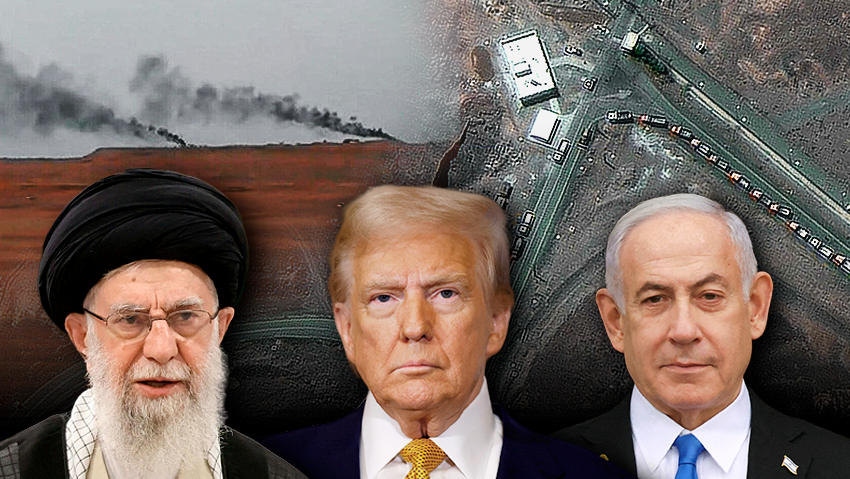
(Photo: AFP Photo / Satellite image ©2025 Maxar Technologies, REUTERS/Kevin Lamarque, ATTA KENAR / AFP, Sarah Meyssonnier/Pool via AP)
It remains unclear whether Iran’s denial reflects reality or whether there is in fact a willingness in Tehran to return to the negotiating table. Previous talks on a nuclear agreement collapsed after Iran dismissed Trump’s warnings and a 60-day deadline he imposed. U.S. B-2 bombers later struck Iranian nuclear facilities. While the strikes reportedly stunned Iranian officials, Tehran soon began rebuilding its nuclear program, even if only at an early stage. Israeli officials say Iran has restarted centrifuge cascades, a reference to uranium enrichment activity.
The current situation differs from the past, analysts say, because Iran now faces not only external pressure but also mounting internal unrest that threatens the regime’s stability. Some in Israel assess that Tehran may conclude it has little choice but to reach an agreement with Washington, after years of rejecting U.S. demands.
President Trump, 'looking at very strong options'


Israel is closely coordinated with the United States and has conveyed its view of what constitutes an acceptable agreement: zero uranium enrichment; inclusion of Iran’s ballistic missile program, which Tehran has so far refused to discuss; and curbs on Iran’s regional proxy and militant activities. Iran has rejected negotiations on those issues as well.
Israel views Iran’s ballistic missile program as an existential threat no less serious than its nuclear ambitions. Israeli officials argue that a simultaneous launch of hundreds of missiles at Israel could cause damage comparable to that of a small nuclear weapon, a scenario Israel says it cannot tolerate.
During a summit with Israeli Prime Minister Benjamin Netanyahu at Mar-a-Lago, Trump issued stark warnings toward Iran, saying the United States would strike quickly if Tehran renewed its nuclear program, and would also respond to ballistic missile threats, though not necessarily immediately.
An Israeli official said Israel’s position on a potential agreement has not changed, adding that Iran’s conduct has only reinforced the need to insist on these conditions without compromise. In Israel, skepticism remains over whether Supreme Leader Ayatollah Ali Khamenei, known for his rigid stance, would yield to U.S. demands even amid widespread domestic unrest.
Danny Citrinowicz, a senior researcher on Iran and the Shiite axis at Israel’s Institute for National Security Studies and a former Israeli military intelligence officer with 25 years of service, said current U.S.-Iran relations resemble the dynamic that preceded and accompanied the so-called “12-Day War,” when Washington sought to exploit Iran’s weakened strategic position to force an agreement on American terms. The key difference now, he said, is the internal condition of Iran’s leadership, which feels backed into a corner and closer than ever to a possible, even partial, concession on enrichment policy.
Khamenei, Citrinowicz said, faces a historic dilemma familiar from Iran’s past. One precedent is Ayatollah Ruhollah Khomeini’s decision to end the Iran-Iraq war to preserve the regime, a move he famously likened to “drinking from a poisoned chalice.” The other is former Prime Minister Mohammad Mossadegh, whose insistence on nationalizing Iran’s oil ultimately led to his overthrow and the return of the shah.
Citrinowicz said Khamenei’s instinct is to reject the American offer and avoid concessions perceived as surrender. This time, however, figures around him — most notably President Masoud Pezeshkian — are keenly aware of the depth of Iran’s crisis. Even if the regime suppresses the current wave of protests, they believe Iran’s economic, social and political conditions will remain dire and require a change in course.
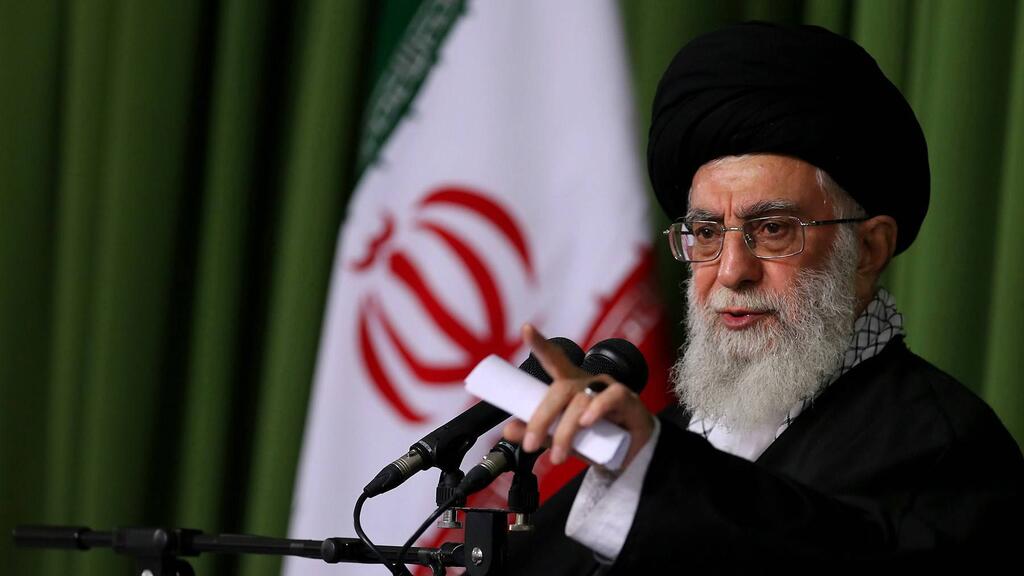
(Photo: AFP)
Whether such a shift would occur before or after a potential U.S. strike remains unclear. What is drawing close attention, Israeli analysts say, is Oman’s ongoing mediation between Washington and Tehran.
Dr. Raz Zimmt, an Iran expert at the Institute for National Security Studies, said there are figures close to Khamenei who believe the only way out of the crisis is negotiations — possibly even direct talks — with the Trump administration, involving far-reaching compromises. He noted that the Iranian president hinted at this possibility following the fighting in June.
Khamenei, however, remains unconvinced, Zimmt said. In the supreme leader’s view, even flexibility or willingness to negotiate with the “Great Satan” offers no guarantees and may only embolden Trump to intensify pressure, ultimately aiming to bring down the regime. “From his perspective, diplomacy would not pull the Islamic Republic out of the crisis,” Zimmt said, “but rather push it another step closer to the cliff from which Trump seeks to throw the regime.”
As a result, Zimmt said, Khamenei may agree to talks only as a stalling tactic — a strategy Trump may not tolerate — or as a means of offering the Iranian public a limited sense of hope, which may also prove insufficient. As long as Khamenei remains in power, Zimmt said, it is difficult to envision the strategic reversal required for a comprehensive agreement.
Israeli officials also point to the period before the “12-Day War,” when public reports highlighted sharp disagreements between Israel and the United States over a possible strike on Iran. Behind closed doors, however, Israeli and American military officers were jointly planning the operation in detail, including coordination involving U.S. bombers.
One issue divided them: Israel sought to eliminate Khamenei on the first day of the conflict, a move the United States vetoed. Some in Israel now speculate that Washington could reconsider if it concludes that Khamenei is the primary obstacle to an agreement with Iran.